 Farnborough
 Nice
Nice
Why London Operates as Europe's Largest Private Jet Hub
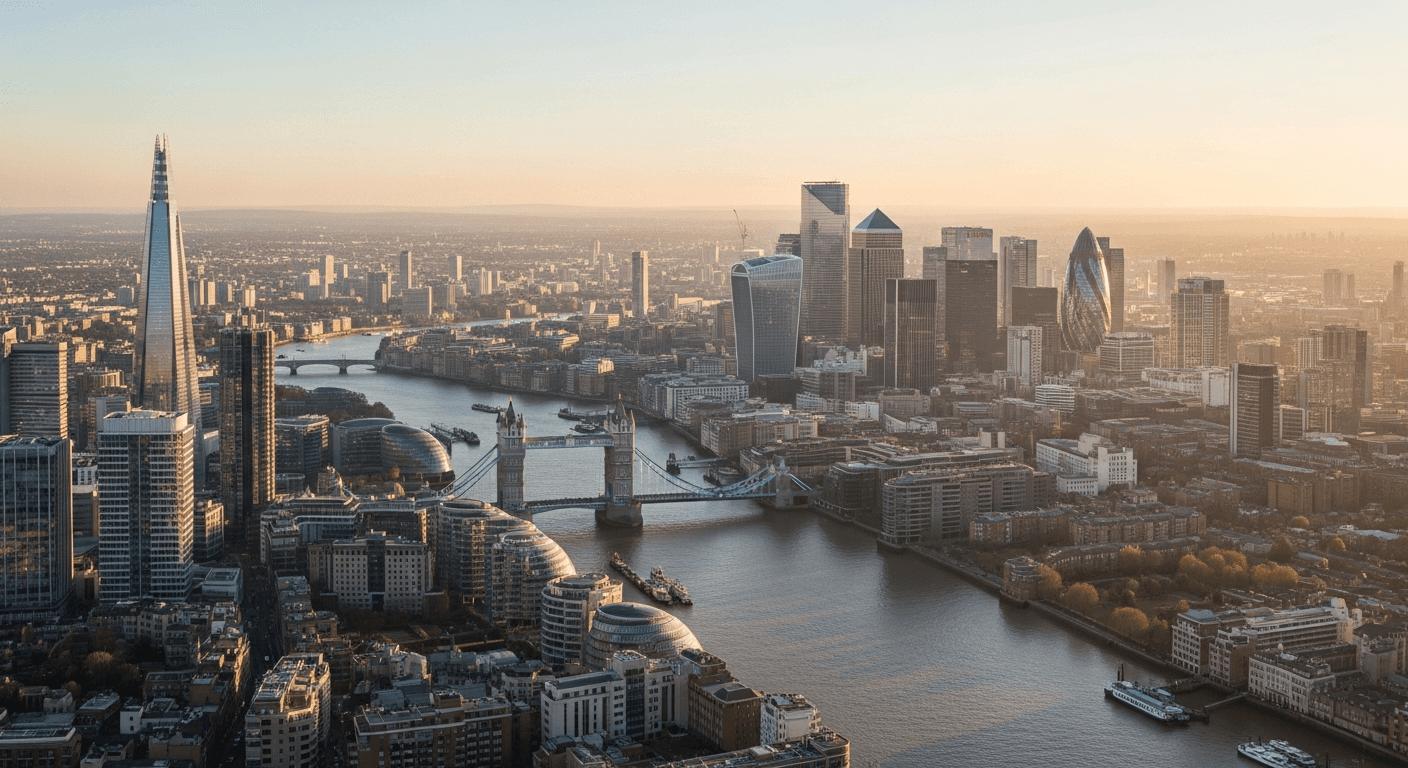
The capital's six business aviation airports handled more than 75,000 movements last year, a figure that exceeds Paris, Nice, and Geneva combined. That number, drawn from EBAA records, captures something obvious to anyone working in the sector and counter-intuitive to most clients: London is not a single private jet city, it is six overlapping ones, each with its own slot regime, runway envelope, and ground transfer profile.
The demand comes from a familiar set of pressures. London hosts more family offices, fund managers, and corporate headquarters per square mile than any European competitor. Royal Ascot, Wimbledon fortnight, the November party-conference window, and the rolling calendar of Mayfair art fairs all generate concentrated peaks. Add the football transfer windows and the autumn private equity cycle, and the capital sustains business aviation traffic that other European cities only see during a single annual event.
The six airports break into two natural groups. Farnborough (EGLF), Luton (EGGW), Biggin Hill (EGKB), and Northolt (EGWU) are dedicated or business-aviation-priority fields. Stansted (EGSS) and Heathrow (EGLL) are commercial airports where private movements compete for slots against scheduled traffic. The difference matters: at the first four, your aircraft is the priority, at the second two, you are a guest in someone else's operating system. The private jet London market behaves accordingly, with brokers building airport selection into the quote rather than treating it as a default.
Farnborough: The Default Choice and Why It Earned That Status
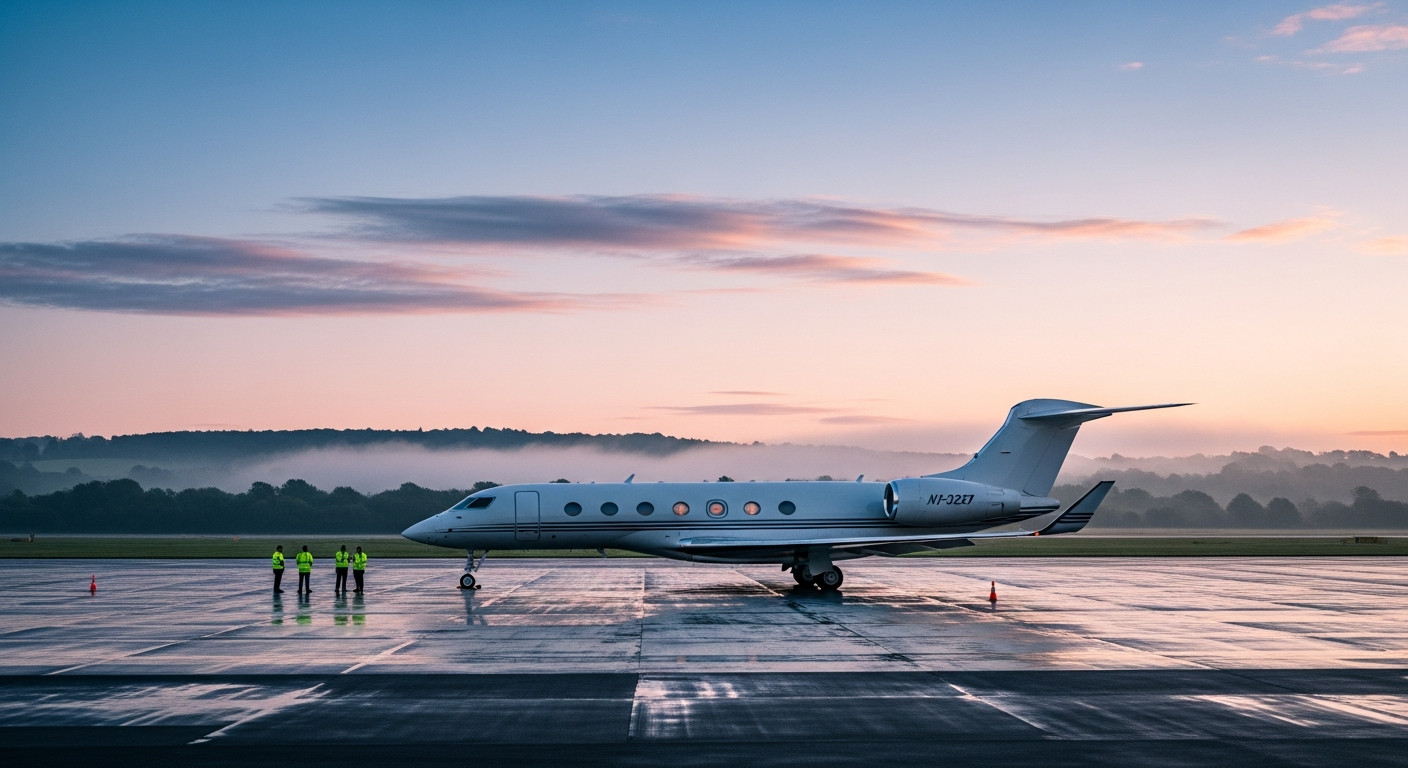
Roughly four in ten London charter clients are routed through EGLF, and the reasons compound rather than singling out one feature. The airport sits 36 miles south-west of central London, operates a 2,440-metre runway capable of handling everything up to the Bombardier Global 7500 and Gulfstream G700, and runs a single FBO model under TAG Aviation that has been refined for more than two decades. The customs and immigration desks process a typical six-passenger arrival in under nine minutes from wheels-stop to car door.
Slot allocation at Farnborough is governed by the airport's permit system rather than the European IATA slot framework. A charter request placed seven days out has a realistic chance of confirmation in any month except July and the first half of December. The airport's planning permission caps annual movements at 50,000, which sounds restrictive until you compare it with the predictability that cap produces: no surprise volume spikes, no last-minute slot withdrawals, no aircraft holding overhead for thirty minutes because a scheduled wave has overrun.
Ground transfer is where Farnborough loses its halo. Helicopter transfer to Battersea (EGLW) takes 11 minutes and runs £2,400 to £3,200 one way for a twin-engine type. By road, the M3 corridor delivers Mayfair in 55 minutes off-peak and stretches to 1 hour 50 minutes during the Friday evening exodus. For a Riyadh principal landing at 18:00 on a Thursday in June, that road figure is the single most important number in the brief, and it is the reason brokers do not treat EGLF as the automatic answer for every private jet London arrival.
Luton, Biggin Hill and Northolt: The Three Most Useful Alternatives
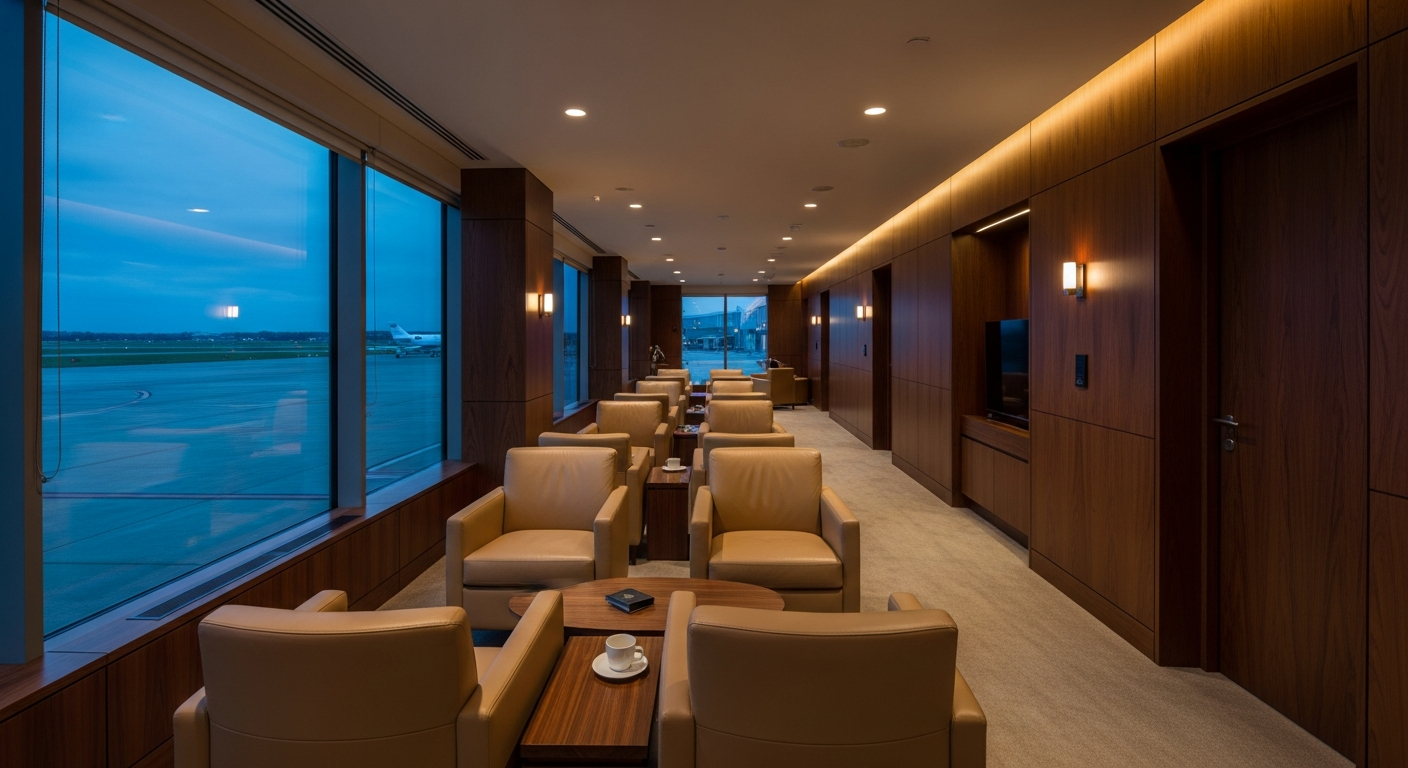
London Luton (EGGW) handles the largest volume of private movements of any UK airport, around 23,000 last year, because its 2,162-metre runway accepts the full midsize and super-midsize fleet and its location 32 miles north of the City suits clients whose destination sits north of the Thames. Signature, Harrods Aviation, and TAG operate parallel FBOs on the airport's east side, which means terminal congestion is rare even during the November conference peak. The airport closes for landings between 23:00 and 06:00 except for emergencies, a constraint that catches out clients flying back from late dinners in Geneva or Monaco.
Biggin Hill (EGKB) is the south-east London answer for clients whose meetings sit in the City, Canary Wharf, or Kent. The 1,802-metre runway accommodates the Embraer Phenom 300E, Cessna Citation Longitude, and Dassault Falcon 8X, though it stops short of the heavy long-range cabin. What Biggin Hill offers that the others cannot match is the dedicated helicopter shuttle to Battersea, six minutes airborne, with departures aligned to inbound charter arrivals. For a Hong Kong principal landing on a Gulfstream G650ER who needs to be in a Berkeley Street meeting by 10:30, the Biggin to Battersea combination is the only routing that holds together.
Northolt (EGWU) is the curiosity of the six. It is an active RAF base that permits 7,000 civilian movements per year on a strict 12-monthly allocation, with priority given to repeat operators. The 1,684-metre runway and 14-day advance booking requirement rule it out for spontaneous trips, but for clients with a fixed London diary the airport's 14-mile drive to Park Lane is the shortest of any London field. A standard CIP arrival processes in under eight minutes, and the lack of FBO retail clutter suits clients who actively prefer a quieter handover.
Heathrow and Stansted: When a Commercial Airport Is the Right Call
EGLL accepts private movements through three handlers, Signature, Universal, and Harrods, though slot scarcity makes it an exception rather than a default. A weekday morning slot between 07:00 and 11:00 must be requested three to four weeks ahead, and even then carries a slot premium of around £3,800 above standard handling. The case for Heathrow rests almost entirely on connecting passengers: a principal arriving from São Paulo on a Dassault Falcon 8X who needs to connect onto an onward sector to Tokyo, or a family meeting inbound passengers off a long-haul scheduled service, are the two flight profiles that justify the cost and complexity.
Stansted (EGSS) sits in a stranger middle ground. The 3,048-metre runway accepts anything flying, slot pressure is lighter than EGLL, and Inflite operates a dedicated business aviation terminal that handles arrivals quickly. The catch is geography: 38 miles north-east of central London, with the M11 northbound corridor known to congest unpredictably around Stansted Mountfitchet. The reasonable case for EGSS is the long-range heavy departure where Farnborough's 2,440 metres feels tight on a hot day with a full fuel load, for example a Bombardier Global 7500 routing direct to Singapore in August at maximum take-off weight.
Choosing Your London Airport: Slot Times, Ground Transfer, and Aircraft Fit
The decision sequence a broker runs through has nothing to do with the airport's marketing material and everything to do with three constraints in fixed order.
First, the aircraft. A Gulfstream G650ER or Global 7500 inbound from the Gulf at maximum landing weight on a 32°C day eliminates Biggin Hill and Northolt immediately on performance grounds. A Phenom 300E from Geneva for two passengers and overnight luggage opens every option on the list, including the option of using an off-peak slot at Stansted for the simple reason that handling is faster there on a quiet weekend.
Second, the slot. Same-day requests in July and the first two weeks of December favour Luton and Stansted, where commercial-style slot management absorbs short-notice traffic better than Farnborough's permit system. Northolt is off the table for anything less than a fortnight's notice. Heathrow is off the table for anything that is not specifically a connection brief.
Third, the ground transfer. The honest framing is that the time from wheels-down to the client's front door determines the airport choice more than runway length, FBO branding, or fuel pricing. For a 09:30 Mayfair meeting, Northolt and Biggin Hill with helicopter onward are the only credible options. For an evening arrival to a Cotswolds estate, Farnborough's M3 access wins regardless of the cabin booked.
Charter pricing varies more by aircraft and routing than by airport choice, though FBO handling differentials matter at the margins. A representative London to Nice sector on a Cessna Citation Longitude runs £14,000 to £17,500 one way, with Farnborough handling adding around £400 over Luton on the departure side. A London to Dubai sector on a Bombardier Global 7500 sits in the £85,000 to £110,000 range depending on season, with the airport choice contributing less than 1.5 per cent of the total cost. The choice is almost never about saving money on the ground; it is about saving the principal forty minutes in traffic at the wrong end of the day.
The right way to brief a broker is to lead with the schedule, not the airport name. "Land 14:00 Wednesday, in Berkeley Square by 15:00, eight passengers, four cases each" gives a broker enough to weigh all six fields against the calendar. "Book me into Farnborough" closes off the analysis before it starts, and on a Friday in July it can cost an extra hour in traffic that no aircraft category recovers in the air.
Anyone arranging a private jet London trip in 2026 inherits a system that rewards specificity. The six airports are not redundant; they are specialised, and the gap between the best fit and a default booking shows up not in the air but in the seventy minutes between landing and arrival at the meeting room.