 Farnborough
 Nice
Nice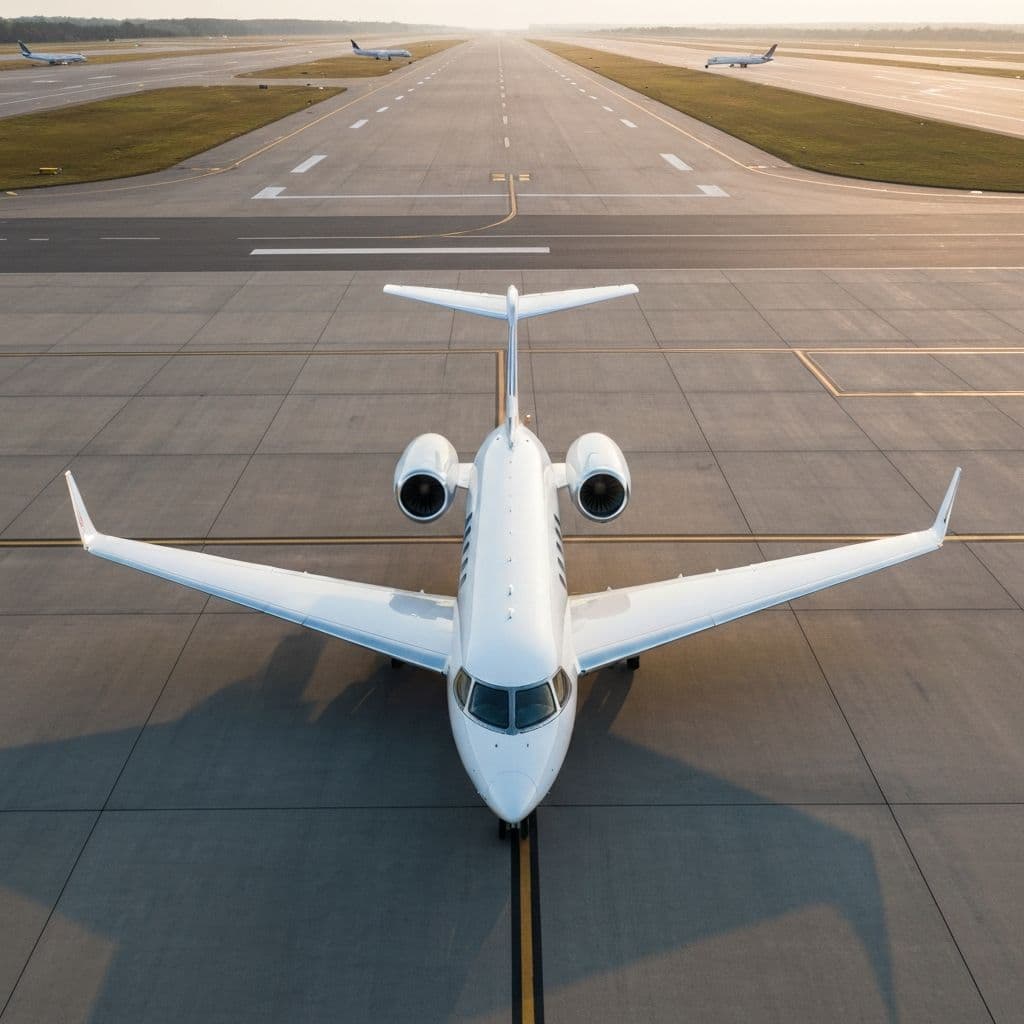
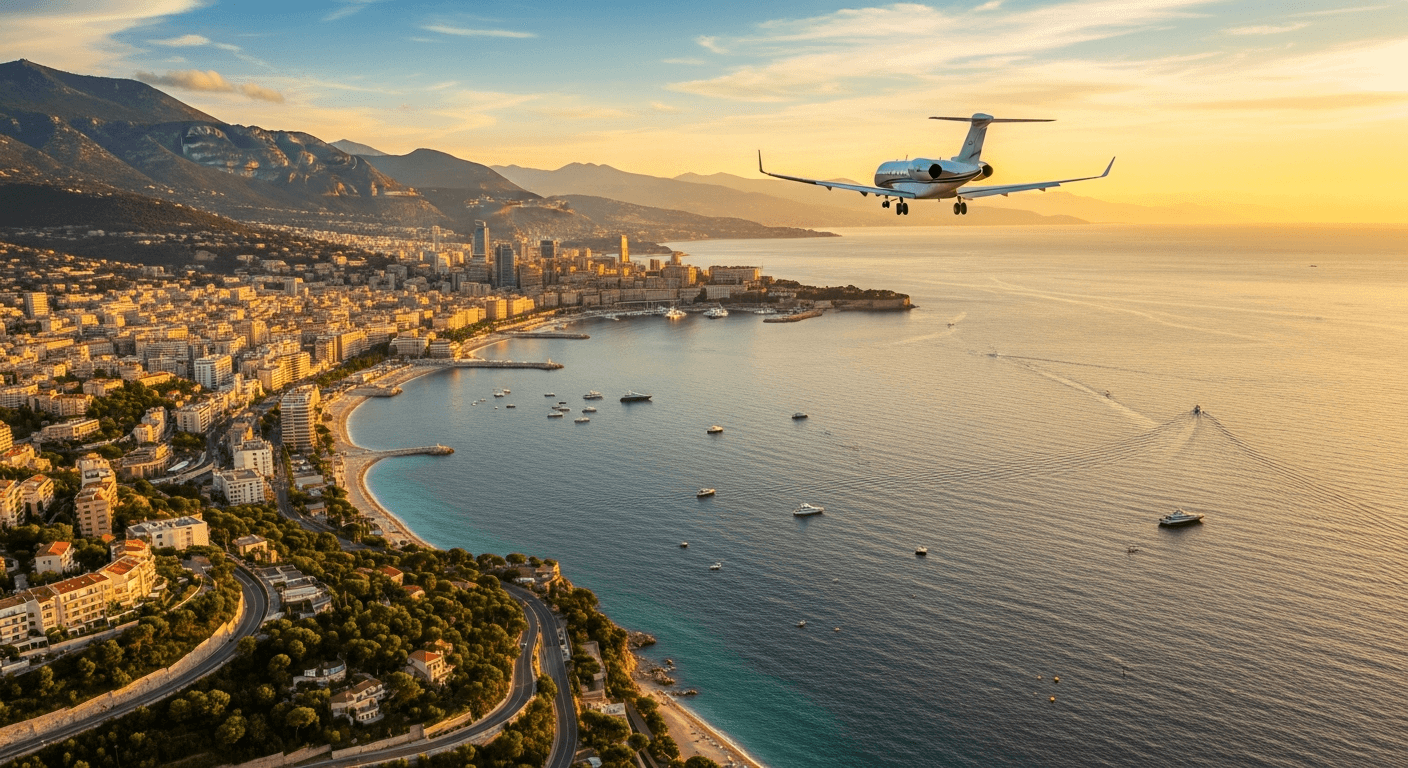
Nice, Cannes, or Monaco: Choosing the Right Entry Point for Your Trip
Nice Côte d'Azur (LFMN) handles over four million passenger movements annually, yet choosing it by default over Cannes Mandelieu or the Monaco heliport is one of the most common and costly mistakes made by first-time Riviera arrivals.
The three entry points serve fundamentally different purposes, and the choice between them should be driven by your final destination, aircraft type, and the transfer time you are prepared to accept. Matching the airport to the itinerary is the first decision that shapes everything that follows.
LFMN is the region's principal international gateway. Its two parallel runways, each over 2,900 metres, accommodate the largest private jets in service: the Gulfstream G650ER, capable of carrying up to 18 passengers across ultra-long-range sectors; the Bombardier Global 7500, with its three distinct cabin zones; and the Dassault Falcon 8X, which combines transcontinental range with impressive short-field performance. Commercial and business aviation share the airfield, which creates the airport's central tension: considerable capability alongside considerable congestion.
The airport sits approximately 30 kilometres from Monaco and 25 kilometres from central Cannes. Those distances translate to 20 minutes on a quiet day and well over an hour in July or August. Many first-time private jet French Riviera travellers accept this without question; those who have made the journey before make a different calculation.
Cannes Mandelieu (LFMD) is purpose-built for general and business aviation. Its single 1,530-metre runway limits the category of aircraft that can operate normally: mid-size and super-mid jets, including the Cessna Citation Longitude and the Embraer Phenom 300E, are well suited to it, while heavy jets with longer take-off requirements must use Nice. The category ceiling is firm.
The compensation is proximity. LFMD sits fewer than five kilometres from the Croisette, and with a vehicle positioned airside, a passenger can reach a Cannes hotel within ten minutes of landing. During the Film Festival, that difference is not marginal; it defines the arrival entirely.
Monaco has no fixed-wing airport. The Principality is served exclusively by helicopter through the Fontvieille heliport, with services connecting from both Nice and Cannes. For any private jet French Riviera itinerary ending in Monaco, the fixed-wing arrival airport is effectively a staging post for the rotary transfer that follows.
The practical rule: use LFMD for Cannes, Antibes, and Juan-les-Pins when the aircraft qualifies by size. Use LFMN for larger jets, Saint-Tropez connections, or groups of more than ten passengers. For Monaco, either airport feeds the helicopter and the choice between them depends on timing, operator preference, and available slots.
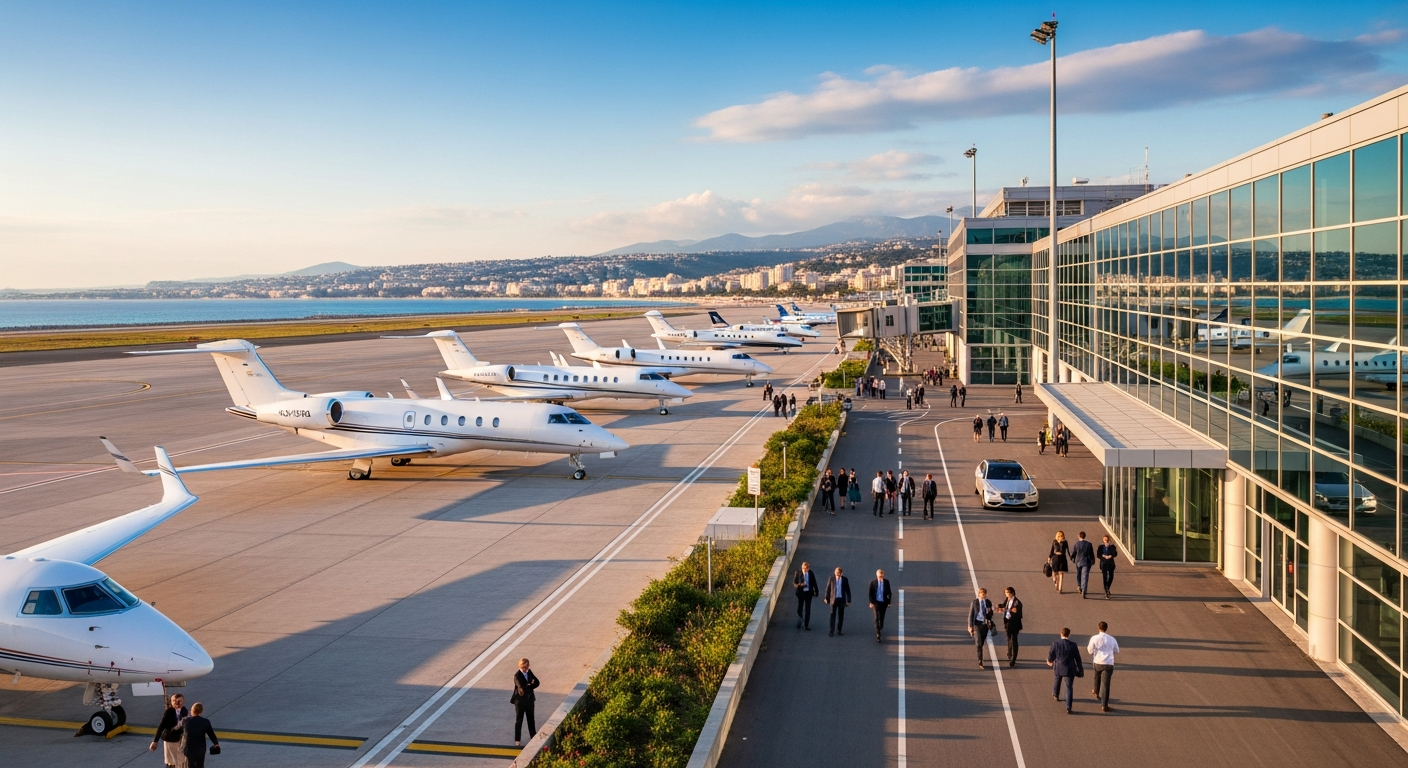
Peak Season on the Côte d'Azur: Slot Restrictions, Surcharges, and How to Plan Ahead
Two events each May compress the French Riviera's aviation capacity to its operational limit. The Cannes Film Festival generates hundreds of private jet movements into LFMD over its twelve-day run. The Monaco Grand Prix, typically the final weekend of the same month, saturates Nice, Cannes, and the Monaco heliport simultaneously. Together, they represent the most concentrated period of business aviation pressure in Europe.
LFMN is a Level 3 coordinated airport: all movements require pre-allocated slots from Cocotra, the French aviation coordination authority. Under normal conditions, slots are available with two to four weeks of advance notice. During the Film Festival and Grand Prix, securing workable timings requires three to six months of forward planning, and even confirmed slots may fall two or three hours from the preferred window.
LFMD is not formally coordinated in the same way but faces severe practical constraints during peak events. At Film Festival peak, it ranks among the busiest general aviation airports in Europe by daily movement count, with ramp space at saturation and handling turnaround times stretched considerably. Operators who work through handlers with established relationships at the airport navigate this far better than those making last-minute enquiries.
Costs rise sharply in season. Handling charges at LFMD during the Film Festival can reach two to three times their off-season rate. Overnight parking adds pressure as aircraft compete for limited apron space through July and August. For a week on the Riviera with a large-cabin jet, total ground costs including handling, parking, and surcharges can exceed £15,000, and occasionally significantly more during Grand Prix week.
The minimum planning horizon for private jet French Riviera travel during the major events is eight weeks for slot requests, with twelve weeks the safe target for Grand Prix and Film Festival. For the general summer season, four to six weeks is usually sufficient, though both months remain congested throughout.
Shoulder months offer a strong alternative for those with schedule flexibility. April, early May before the festivals begin, and September through October deliver most of the Riviera's appeal at a fraction of the infrastructure pressure. Slots are available at short notice, ground charges return to standard rates, and the airport experience is considerably calmer.
One underused return strategy: Toulon-Hyères (LFTH), approximately 80 kilometres west of Nice, operates without slot restrictions and remains largely uncongested year-round. For return sectors to London Farnborough (EGLF) or Geneva (LSGG), the modest additional transfer time from Toulon is often far outweighed by reduced delays and lower overall ground charges.
FBOs and Ground Handling: What to Expect at Each Airport
At Nice, Signature Flight Support operates the primary business aviation FBO and manages the majority of private jet traffic through LFMN. The facility provides dedicated passenger lounges, airside vehicle access, fuel services, and full customs and immigration processing for non-Schengen arrivals. It is professional and well-resourced, though the experience at a large international airport reflects the scale of the operation: efficient rather than intimate.
For clients who require greater discretion or a quieter environment, the Jetex facility at Nice offers a credible alternative. FBO selection at LFMN is worth discussing with your charter broker before booking: the difference between a handler who positions your vehicle directly airside and one who directs passengers to a landside collection point is significant in practice, particularly during busy periods.
Cannes Mandelieu's principal handler, Cannes Aviation, has built a strong reputation on speed and the compact nature of the operation that LFMD's scale permits. Vehicles are positioned at the aircraft door as standard, ramp access is direct, and the time between touchdown and clearing the airport perimeter is genuinely short. For clients whose priority is minimising transition time between flight and destination, LFMD consistently outperforms Nice.
Non-Schengen arrivals at LFMD are processed on site, though individual passport and documentation requirements should always be confirmed with the handling agent before departure. In some cases, LFMN remains the more straightforward entry point depending on nationality.
The Monaco heliport at Fontvieille is compact and efficiently managed. It handles customs and immigration on site for non-Schengen arrivals, and the distance from the helipad to a waiting vehicle is a matter of metres. For arrivals from within the Schengen area, the process is entirely frictionless.
For any private jet French Riviera arrival, arranging ground transport through the handling agent rather than booking independently is consistently the more reliable approach. The best handlers maintain working relationships with trusted transfer operators, can coordinate vehicle positioning with the crew in real time, and eliminate the most common source of unnecessary post-landing delay.
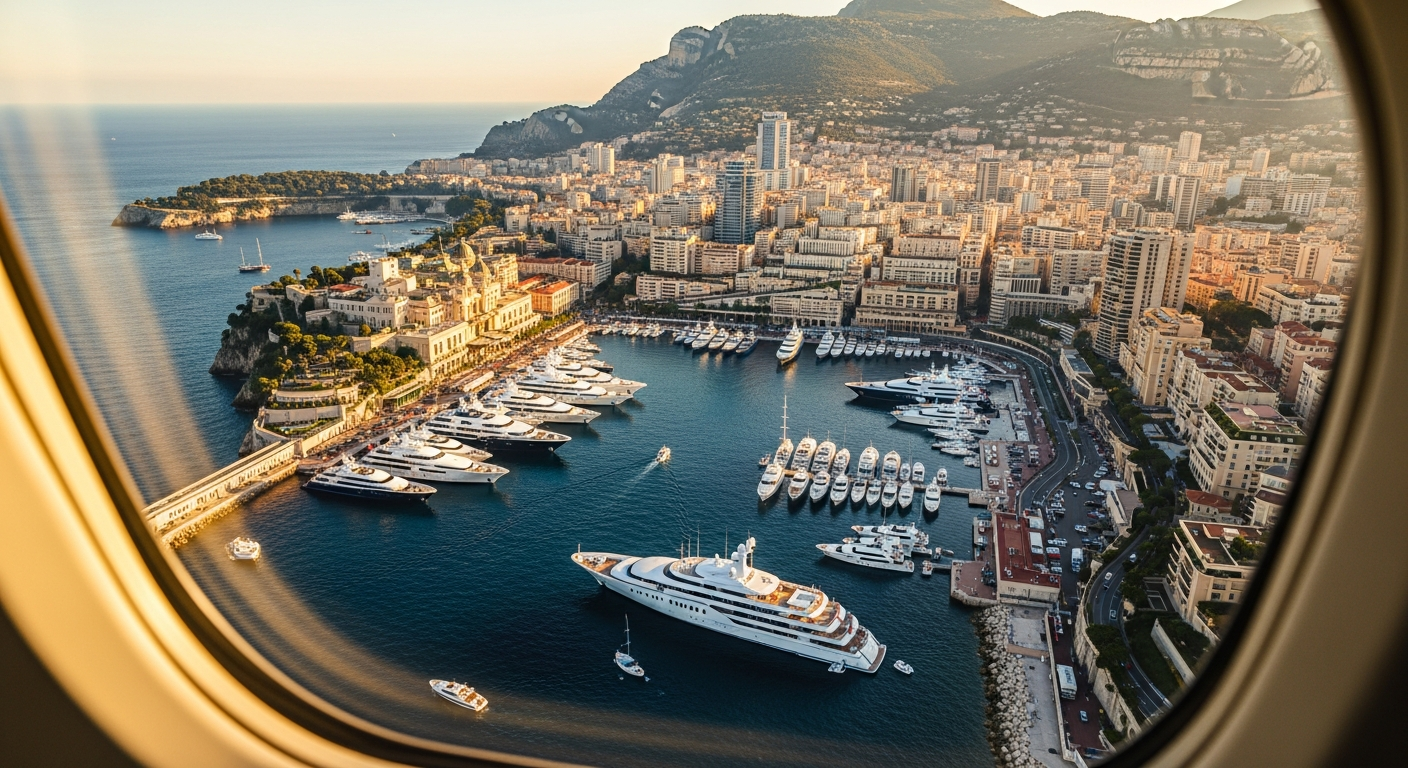
Beyond the Airports: Helicopter Transfers, Superyacht Connections, and Onward Travel
The helicopter has become essential infrastructure for the Riviera, not a premium addition. Nice to Monaco takes approximately seven minutes by Airbus H130 or EC135, against 45 minutes by road in light traffic and over an hour in season. Cannes to Monaco runs around twelve minutes by air. Héli Air Monaco and Monacair both operate year-round on-demand and scheduled services, with peak-summer timetables running multiple aircraft continuously through the day.
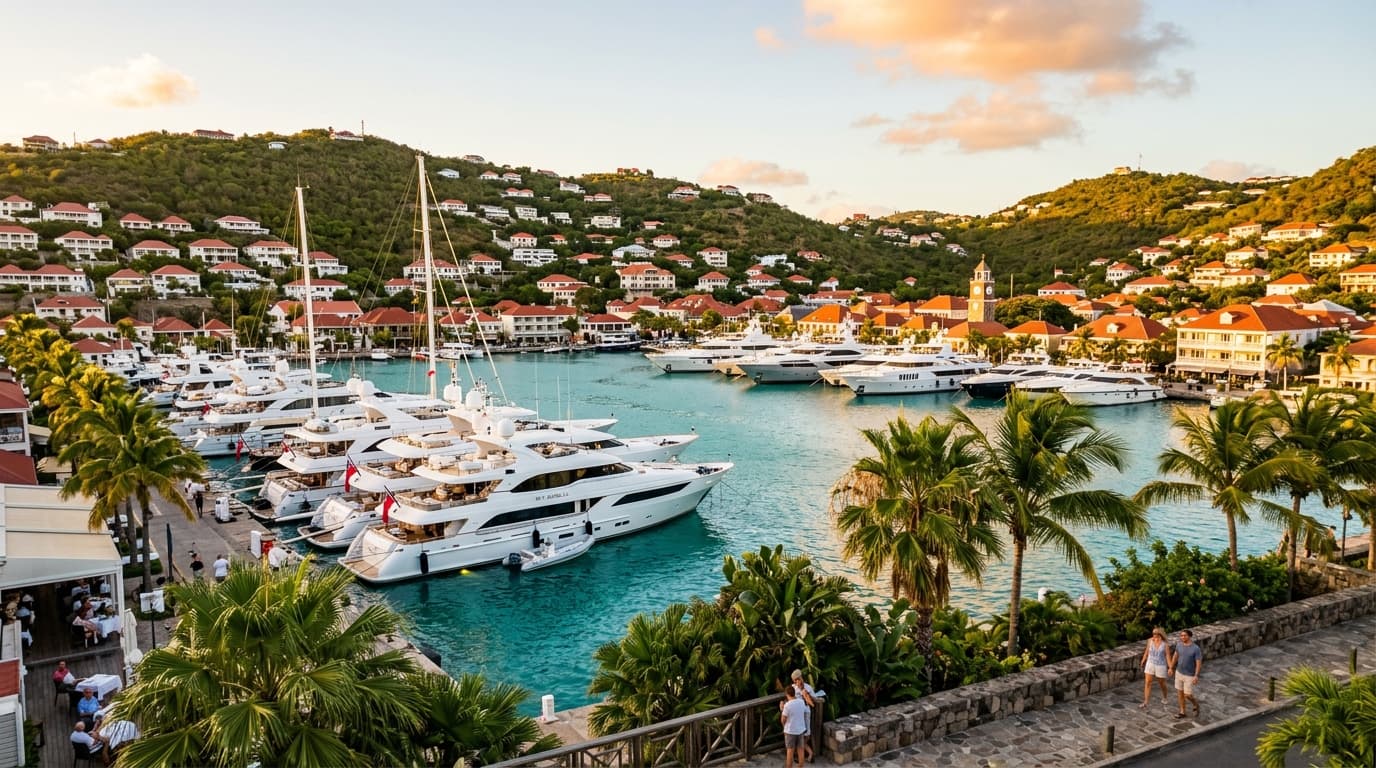
Superyacht connections account for a significant share of Riviera aviation logistics. Many arrivals into Nice or Cannes are bound not for hotels but for vessels moored in Port Hercule, the Vieux Port de Cannes, or along the coast towards Antibes and Saint-Tropez. Helicopter transfers can deliver passengers directly to superyachts at anchor where a certified landing platform exists; for those without, tender collection from the nearest marina is standard.
Saint-Tropez presents a recurring logistics challenge. La Môle Saint-Tropez (LFTZ), roughly twelve kilometres from the town, accepts light jets and smaller mid-size aircraft, including the Embraer Phenom 300E, on its 1,230-metre strip, but operating constraints limit its practical utility for larger groups. The standard approach is to fly into Nice and take a helicopter or private boat onward; the helicopter from LFMN takes approximately 25 minutes and drops passengers at the town's heliport near the old port.
Sector times from key European origins are well established. London Farnborough (EGLF) to Nice runs around two hours in a mid-size jet. Geneva (LSGG) to Nice takes approximately 45 minutes; Zurich (LSZH) adds roughly 15 minutes more. From Lisbon (LPPT), the final sector into LFMN adds approximately two hours on a longer positioning routing.
The underlying logic of a well-executed private jet French Riviera trip is one of connected stages: the transatlantic or intra-European sector, the slot, the FBO, the helicopter, the final transfer. Each element depends on the one before it, and the sequencing must be considered in full before the first booking is confirmed.
Travellers who plan the arrival as a single coordinated sequence arrive with the experience the Riviera is supposed to deliver. Those who treat each leg as a separate transaction too often find themselves stranded at an airport rather than at their destination, watching the afternoon light fade over the water.