 Farnborough
 Nice
Nice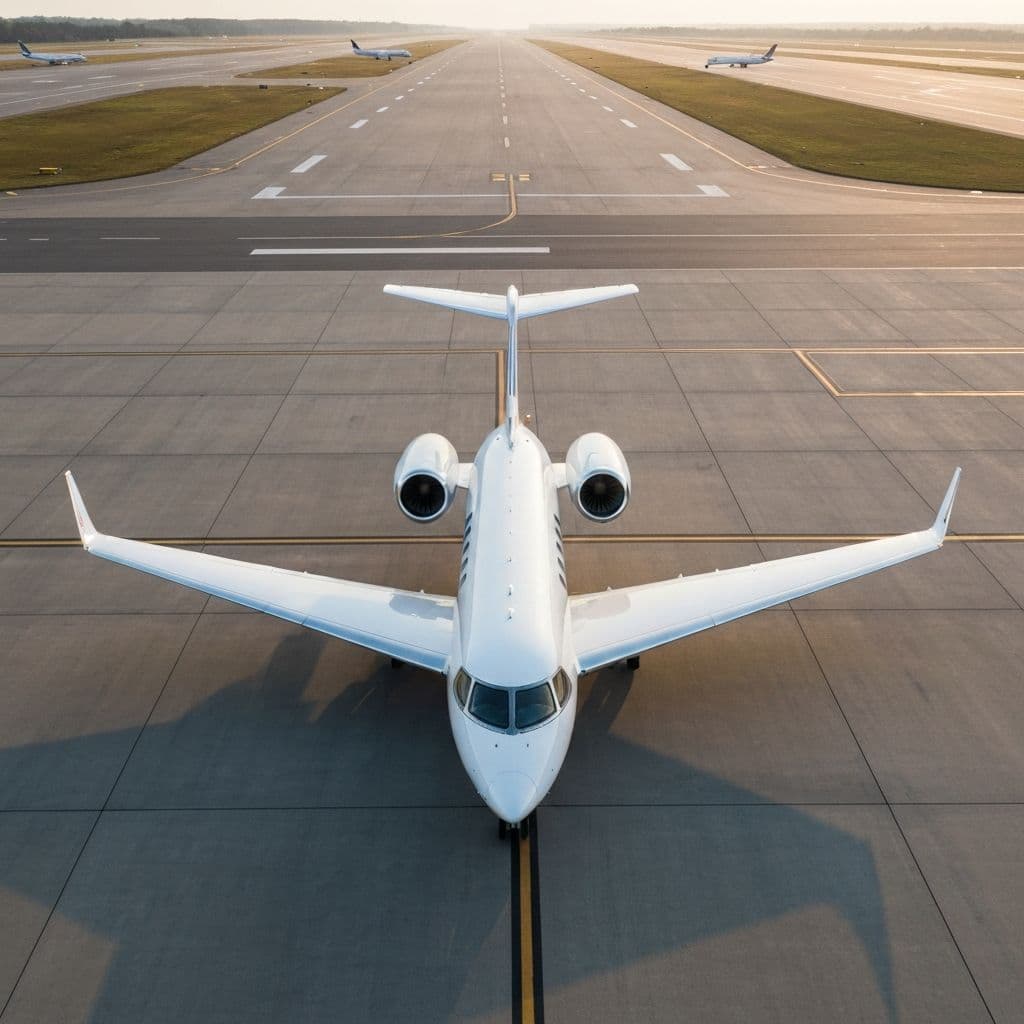
Why the Venice Film Festival Is Unlike Any Other Event on the Private Jet Calendar
Slot availability at LIPZ Marco Polo drops to near-zero within four days of the festival's opening ceremony; operators who leave booking beyond March risk being diverted to Treviso and adding ninety minutes to their water transfer across the lagoon.
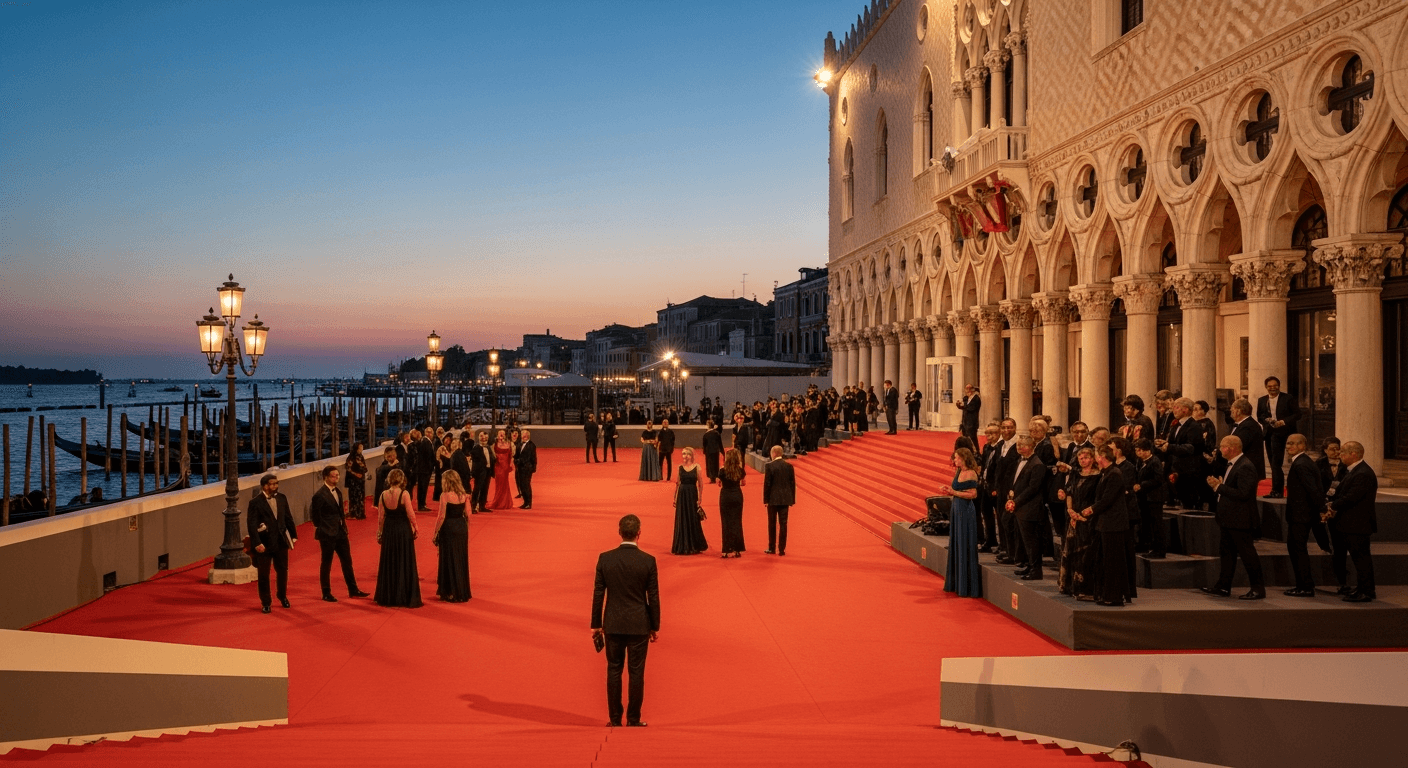
The Mostra Internazionale d'Arte Cinematografica, held on Venice's Lido island each year from late August into early September, has run since 1932, making it the oldest competitive film festival in the world. That heritage shows in the infrastructure: the Lido has one main artery, a single vaporetto route, and a finite number of private jetties. Everything about arriving here rewards advance planning, and almost nothing about it forgives the last-minute decision.
What separates a Venice Film Festival private jet arrival from any other major cultural event on the private aviation calendar is the compulsory water leg. There is no road from the airport to the Lido. Every guest, regardless of how they flew in, must cross the lagoon by boat. Flying private compresses the airport-to-jetty sequence dramatically, removing the variables that accumulate when a terminal is shared.
The festival's official dates for 2026 run from 26 August to 5 September. Prize announcements and the Golden Lion ceremony fall on that final Saturday, which is also the hardest single night for onward departures.
Flying into Venice: Marco Polo, Treviso, and Verona: Which Airport Is Right for You
LIPZ Venice Marco Polo is the primary gateway and the correct choice for the Lido. The private aviation facility sits adjacent to the main terminal and, critically, has direct jetty access: a dedicated water taxi can be staged on the apron side within minutes of landing, putting guests on the water before any crowds clear customs. The transfer to the Lido runs approximately 30 minutes by private taxi boat in standard conditions.
The constraint is slot capacity. Marco Polo operates as a mixed commercial and general aviation airport, and during the festival fortnight, slots for arriving jets fill quickly. Aircraft with a Maximum Take-Off Weight above 5,700 kg require a prior permission required (PPR) slot from the airport authority; late applicants are routinely declined or offered windows that fall outside the practical festival day. Securing a slot through an experienced handling agent rather than a generic broker makes a significant difference at this airport specifically.
LIPH Treviso Antonio Canova is the alternative when Marco Polo is full. It sits approximately 35 kilometres to the north-west and has no direct water access. Ground transport to a boat pier in Mestre or Punta Sabbioni adds between 40 and 60 minutes, then a water taxi from either point to the Lido adds another 25 to 40 minutes. Total door-to-Lido time from Treviso can reach two hours in festival traffic: a meaningful difference if a screening starts at a fixed hour.
LIPX Verona Villafranca (VRN) is a third option considered occasionally for ultra-long-range arrivals originating from outside Europe, where the aircraft is simply positioned overnight. It is 115 kilometres west of Venice, and ground transfer times to a Venice boat terminal exceed 90 minutes without stops, making it impractical for same-day Lido arrivals.
The clear hierarchy: LIPZ first, LIPH as a fallback, LIPX only for overnight positioning of large-cabin aircraft that cannot land at either on fuel weight.
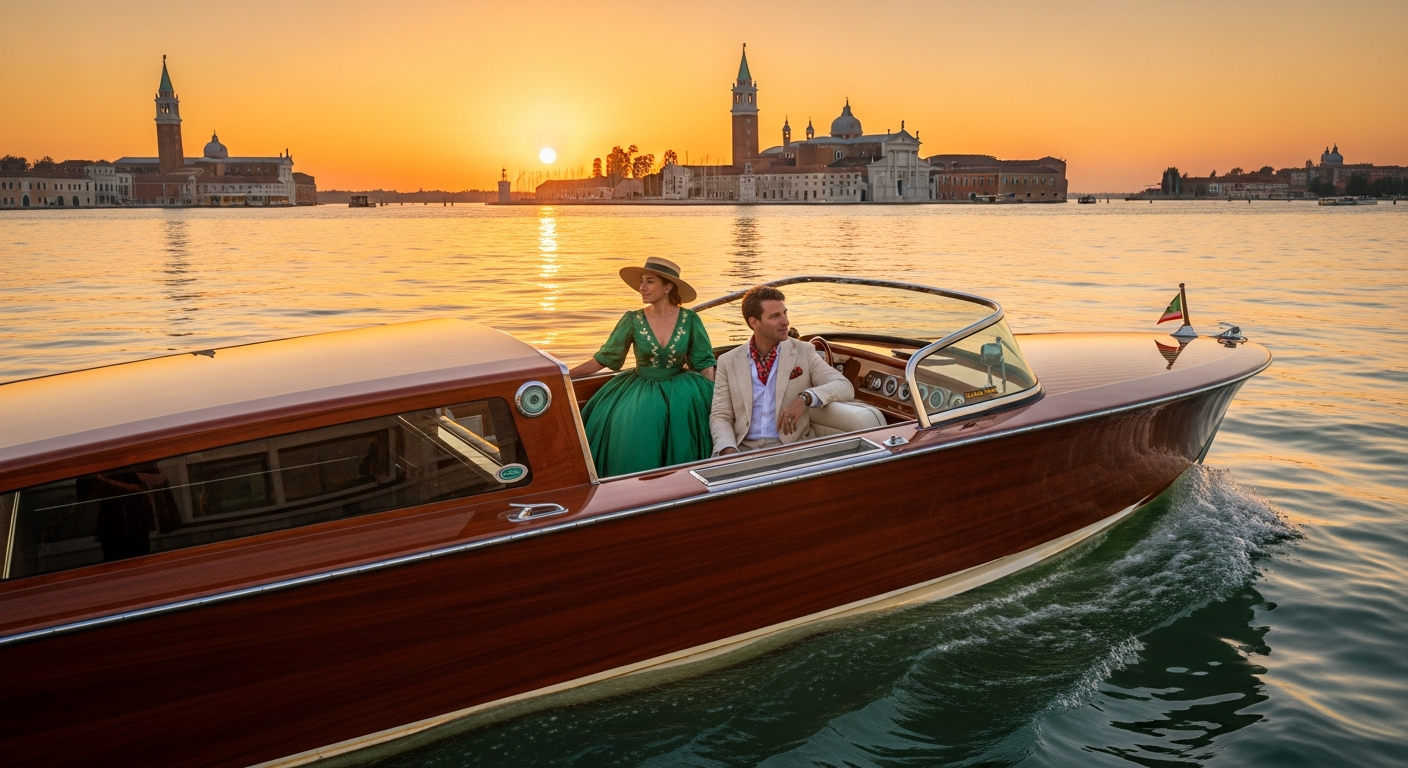
From the Apron to the Lido: The Water Transfer and What to Expect
Handlers at Marco Polo's general aviation facility can arrange private water taxi transfers directly from the airside jetty, meaning guests clear customs, step through the FBO, and board their boat without entering the public terminal. In festival conditions, that sequence typically takes between 15 and 25 minutes from block-on to water.
The crossing from Marco Polo to the Lido covers roughly 10 kilometres across the northern lagoon. A private taxi boat at cruise speed completes it in 25 to 35 minutes, depending on lagoon traffic and whether the route passes through the Porto di Lido channel, which can be busy during the afternoon film-going hours. Guests booking villa or hotel transfers should confirm the precise jetty: the Lido has several landing points, and the Hotel des Bains, the Excelsior, and the Palazzo del Cinema area each have their own dedicated access. The evening boat back from a late screening is worth planning with the same care as the inbound transfer; confirm the return jetty with your hotel before you arrive.
There is a seasonal caveat. Acqua alta, Venice's periodic high-water flooding, is less common in August and September than in winter, but it is not impossible in a late-season year. Private handlers who specialise in Venice operations can monitor lagoon conditions and substitute a larger, covered tender if forecasts suggest any disruption. Booking a Venice-specific handler rather than a general-purpose ground crew resolves most contingency questions well before the aircraft lands.
A charter of a Cessna Citation Longitude on a Venice Film Festival private jet routing from London Luton (EGGW) to Marco Polo covers approximately 1,200 kilometres and flies in around 2 hours 10 minutes, with seating for up to 12 passengers. That timing means a 10:00 departure from London puts guests poolside on the Lido by early afternoon.
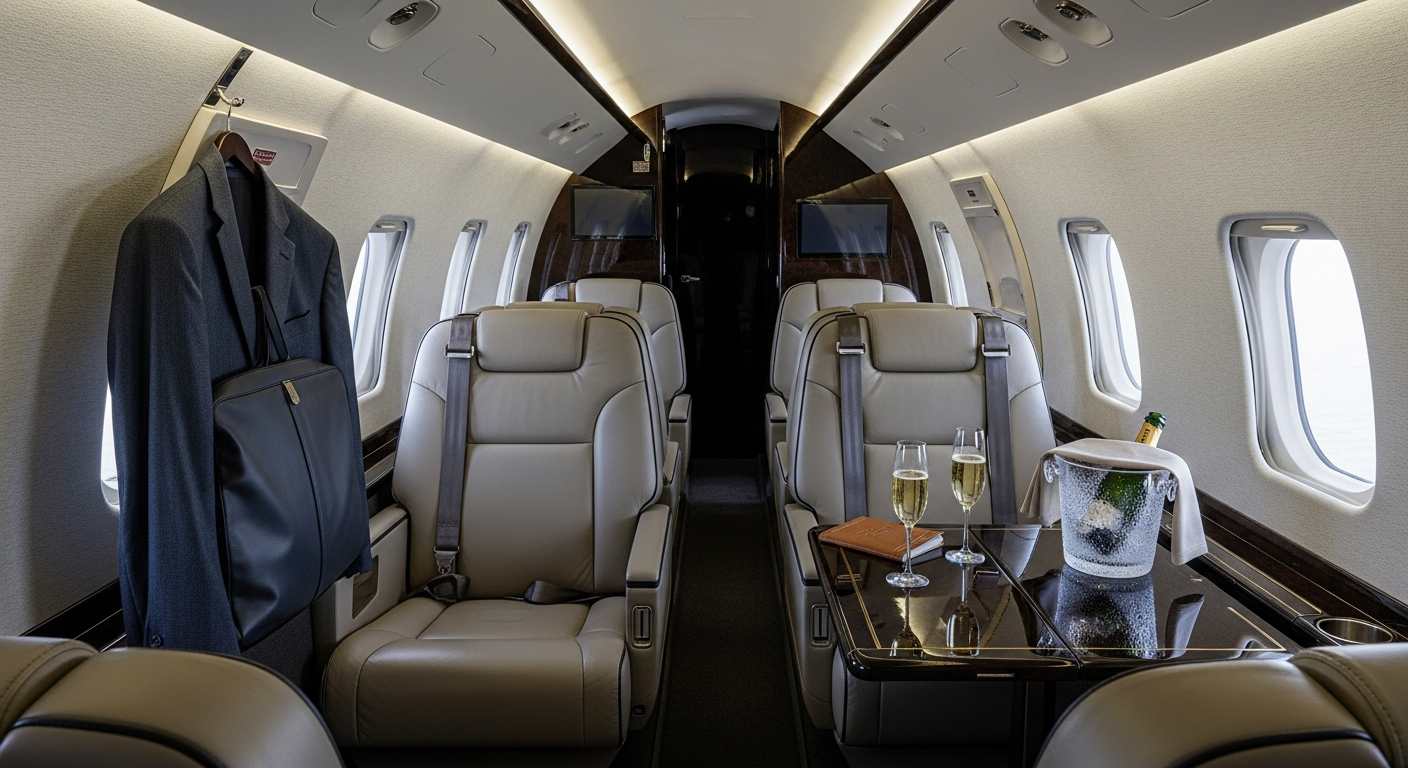
Choosing the Right Aircraft for Your Festival Trip
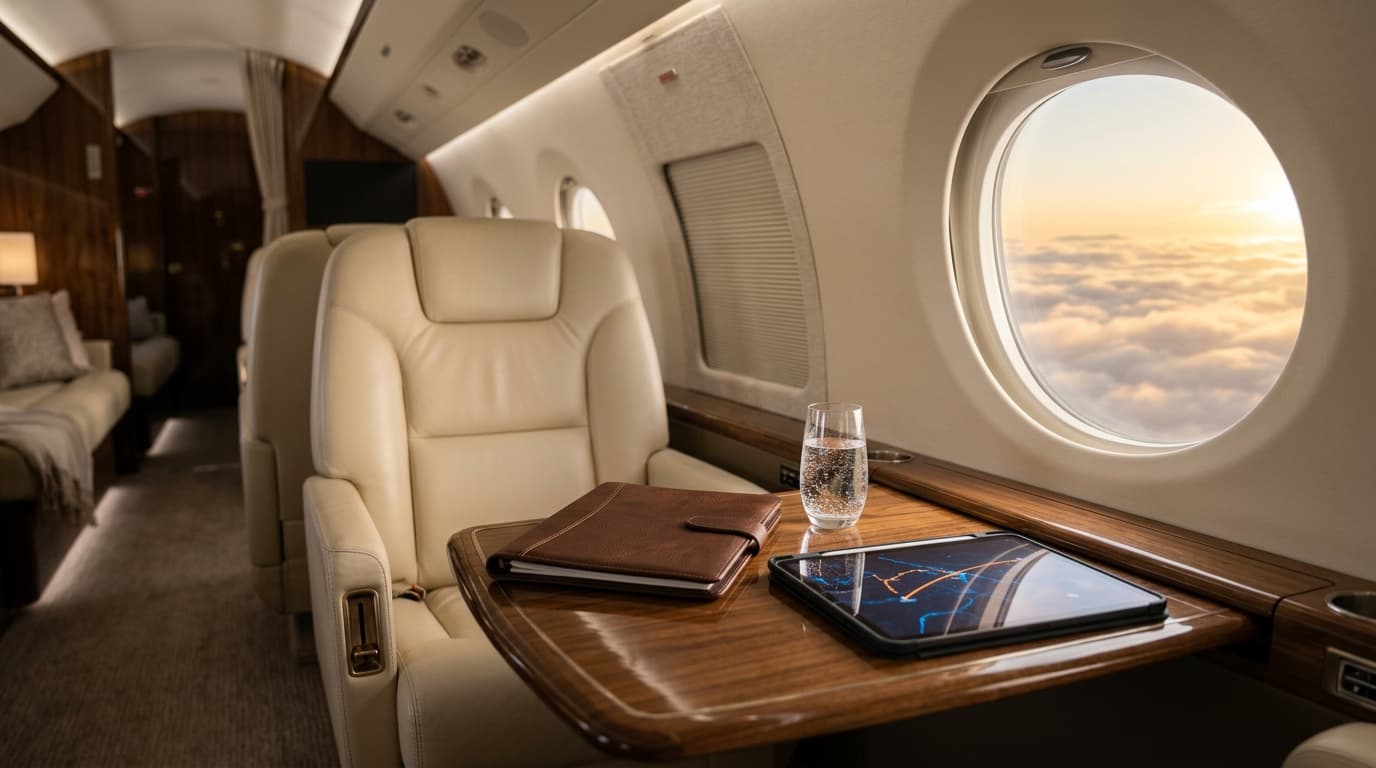
For European city-pairs to LIPZ, the midsize and super-midsize categories cover virtually every practical origin. A Cessna Citation Longitude, with a cabin height of 6 ft 0 in and a cabin width of 6 ft 3 in, handles London, Paris, Geneva, Zurich (LSZH), and Madrid without range pressure and carries up to 12 passengers comfortably. For a sector of 1,000 to 1,500 kilometres, it is the most practical choice available.
Groups flying from further afield inside Europe, particularly from Lisbon (LPPT) or the Nordic capitals, benefit from the Bombardier Challenger 350's range buffer and its cabin height of 6 ft 1 in, which accommodates eight passengers in a standard layout across 3,200 nautical miles. If LIPZ slots force a same-day diversion to LIPH Treviso, the Challenger 350 absorbs that adjustment without any range concern.
Guests combining the festival with Middle Eastern or transatlantic travel may position a Gulfstream G650ER or a Dassault Falcon 8X into Venice. Neither aircraft lands at LIPZ routinely on full fuel loads from intercontinental distances; the standard approach is to fly the long leg into Milan Malpensa (LIMC) or Rome Fiumicino (LIRF) the previous evening, night-stop, and then reposition on a short one-hour hop the following morning. One-way charter costs for a Gulfstream G650ER on the London–Venice sector run to approximately £28,000 to £38,000 at current market rates.
For smaller parties focused on the Lido's social dimension, an Embraer Phenom 300E carries six passengers with a cabin width of 5 ft 0 in: fifteen inches narrower than the Citation Longitude's 6 ft 3 in, but adequate for a sector of under two and a half hours. A London–Venice sector on the Phenom 300E typically runs to £12,000 to £16,000 one way, making it the most cost-efficient entry point for this routing.
The Bombardier Global 7500 and Dassault Falcon 10X are both appropriate for ultra-long-range arrivals positioning into Venice as part of a wider European tour, though their size introduces specific apron requirements at LIPZ; confirm dimensions with your operator before committing to Marco Polo as the arrival point.
Timing Your Arrival: When to Fly, How Long to Stay, and the Slots You Need to Book First
Slot requests at LIPZ for the festival's core week (26 August through 5 September 2026) should be submitted no later than four months prior, with preferred arrival windows specified clearly. Morning arrivals between 08:00 and 11:00 local clear before peak lagoon traffic and align naturally with afternoon screenings. Evening arrivals during competition screenings are the hardest to plan against, as precise programme end times vary with each film and cannot always be confirmed in advance. The opening night on 26 August presents a particular case: arrivals before 16:00 local allow time for hotel check-in, red carpet access, and the post-screening dinner circuit without pressure.
The minimum meaningful stay for the festival is four nights. Two nights is sufficient to catch a competition screening and the beach circuit at the Excelsior, but the social substance of the Lido concentrates in days three and four, when the mood shifts from press previews to the industry's actual working gatherings. A Venice Film Festival private jet charter scheduled for five nights allows genuine flexibility around the Golden Lion ceremony on the final Saturday and the quieter, more intimate Sunday that follows.
Departure slots deserve the same advance attention as arrivals. Post-ceremony Saturday evenings at LIPZ are the festival's most congested departure window: multiple aircraft leaving simultaneously, water taxis queuing at the jetty, and a crowd in full celebration all converge at once. Booking an early Sunday morning departure or a late Saturday window past 22:00 local time is considerably more reliable than the 18:00 to 21:00 bracket.
For those approaching this as a Venice Film Festival private jet trip forming part of a longer European summer programme, the logical extension is a pre-festival night in the Dolomites or a post-festival positioning to Monaco, with LFMN as the onward point. Both sectors fall comfortably within any midsize or larger aircraft's capability without range planning.
Attending the world's oldest film festival as it deserves to be attended requires logistics that are precise, unhurried, and entirely invisible to the people around you. The calculus is straightforward: book the slot at LIPZ early, stage the water taxi from the apron, and you arrive at the Lido looking entirely as though transport was never a consideration at all.