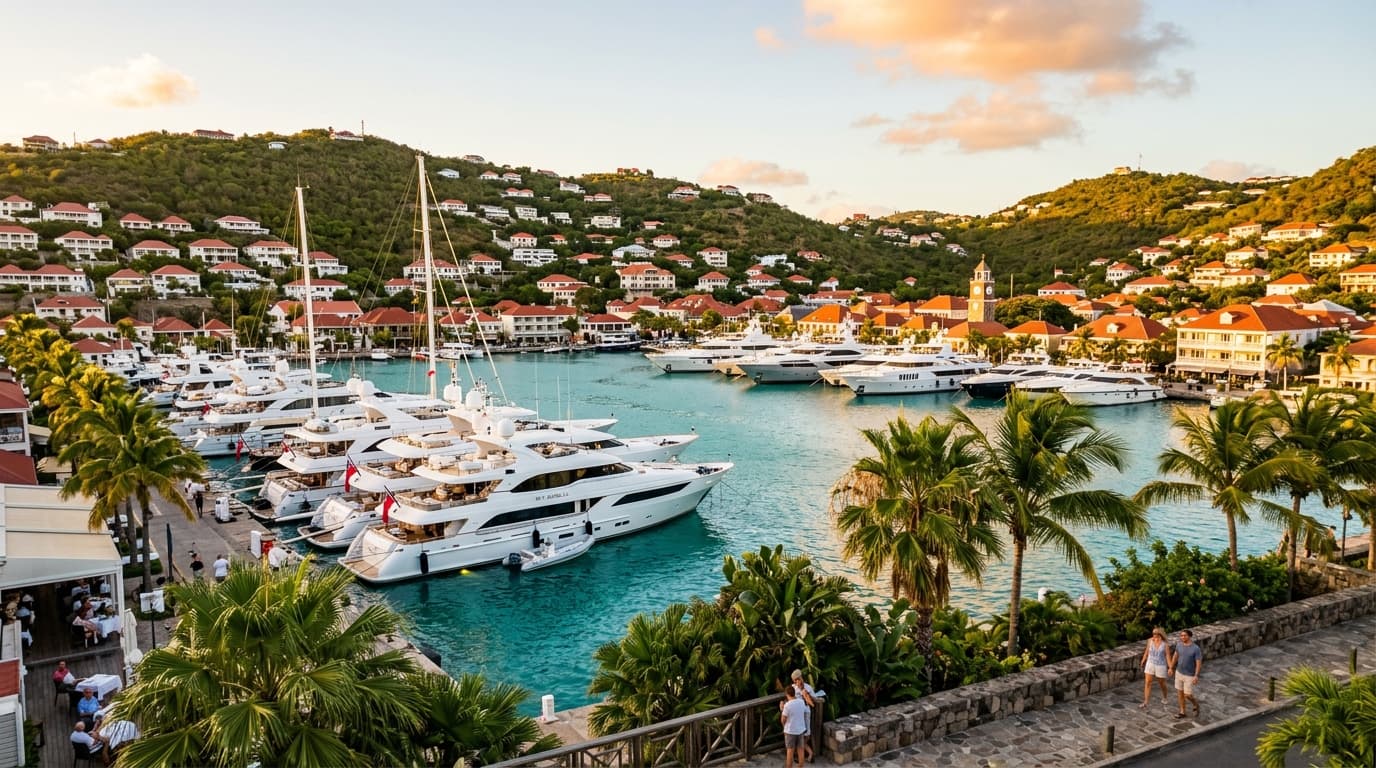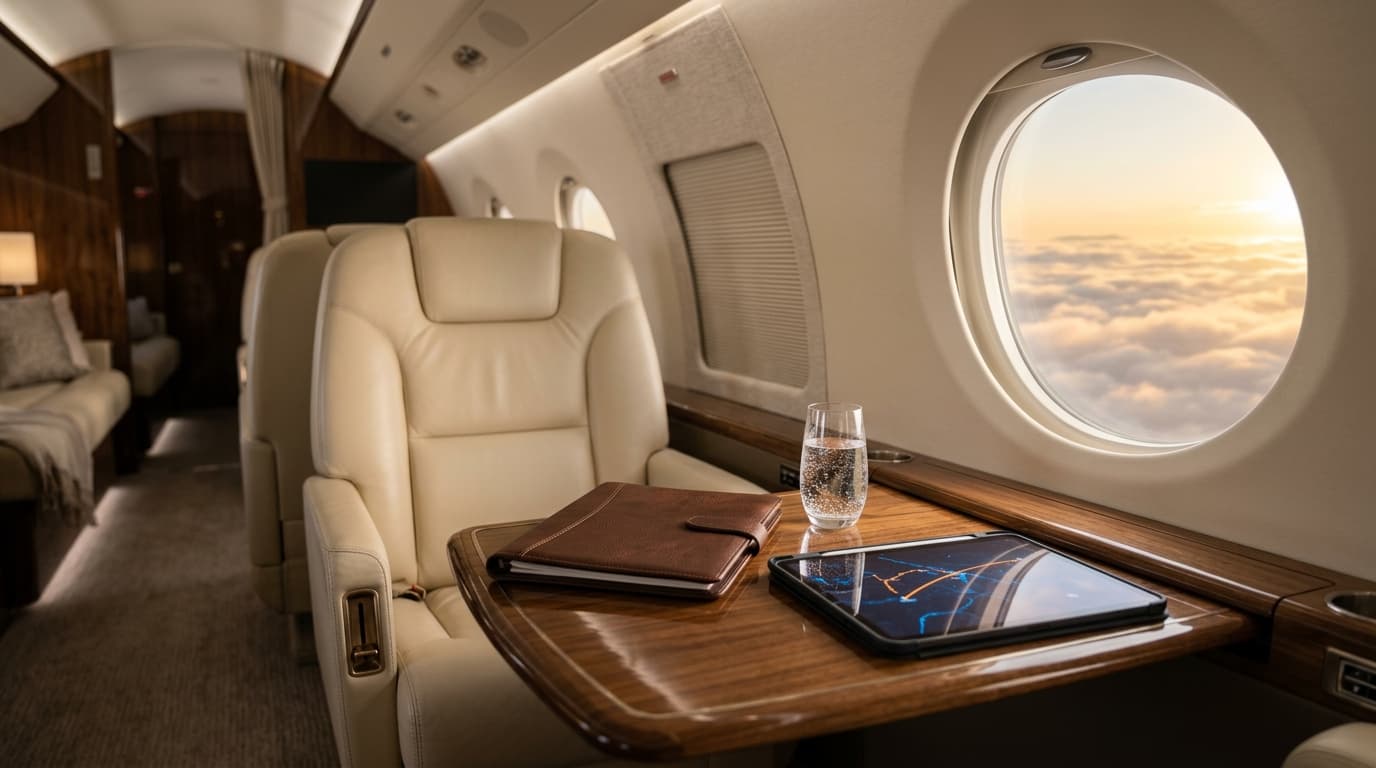
 Farnborough
 Nice
Nice
Why London–Paris Is Europe's Most Flown Private Route
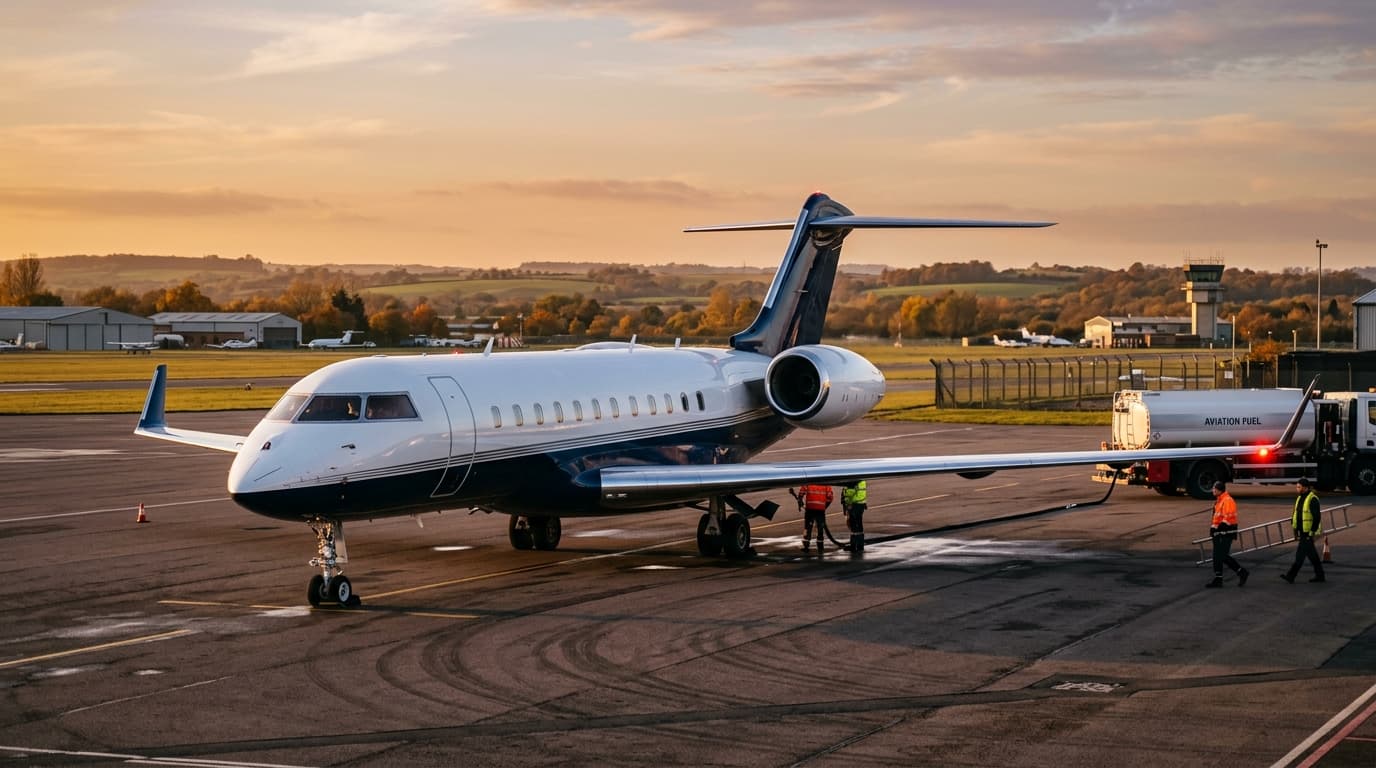
Biggin Hill (EGKB) alone logs more business aviation departures to Paris on a Friday afternoon than any other UK airport sends to any single European city, and the sector itself is over in fifty-five minutes, gate to gate.
That density is not an accident of geography. London and Paris are the two largest financial and political centres in Western Europe, separated by a flight time shorter than most people's daily commute, which makes the route the default choice for chairmen, dealmakers and family offices moving between the two cities several times a month.
Matching the right London and Paris private jet airports to your itinerary is what actually determines whether the sector takes fifty-five minutes gate to gate or closer to two hours door to door once transfers are added. Get the pairing wrong and you can lose more time on the ground in Paris than you spent in the air.
Compare the movement volumes with other short European sectors: London-Amsterdam and London-Brussels both see meaningful business aviation traffic, but neither approaches the frequency of London-Paris slots at Biggin Hill, Farnborough and Le Bourget combined. Charter brokers who work this corridor daily describe it less as a single route and more as a shuttle service with several departure windows an hour during peak business periods.
The short block time also changes the economics. A one-way charter on a light jet across this route currently runs to £7,500-£9,500 depending on the aircraft, positioning costs and how close to departure the booking is confirmed, a figure that holds fairly steady because the sector length rarely varies by more than a few minutes regardless of which airport pairing is chosen.
Choosing Your London Airport: Biggin Hill, Farnborough, Luton, and London City Compared
Farnborough (EGLF) closes to arrivals earlier in the evening than Biggin Hill, a curfew difference that has ended more than one dinner reservation for flyers who assumed both airports operated on the same schedule.
Biggin Hill sits roughly twenty minutes from central London by car outside peak traffic, has no night curfew restriction as strict as Farnborough's, and has become the default choice for the Friday-evening and Sunday-evening rush that defines this route. Its runway, at 3,860 feet, comfortably handles the Embraer Phenom 300E and Cessna Citation CJ3+ that dominate this sector, though it limits some larger midsize types on a full fuel load.
Farnborough offers a longer runway at 7,349 feet and a dedicated business aviation terminal with no scheduled airline traffic to compete with for slots, which makes it the preferred option for operators flying a Bombardier Global 7500 or Dassault Falcon 8X on this route, even though the aircraft is comfortably oversized for a fifty-five-minute sector.
Luton (EGGW) mixes business aviation with scheduled carriers, which means slower ground handling at peak times but a wider spread of available slots outside the Friday and Sunday crush. London City (EGLC) is the closest airport to the City and Canary Wharf, roughly fifteen minutes by car, but its steep approach and shorter runway restrict it to a narrower band of aircraft, mostly smaller jets and turboprops certified for the airport's specific approach category.
The choice among London and Paris private jet airports usually comes down to which end of the journey has the tighter time constraint. A banker with a 9am meeting in La Défense books differently to a family heading to a Saturday lunch in the 7th arrondissement.
Choosing Your Paris Airport: Le Bourget vs. Pontoise and Toussus-le-Noble
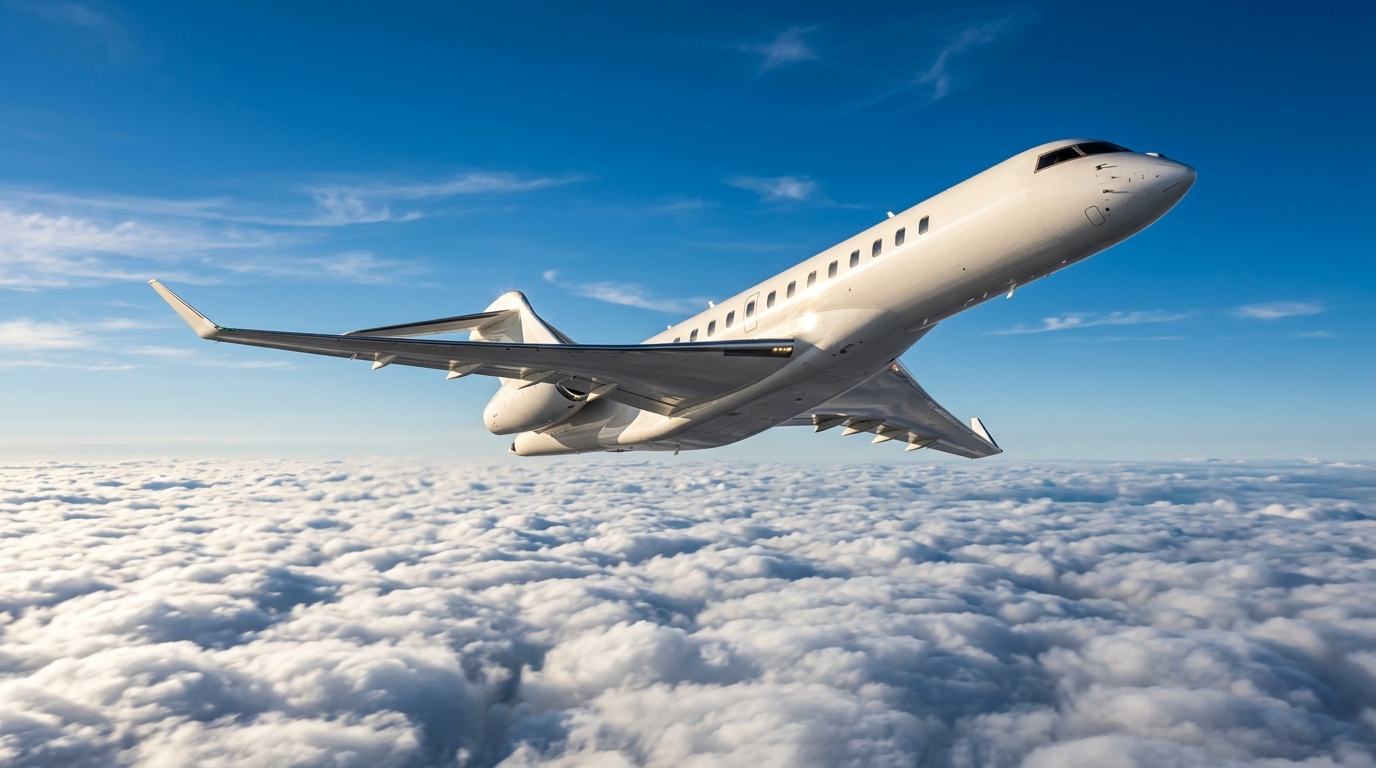
Le Bourget (LFPB) handles the overwhelming majority of business aviation traffic into Paris, which means its customs and immigration processing is built for volume, but it also means slot congestion during Fashion Week and the Grand Prix calendar that catches out flyers booking less than a fortnight ahead.
Le Bourget sits around thirty minutes from central Paris in ordinary traffic, rising to fifty minutes or more during the evening rush on the Périphérique. Its FBOs are used to handling everything from a Pilatus PC-12 to a Gulfstream G650ER, and its customs post is staffed for the same hours the airport itself operates.
Pontoise-Cormeilles-en-Vexin (LFPT) sits roughly forty-five minutes northwest of central Paris and offers noticeably lower landing fees and faster turnaround than Le Bourget, at the cost of a longer transfer for anyone headed into the city centre itself.
Toussus-le-Noble (LFPN) is the closest of the three to the western suburbs and to Versailles, useful for flyers whose actual destination sits outside the Périphérique, but its 1,113-metre runway rules out anything larger than a light jet or turboprop.
For a same-day return where every minute of transfer time counts, that runway length narrows the realistic aircraft shortlist at Toussus-le-Noble to types under roughly 15,000 lb maximum takeoff weight, which covers the Phenom 300E and the Citation CJ3+ but excludes most midsize and super-midsize jets flying this sector.
Aircraft Choice for a 55-Minute Sector: When a Turboprop Beats a Light Jet
A Pilatus PC-12 NGX cruises the London-Paris sector at roughly 285 knots against a light jet's 450 knots, yet the door-to-door time difference on this specific route is often under ten minutes once taxi and approach sequencing are accounted for.
That arithmetic changes the calculation for anyone choosing between aircraft categories on a sector this short. The Pilatus PC-12 NGX seats up to nine in a 4 ft 11 in cabin height, carries a lower hourly charter rate than a light jet, and can use grass or shorter paved strips that some light jets cannot, which matters for flyers using smaller French airfields near Chantilly or Deauville as a Paris-adjacent alternative.
The Embraer Phenom 300E, by contrast, offers a 5 ft 1 in cabin height and 17,304 lb maximum takeoff weight, with a genuine speed advantage on longer legs that simply does not materialise across a route this short. Its real advantage on London-Paris is baggage capacity and a marginally quieter cabin, at 65 dB, rather than block time saved.
The Cessna Citation CJ3+ sits between the two, with a 4,721 lb payload and access to shorter runways than the Phenom 300E, making it a common choice for operators serving Biggin Hill and Toussus-le-Noble together. A Beechcraft King Air 350i splits the difference again: turboprop economics with a cabin close to light-jet comfort, at 4 ft 9 in height, for groups who value the lower hourly rate over outright speed.
The decision threshold is straightforward: below a 200 nautical mile stage length, which covers this route at roughly 190 nm direct, a turboprop beats a light jet on cost per seat whenever the group is four or fewer and neither London airport nor Paris airport chosen requires the longer runway that only a jet can use comfortably.
Timing It Right: Fashion Week, Business Season, and the Weekend Getaway Crowd
Slots at Le Bourget during Paris Fashion Week, held in late February and again in late September through early October, are typically fully booked six to eight weeks before the show opens.
Outside those two fortnights, the tightest demand on London and Paris private jet airports runs through the September-to-December business season, when boardroom travel between the two cities peaks alongside the January-to-June run that follows the new year. Friday afternoon departures from Biggin Hill and Farnborough, and Sunday evening returns into the same two airports, form the busiest single block of the week year-round, driven by the weekend-getaway crowd rather than business flyers.
Booking a slot inside that Friday or Sunday window with under seventy-two hours' notice during peak season often means being offered Luton or Pontoise instead of the preferred pairing, simply because Biggin Hill and Le Bourget slots have already gone. Flyers who can shift departure by ninety minutes either side of the peak window generally keep their first-choice airports and avoid that substitution altogether.
Racing and equestrian calendar events add a further layer: Longchamp's Arc weekend in early October and the Chantilly racing dates through the summer both push demand at Le Bourget and Toussus-le-Noble higher than the ordinary weekend baseline, worth flagging to a broker at the point of enquiry rather than assuming standard availability applies.
Booking Considerations: Slots, Customs, and the Same-Day Return
Post-Brexit border checks mean every passenger on a London-Paris private charter clears both UK exit and French Schengen entry formalities in person, a process that typically adds fifteen to twenty minutes at each end rather than the near-instant clearance some flyers still expect from pre-2020 trips.
Slot allocation at Le Bourget requires prior permission for most aircraft categories, generally submitted twenty-four hours ahead through the operator, though same-day requests are sometimes accommodated outside the Fashion Week and Grand Prix periods when the airport is operating below capacity.
Structuring a genuine same-day return on this route means treating the ground transfer, not the flight, as the constraint that decides the schedule. A meeting in La Défense reached via Le Bourget can add fifty minutes each way in daytime traffic, while the same meeting reached via Pontoise can add over an hour once the longer motorway approach is included.
The tightest workable same-day pattern pairs Biggin Hill with Le Bourget, keeping both ground transfers under thirty minutes outside peak traffic and leaving a comfortable margin either side of a midday meeting. Anyone building a same-day itinerary around a meeting starting after 4pm should build in the wider Périphérique delay as the default assumption, not the exception, since the return slot at Le Bourget will often fall inside the evening rush regardless of how the outbound leg was timed.