 Farnborough
 Nice
Nice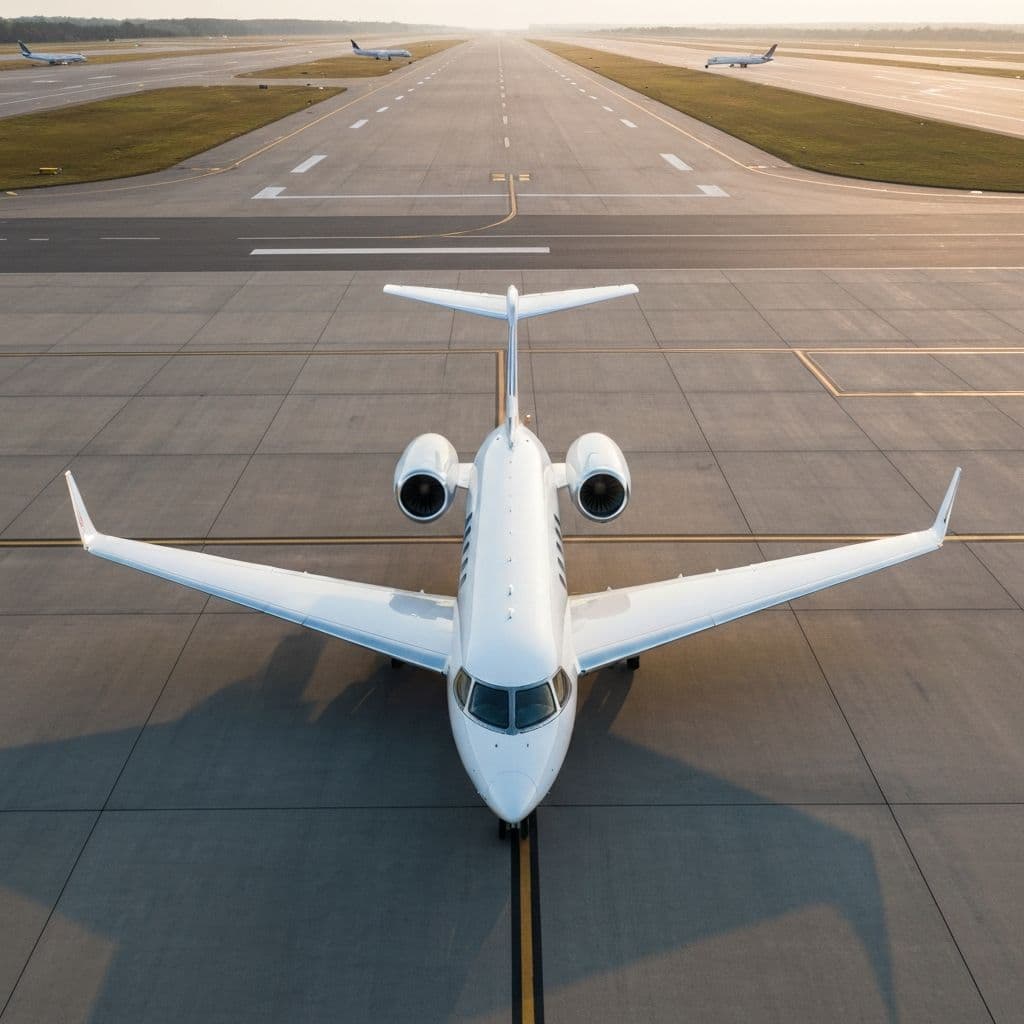

How a Private Jet Instant Quote Is Actually Calculated
A figure of £9,800 for Farnborough to Nice can become £13,400 on the invoice without anyone acting in bad faith. The gap starts with how the number on screen is built.
Most engines take your departure and arrival airports, here EGLF and LFMN, and calculate a great-circle distance of roughly 560 nautical miles. They convert that to flight time using a standard block speed for the aircraft category, then multiply by an hourly rate. For a light jet such as the Embraer Phenom 300E, which seats up to eight in a cabin 5 ft 1 in wide and 4 ft 11 in high, that rate typically sits between £3,800 and £4,600 per flight hour. A sector of around 1 hour 50 minutes therefore produces a flying charge of £7,500 to £8,800 before anything else is added.
What happens next depends on the tool. Some engines query live operator availability and empty-leg listings, so the price reflects an aircraft that exists on your date. Others run on a rate table refreshed monthly from historic charges, which gives a statistical average rather than a price anyone has agreed to fly for.
Many engines then add a flat uplift, commonly 8 to 12 per cent, to stand in for extras. That is a guess at the average, not a calculation of your trip.
The person typing private jet instant quote into a search bar usually wants a floor and a ceiling, and the better tools show a range for exactly that reason. A single bold figure with no range is a warning sign: it suggests the tool is optimised to look cheap at the moment of comparison.
What an Instant Estimate Leaves Out: Positioning, Landing Fees, Handling and VAT
Five line items cause most of the movement between screen and invoice, and none of them is optional. Here is how they stack up on a winter Farnborough to Nice sector flown by a Phenom 300E.
| Line item | Typical amount |
|---|---|
| Flying time (1.9 hours at £4,300) | £8,200 |
| Positioning of the aircraft | £2,400 |
| Landing, handling and parking | £1,600 |
| Catering | £350 |
| De-icing (winter only) | £850 |
| Total | £13,400 |
In summer the de-icing line disappears and the same trip lands at about £12,550.
Positioning. The aircraft rarely starts where you do. If the nearest suitable Phenom 300E is based at Paris Le Bourget (LFPB), the operator must fly it to Farnborough empty, and some or all of that leg is charged to you. At £4,300 an hour, a 55-minute positioning flight adds around £4,000 if charged in full. Where the aircraft sits at Luton (EGGW), 15 minutes of positioning adds about £1,000. Instant engines usually ignore this because they cannot see the operator's fleet map.
Landing and handling. Airports charge by aircraft weight, and handlers charge by turn. A midsize jet at Nice can attract £900 to £1,500 in landing, parking and handling in peak season, while Farnborough handling typically adds £400 to £900. Both are quoted by the airport or handler at the time of flight, not by the engine.
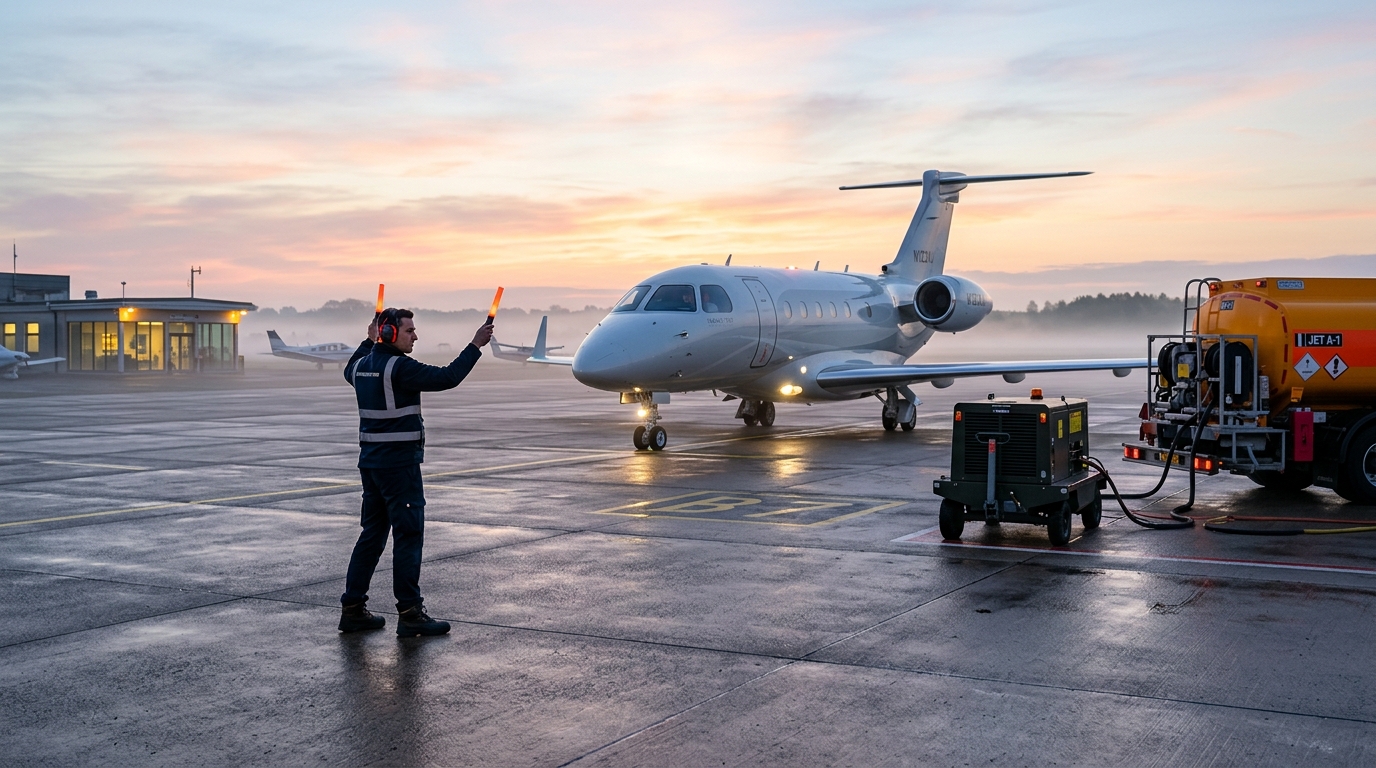
De-icing. From November to March, a treatment before departure from a UK or Alpine airport costs roughly £600 to £1,200 for a light jet and more for larger types. It is charged only if the weather requires it, which is why it never appears in an estimate and often appears on the invoice.
Catering. Fresh catering for six passengers is usually £150 to £350 per person at the premium end, and most engines assume none.
VAT. Treatment depends on the route and the aircraft. International passenger legs from the UK are generally zero-rated, but a domestic UK leg on a small jet is standard-rated at 20 per cent, so a £6,000 domestic estimate becomes £7,200. Other countries apply their own rules to intra-EU legs. The engine rarely says which treatment it has assumed.

Why Two Quotes for the Same Route Can Differ by 30 Per Cent
Two quotes of £10,800 and £14,000 for an identical date and route are common, and the second is 30 per cent higher. Neither need be wrong, because they often price different things.
Different aircraft. One quote may be for a Phenom 300E and the other for a Bombardier Challenger 350, which has a 7 ft 2 in cabin width, seats nine and typically costs £5,500 to £6,500 an hour. The first operator is selling a six-seat light jet; the second a larger cabin with a standing-height aisle at 6 ft 0 in.
Different bases. The cheapest operator is often just the nearest. An aircraft already at EGLF needs no positioning, whereas one starting at Le Bourget carries a long unproductive leg in its price.
Empty legs and repositioning. An operator whose aircraft must return to the UK anyway may discount your leg by 30 to 50 per cent. Those seats exist only on specific days, so one quote can benefit from a favourable direction of travel and another cannot.
Cost base and standards. An operator holding a recognised safety rating, with experienced two-pilot crews and a full maintenance reserve, prices differently from one running a leaner operation. The extra cost is real, and it is where the cheapest quote often hides its compromises.
Demand. On the Friday before a Cannes or Monaco weekend, operators will not discount; on a Tuesday in February, they often will.
Margin and validity. A quote may carry a broker's fee, or none, and may hold for 24 hours or for 30 minutes. When two quotes differ, ask for both to be restated against the same aircraft type, the same inclusions and the same validity window before comparing them.
Indicative Price vs Firm Quote: Which Parts Are Confirmed by an Operator
An indicative price is a calculation; a firm quote is an offer an operator has agreed to fly. The difference is easier to see by listing what each contains.
A genuine firm quote names a specific aircraft by registration and the operator holding the air operator's certificate. It states the departure and arrival times the crew can actually legally fly, given duty-time limits, and it itemises flying time, positioning and fees in writing. It also carries a validity period and a set of cancellation terms.
Some elements stay variable even then, and an honest operator will say so. Landing and handling fees are usually passed through at cost, as is de-icing on the day. Fuel is generally priced at an agreed rate, but some contracts allow a surcharge if the price at the airport rises sharply before departure. The question to ask is which of those items are capped.
To move from an estimate to something you can rely on, send the details a quoting engine does not collect:
- the exact passenger count and the luggage, including skis, golf bags and bulky items;
- whether your dates have flexibility of a day either side;
- the catering you want, and any ground-transport requirements;
- whether you will accept a larger or smaller aircraft category.
The broker or operator can then check availability across several fleets and return named aircraft with firm prices. A broker who shows only one option, without explaining why, has not finished the job. At Villiers, the working method is to obtain at least two operator-confirmed offers for the same specification, so that any difference you see is a difference you can explain.
Five Questions to Ask Before You Accept Any Quote
These questions take five minutes and are the cheapest protection available before a deposit leaves your account.
Which aircraft, by registration, and which operator holds the certificate? If the answer is a category ("a light jet") instead of a tail number, you are looking at an estimate. Ask which operator will fly you and whether the aircraft may be substituted.
Where is the aircraft based, and is positioning in this figure? An answer of "Le Bourget, and yes, both ways" tells you the price is complete. An answer that avoids the question tells you an invoice line may be waiting.
Which fees are fixed and which are passed through at cost? Landing, handling, de-icing, catering and ATC charges should each be marked as included, capped or variable. Ask for a ceiling on the variable ones.
How is VAT treated on each leg? Request it in writing per leg, because the answer for an international leg can differ from a domestic one by 20 per cent of the total.
Where does the deposit go, and what happens if the flight changes? The money should be held by the operator or in a client account, not a general trading account. Ask what is refunded if the operator substitutes a smaller aircraft, cancels for a technical reason or changes your departure by more than an agreed number of hours.
An estimate tells you what a trip is likely to cost. A confirmed quote tells you what you will actually pay, and only a quote that names the aircraft, the fees and the refund terms is worth a deposit.