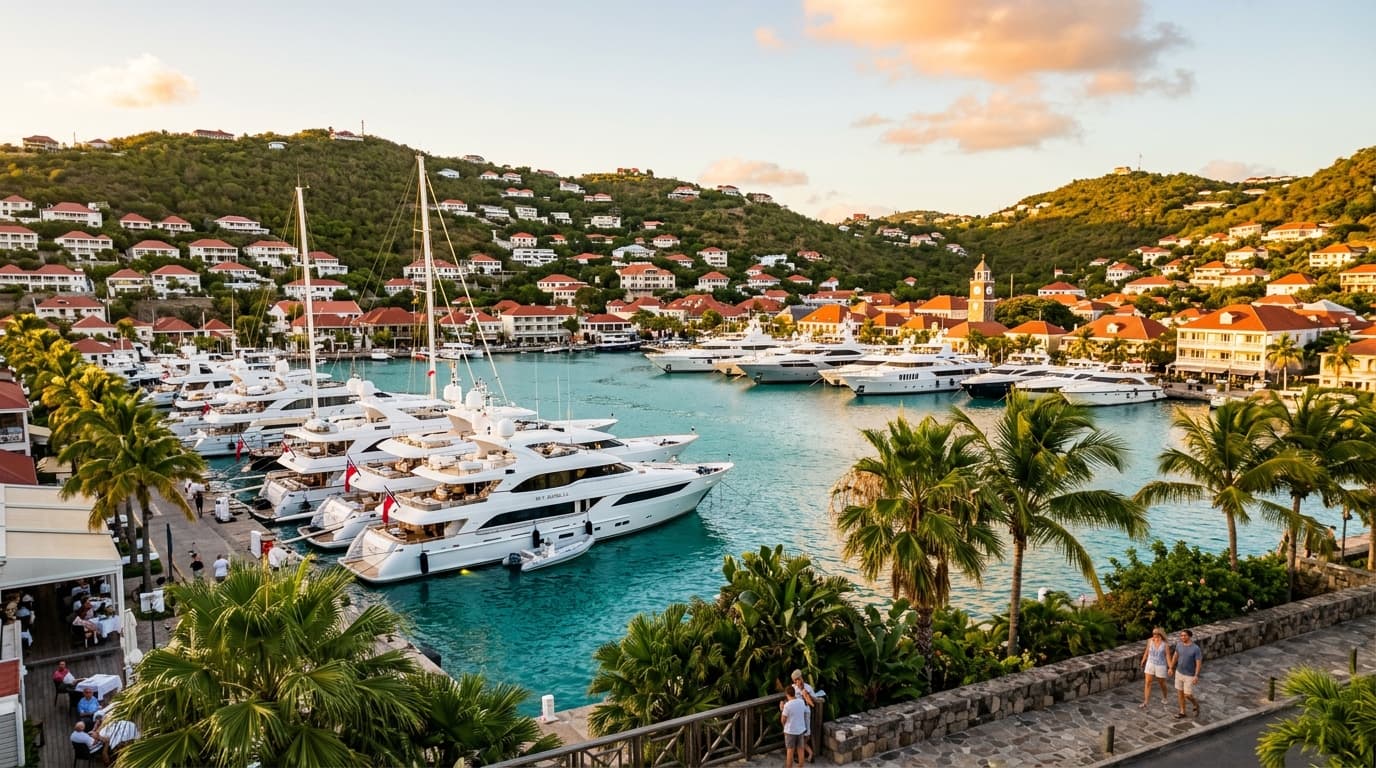
 Farnborough
 Nice
Nice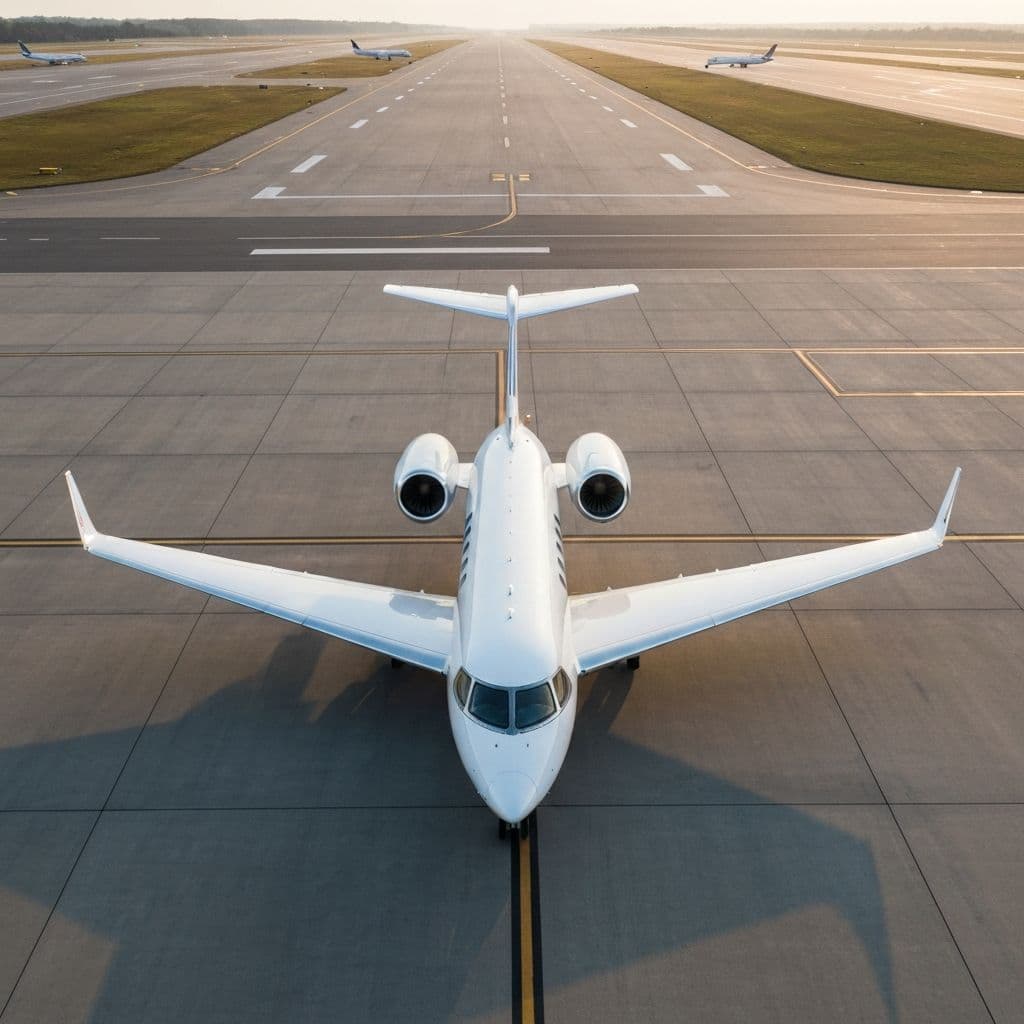
Anatomy of a Spreadsheet Charter Desk: The Tabs, the Inbox and the Eleven Phone Calls Behind One Three-Leg Trip
A three-leg trip from Farnborough to Nice to Geneva and back costs a charter desk eleven phone calls before the client sees a single price.
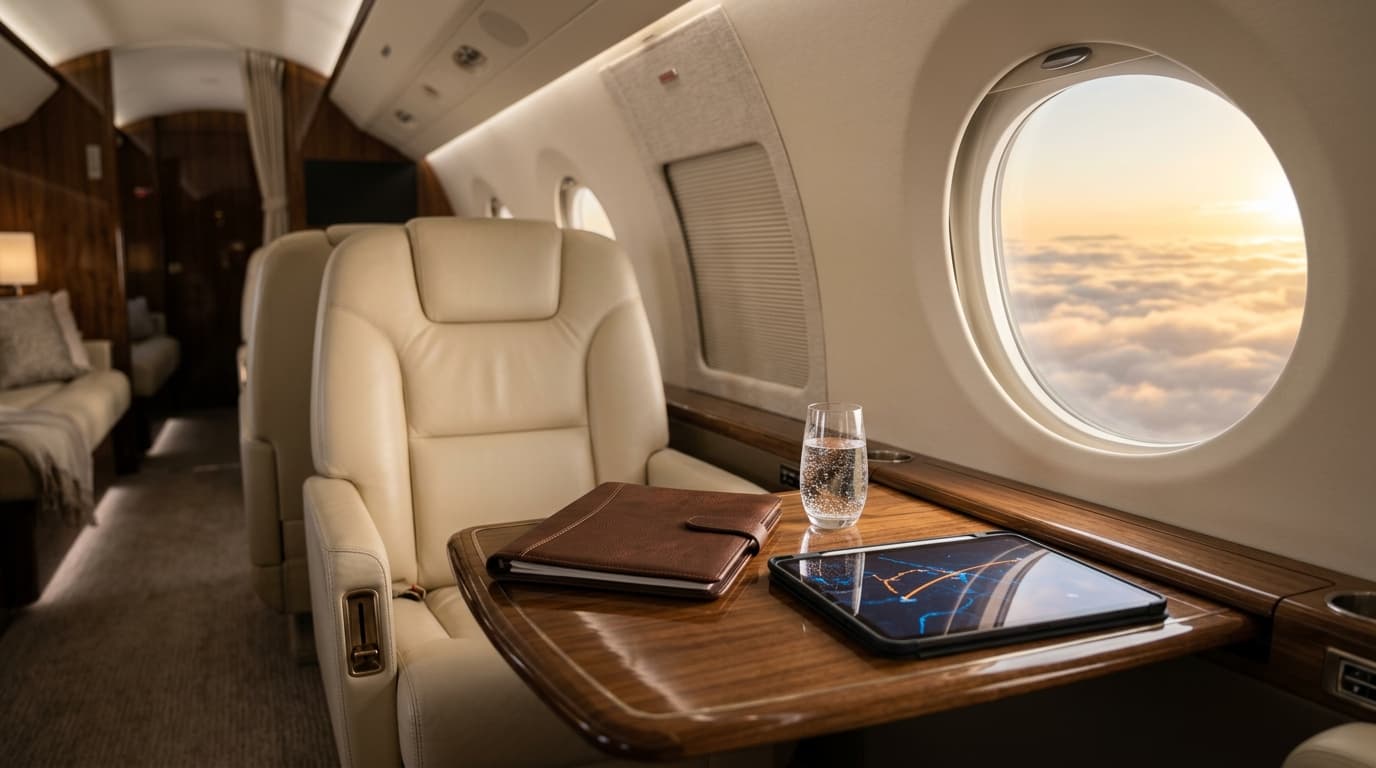
The trip itself is unremarkable: four passengers, EGLF to LFMN on a Monday morning, LFMN to LSGG after a client lunch, and LSGG back to EGLF on Tuesday. The flying adds up to about 3 hours 50 minutes across three sectors, roughly 1 hour 45 minutes, 45 minutes and 1 hour 20 minutes. That suits a midsize jet such as the Challenger 350, with a cabin 7 ft 2 in wide and 6 ft 0 in high.
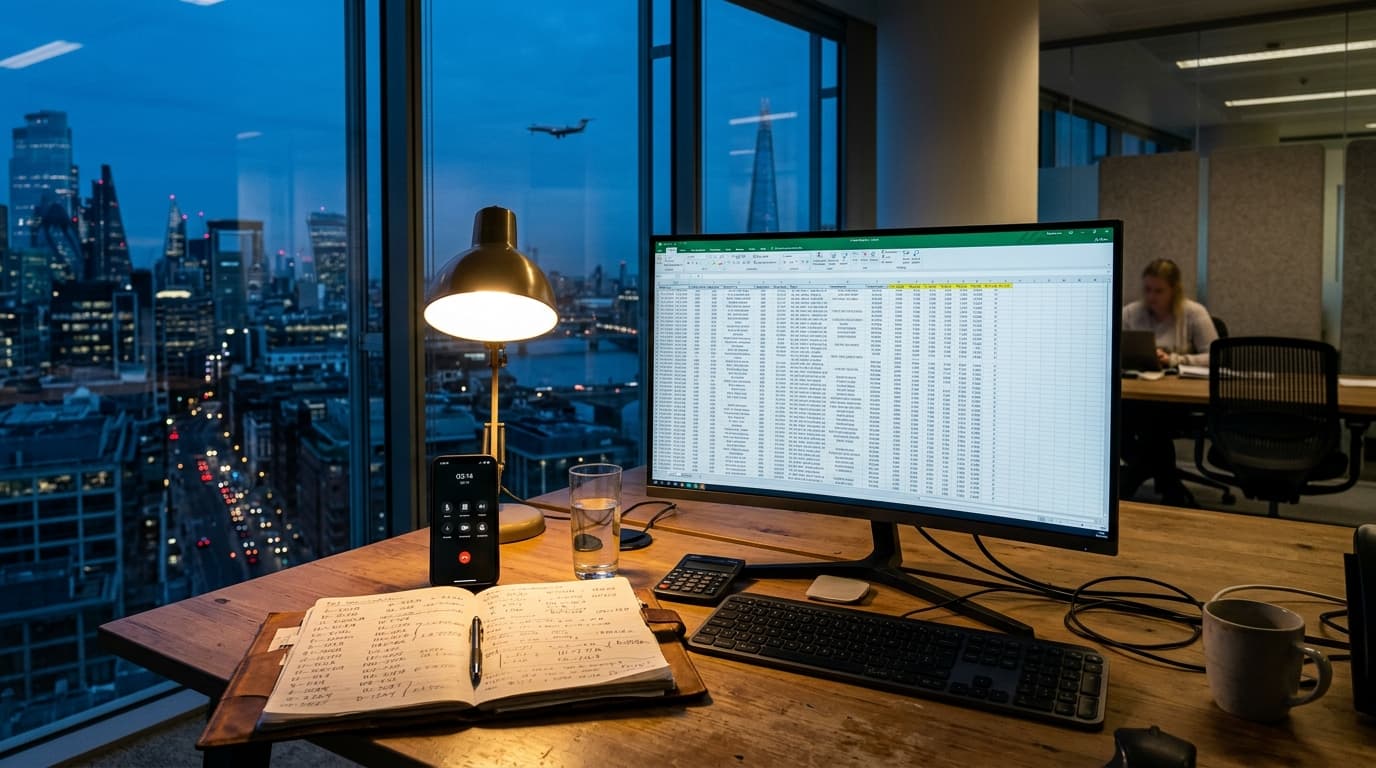
The desk that prices it runs on three things. A spreadsheet holds live quotes, with one tab per operator and one for the checklist; a shared inbox holds the replies; and a phone does the work neither can. Marketplaces such as Avinode list aircraft, but a listing is not a confirmation. This is how most charter operations spreadsheets work in practice: every tool stores data, and none of them acts on it.
Here is where the eleven calls go:
- Five calls to operators, to confirm an aircraft is free on the Monday and the Tuesday.
- Two calls to check where each shortlisted aircraft is parked tonight, because a Challenger 350 listed at Luton may be sitting in Nice.
- Two calls to price repositioning, or to ask whether a return empty leg can be shared.
- One call to handling at Nice, where peak-season parking tightens.
- One call to confirm the crew can legally fly the day.
Around those calls sit the touchpoints that are not calls. Someone copies the best operator's numbers into the house quote format, which takes about 25 minutes, writes the cover note, and then chases operators who have gone quiet. Those are the five handoffs: availability, repositioning cost, duty-time checks, quote reformatting and follow-up. In our working estimate for a representative desk, the cycle takes about 4 hours 20 minutes of staff time spread over two days.
The client's number, at peak summer rates, typically lands at £22,000 to £28,000 for the three sectors including landing fees, handling and fuel. They usually expect it by lunchtime.
Why Handoffs Between Systems Fail Silently: Stale Availability, Retyped Tail Numbers and the Quote That Outlived Its Aircraft
An operator quote marked valid for 48 hours is a promise about paper, not about the aircraft.
Suppose an operator emails a price at 09:10 on Thursday for a Challenger 350 on the following Monday. At 14:00 another broker books the same aircraft. Nothing tells the spreadsheet, so the row stays green, and the client approves it on Friday morning. The desk finds out on a Friday afternoon call, with a weekend ahead and no second aircraft held.
Retyping creates a second class of failure. The tail number moves from email to spreadsheet to client PDF to the handling request, and every retype is a chance for a transposed character. A wrong registration in a handling request at LFMN can mean a missing parking slot or a rejected arrival notification. A wrong registration in the checklist tab means the insurance and airworthiness documents were checked against a different aircraft.
These failures are silent because no system owns the link between them. The inbox does not know the spreadsheet exists, and the spreadsheet cannot tell that a reply arrived. Staff are the integration layer, which works until a desk is carrying more than a dozen live enquiries at once.
Three signals are usually missing: when availability last changed, who changed it, and which downstream documents depended on it. A spreadsheet-driven charter desk holds the data for all three but cannot connect them, so a person has to remember. Under load, people remember the loudest enquiry, not the oldest quote.
What an Agent Does Instead: Operator Sourcing, Positioning Cost and Flight-Time Pricing in One Pass
An agent treats the eleven calls as one query rather than eleven chores.
For sourcing, it sends structured availability requests to every operator with a suitable aircraft based within 250 nm of EGLF. That threshold is deliberate: beyond roughly an hour of positioning flight each way, the empty-leg cost outweighs most differences in hourly rate. It reads the replies as they arrive and records the tail number once, then carries that single identifier through every later document, so nothing is retyped.
Positioning cost is calculated per aircraft rather than guessed. A Challenger 350 based at EGGW, about 35 nm from Farnborough, adds under 15 minutes of positioning. One based at LFPB, roughly 200 nm away, adds about 50 minutes each way. At roughly £5,500 per flight hour, that is a difference of £4,500 to £9,000 depending on whether the operator bills one positioning leg or both.
Flight-time pricing then multiplies block time for each sector by the hourly rate and adds landing fees, handling, fuel uplift and the crew's overnight in Geneva. The output is one total per aircraft, comparable across operators. A Citation Latitude, with a cabin 6 ft 5 in wide, is nine inches narrower than the Challenger 350's 7 ft 2 in, and is often priced lower per hour. The agent shows both totals side by side and leaves the choice of cabin to the client.
Quote reformatting disappears as a task. The agent writes the house-format quote from the structured data, so the figures in the PDF are the figures the operator sent.
Chasing becomes a rule rather than a memory. Each quote carries the operator's own timestamp, availability is re-checked before the quote is presented, and silent operators are chased after two business hours. The stale-quote problem turns into an expiry the system can see. Against the 4 hours 20 minutes of manual work above, we model the same trip at about 35 minutes of human review.

Compliance and Duty Checks Without the Checklist Tab: Operator Vetting, Crew Limits and Document Expiry as Standing Rules
The cheapest moment to find a crew-limit problem is before the quote exists, not after the client has approved it.
A standing rule runs on every quote automatically, where a checklist tab relies on someone remembering to tick it. For operator vetting, the rules cover a valid air operator certificate (AOC) for the aircraft type, a current insurance certificate at the required liability limit, and, where the client's policy asks for it, an audit rating from a recognised auditor such as Wyvern or ARGUS.
Crew limits work the same way. Under EASA flight time limitation rules, the maximum basic flight duty period for an acclimatised two-pilot crew reporting in the morning window is 13 hours on one or two sectors. Monday's two sectors fit comfortably: a 07:00 report and a landing in Geneva mid-afternoon is about 9 hours of duty, four hours inside the limit.
The useful output is the edge case. If the client's lunch overruns, the rule converts the 13-hour limit into a latest departure from Nice of roughly 20:00 local, and shows it on the quote before anyone has promised a late evening. The operator's flight operations team still makes the legal call, and many apply tighter company limits; the agent's job is to raise the problem while there is time to change aircraft or crew.
Document expiry is the quietest of the three. The rules watch the AOC, insurance, the aircraft's airworthiness review certificate and each passenger's passport, since both France and Switzerland sit inside the Schengen area and entry requirements apply on every sector. They run daily against every live quote, so a certificate that lapses between quote and departure is flagged long before the aircraft is at the stand.
A checklist tab proves a check happened once. A standing rule proves the condition still holds today, which is the only thing that matters on the morning of departure.
Where Humans Stay in the Loop: Sign-Off Gates, Exceptions and the Honest Limits of Automation
The agent never signs anything on the client's behalf, and it does not hold the client relationship.
Four gates stay human by design. The first is client sign-off on the aircraft and price. The second is any quote where the margin falls outside an agreed band. The third is exceptions: an aircraft grounded for maintenance, a weather diversion, or a slot refused at LFMN. The fourth is contract and payment instructions, where a mistake is expensive and slow to reverse.
Of the five handoffs, availability, repositioning cost, duty-time checks, quote reformatting and follow-up chasing can all run end to end. Approval is the sixth step and is deliberately not a handoff, because someone accountable must say yes.
The limits are real. An agent cannot judge whether a client of ten years needs a call rather than an email. Some operators still answer only by phone, and a peak-season parking request at Nice sometimes needs a person with a relationship at the handling agent. Where an operator has no digital channel, the call remains a call.
The model is not confined to aviation. villiersOS is built for private jet charter today, but the same architecture could run yacht charter, where a broker also juggles live availability, repositioning costs and crew rules, and the approach applies equally to any desk that prices scarce assets across several suppliers.
For a charter desk, the practical test is simple: count the phone calls behind your last multi-leg trip. If the answer is near eleven, the tab-and-inbox way of running a desk is spending hours on work a standing rule could do in minutes.