 Farnborough
 Nice
Nice
Why Art Basel Miami Beach Draws the World's Collectors: And Their Aircraft
Opa-locka Executive Airport (KOPF) processes more business aviation movements in the first week of December than any other reliever airport in Florida, and parking requests for Art Basel Miami Beach week routinely exceed available ramp space by late October. That single fact tells you most of what you need to know about flying in for the fair: demand outstrips supply well before the doors open, and the collectors who treat this as a scheduling problem rather than a shopping trip get the better outcome.
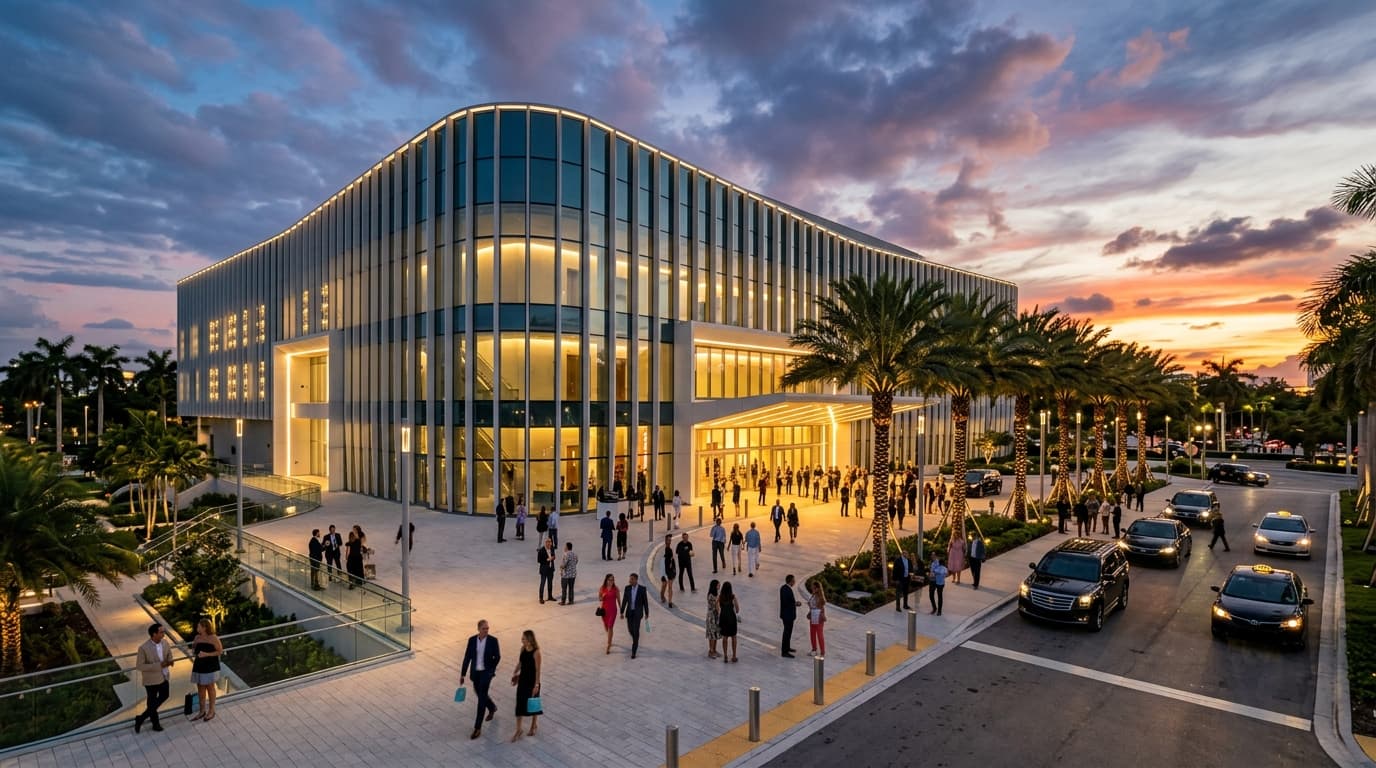
Art Basel Miami Beach has grown into the anchor event of the American art calendar since its 2002 launch, pulling in several hundred exhibiting galleries and tens of thousands of visitors across a single week at the Miami Beach Convention Centre. Satellite fairs including Design Miami, NADA Miami and Untitled Art run concurrently, spreading the crowd across Wynwood, the Design District and a beachfront tent south of the main hall.
For serious buyers, the itinerary rarely stops at the convention centre doors. Gallery previews, private collection visits and dealer dinners fill the days either side of the public fair, and a private jet Art Basel Miami arrival lets a collector set that itinerary rather than build it around someone else's connection times.
The concentration of wealth in one place for one week is what pulls the aircraft in. Miami-Opa Locka Executive, Miami Executive and Fort Lauderdale Executive between them see several hundred business jet movements across fair week, a volume that turns routine positioning into a genuine logistics exercise for anyone who has not already secured a slot.
Individual gallery sales at the top end regularly clear seven figures during the vernissage alone, and dealers report their strongest single day of the entire year on that Wednesday preview. Buyers moving at that pace do not want to be negotiating a rental car or a shuttle timetable between appointments, which is the other reason the ramp at Opa-locka fills the way it does: the aircraft becomes the base of operations for the week, not just the way in.
When to Fly: Preview Days, Fair Dates, and the December Miami Squeeze
Vernissage passes admit top-tier collectors a full day before the general VIP preview opens, and that gap is precisely when Opa-locka's ramp fills to capacity. Art Basel Miami Beach's 2026 edition runs its public days from Thursday to Saturday in the first full week of December, with the VIP preview on the Wednesday and a first-look session for major collectors and patrons the morning before that.
The pattern repeats every year: arrivals cluster into a 36-hour window ahead of the Wednesday preview, and departures cluster into a similar window after the fair closes on Saturday evening. Slot and parking requests submitted inside two weeks of the fair are frequently declined at Opa-locka during that peak window, even for clients with an established relationship with the FBO.
Flying in a day earlier, on the Monday or Tuesday rather than the Wednesday morning rush, avoids the worst of it. Aircraft positioned ahead of the squeeze get better ramp placement, faster turnarounds for local hops to Palm Beach or the Bahamas, and a far easier time securing a return slot for Saturday night or Sunday morning.
Design Miami and Untitled Art run their own preview schedules alongside the main fair, generally opening a day ahead of the Basel vernissage. Collectors who want to cover all three before the crowds arrive typically land on the Sunday or Monday, giving themselves two clear days before the calendar compresses. That timing also avoids the single sharpest spike in private jet Art Basel Miami demand, which lands on the Tuesday and Wednesday immediately before the vernissage.
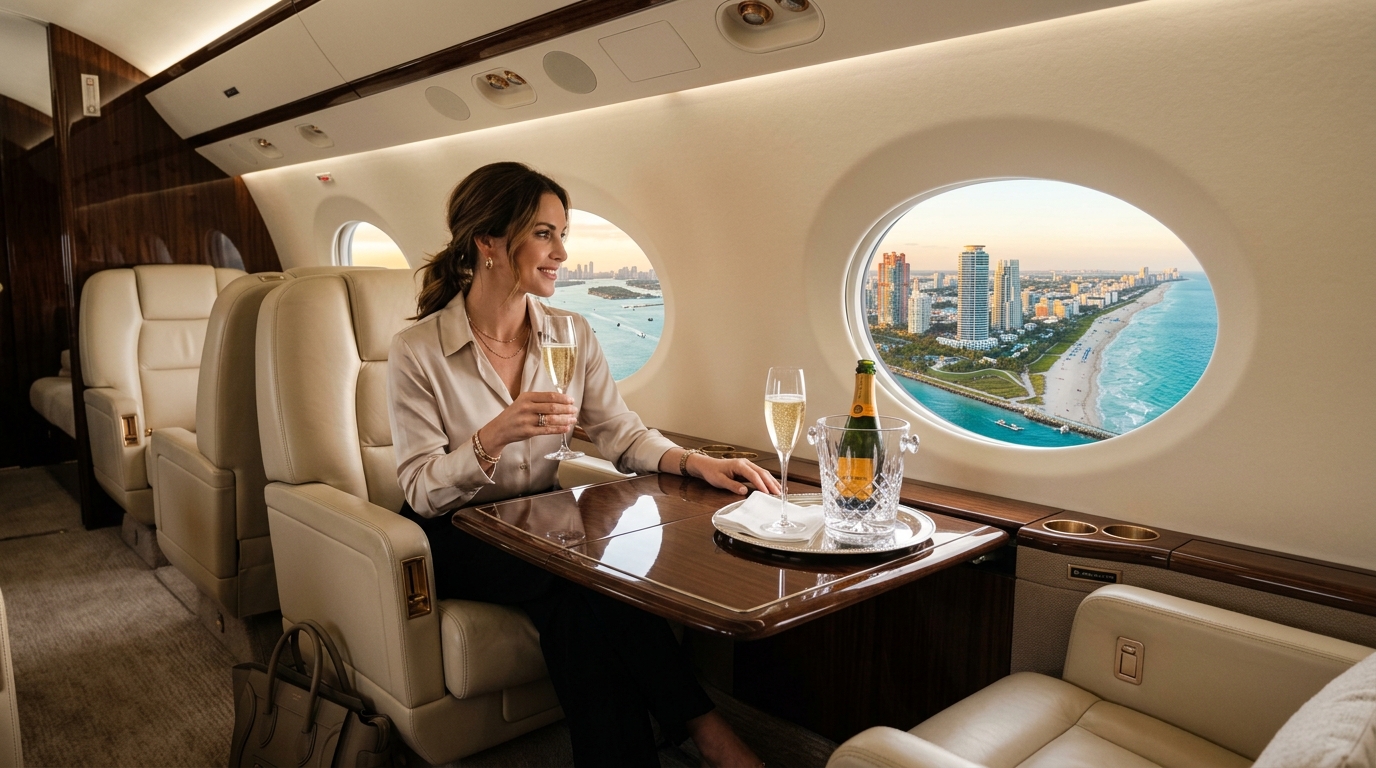
Choosing Your Airport: Opa-locka, Miami Executive, and Fort Lauderdale Executive Compared
KOPF sits roughly 14 miles from South Beach, and a transfer under normal traffic runs 25 to 30 minutes; during fair week, with road closures around the convention centre, that can extend to 45 minutes. Its 8,002-foot main runway takes anything up to a large-cabin Gulfstream or Global comfortably, which is why it absorbs most of the heavy-jet traffic for Basel week and why its ramp fills first.
Miami Executive Airport (KTMB), the former Kendall-Tamiami, sits about 19 miles southwest of South Beach with a transfer closer to 35 to 40 minutes outside peak traffic. Its longest runway measures 6,000 feet, enough for light and midsize jets such as the Embraer Phenom 300E or Citation Longitude but a genuine constraint for anything larger. It sees noticeably less Basel traffic than Opa-locka and, as a result, often has ramp space available when KOPF has none left.
Fort Lauderdale Executive Airport (KFXE) is the fallback that experienced operators reach for first rather than last. It sits around 30 miles north of South Beach, meaning a 45 to 60 minute transfer depending on the state of Interstate 95, but its 6,001-foot runway and consistently available parking make it a reliable option when both Miami-area fields are full.
The practical rule: book Opa-locka the moment your dates are fixed, hold Miami Executive as the midsize-jet alternative, and treat Fort Lauderdale Executive as the guaranteed fallback rather than a last resort. Waiting until fair week itself to choose narrows the realistic options to whichever field still has a slot within a 45-minute transfer of the convention centre, which by late November is usually only Fort Lauderdale.
FBO choice within each airport matters almost as much as the airport itself. At Opa-locka, the two main handlers run separate ramps with independent parking allocations, so a rejection at one is worth checking against the other before writing the airport off entirely for your preferred dates. The same applies at Fort Lauderdale Executive, where a second FBO often holds capacity long after the first has closed its books for fair week.
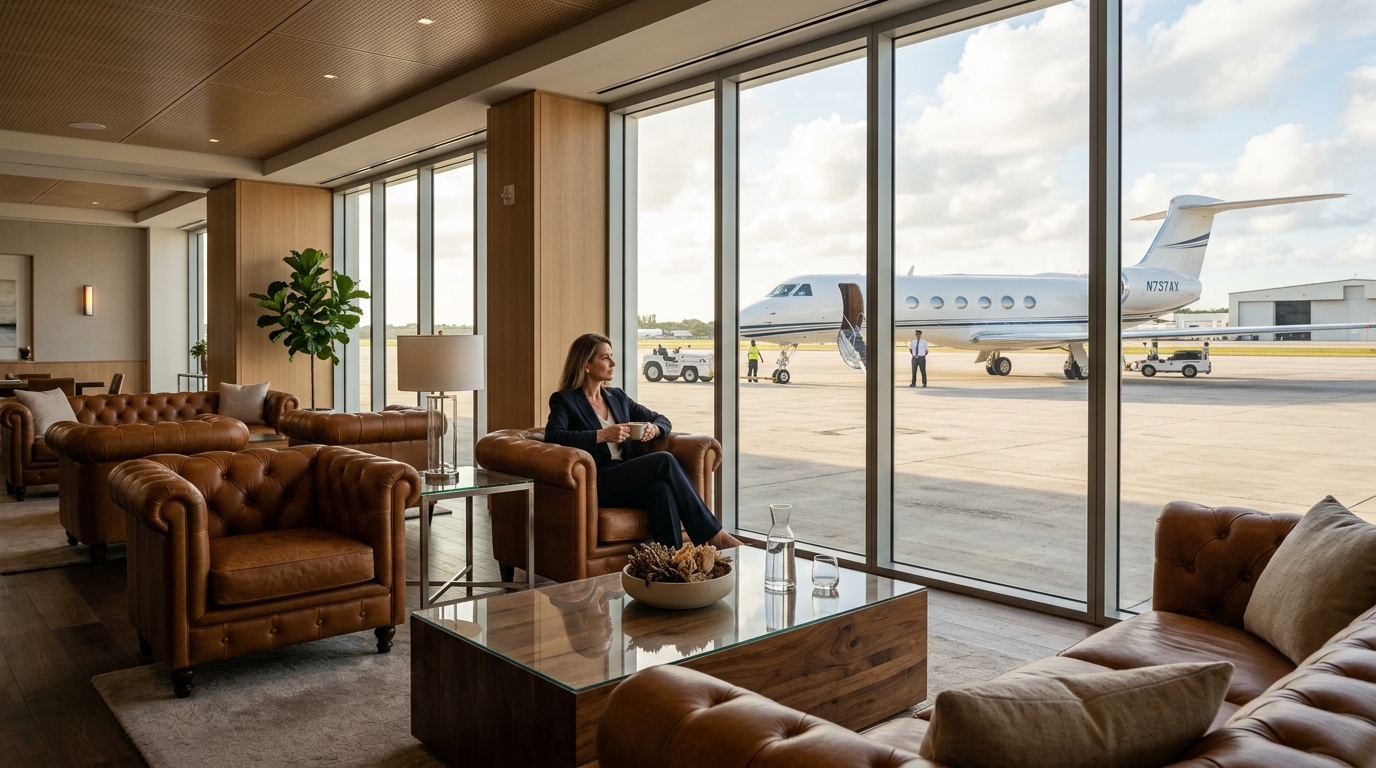
Best Aircraft for the Trip: Transatlantic Arrivals vs Domestic Hops
A London-to-Miami sector covers roughly 4,400 nautical miles, which puts it within non-stop range of the Gulfstream G650ER and the Bombardier Global 7500 but close to the limit for a Dassault Falcon 8X against a headwind, when a technical stop in the Azores or eastern Canada becomes likely. The G650ER's 7,500 nautical mile range and the Global 7500's 7,700 nautical mile range both clear the sector with fuel reserves to spare, which is why they dominate private jet Art Basel Miami arrivals originating in Europe.
Cabin comfort matters over a nine-hour sector. The Global 7500 offers a 6 ft 2 in cabin height and a four-zone layout that lets a group of six to eight split into separate working and resting areas, while the G650ER's 6 ft 5 in cabin and lower cabin altitude at cruise reduce fatigue on arrival, useful when the first gallery appointment is scheduled for the same afternoon.
A London Farnborough (EGLF) to Opa-locka charter on a heavy jet in this class runs approximately £120,000 to £160,000 one-way during fair week, with pricing toward the top of that range once December demand and empty-leg scarcity are factored in. Booking six to eight weeks ahead of the fair, rather than inside the final fortnight, is the single biggest lever a client has over that price.
For collectors already in the United States and making a domestic hop into Miami, the calculus changes. A Teterboro-to-Opa-locka sector suits the Embraer Phenom 300E for parties of up to six or the Bombardier Challenger 350 for larger groups needing more baggage capacity for gallery purchases, and either aircraft clears the roughly two-and-a-half-hour flight without a fuel stop. The Cessna Citation Longitude is a further option for that route, offering a wider cabin than the Phenom 300E at 6 ft 0 in versus 4 ft 11 in, worth the upgrade for a group of six travelling with framed or crated work.
Group size is the deciding factor more often than range. Six passengers or fewer, flying non-stop from within the United States, sit comfortably in a Phenom 300E; anything larger, or any party carrying crated artwork that needs the additional hold volume, should move up to the Challenger 350 or Citation Longitude without a second thought.
Beyond the Fair: Where to Stay, Dine, and Be Seen During Fair Week
Faena Hotel Miami Beach and The Setai fill their best suites for Basel week by early autumn, and both sit within a 10-minute walk of the convention centre's gallery shuttle stops, close enough to skip the week's worst traffic entirely.
Faena's Moorish-influenced rooms and its resident performance space have made it the fair's unofficial social anchor for a decade, while The Setai's quieter, Asian-inflected courtyards suit collectors who want to escape the noise between appointments. Soho Beach House, a members' venue a short drive north in Surfside, runs its own programme of talks and dinners that quietly rival the fair's official events.
Dining reservations tighten as fast as airport slots. Boulud Sud and Katsuya both take fair-week bookings from September onward, and a table at either on preview night is worth securing before the flight itself is booked. The Design District, a 15-minute drive from South Beach, adds another cluster of galleries and restaurants worth a full afternoon on its own, particularly for collectors focused on design objects rather than fine art.
Untitled Art's beachfront tent, a short walk south of the convention centre, runs its own preview a day ahead of the main fair and is frequently the quieter, more considered stop before the main event opens. Pairing a private jet Art Basel Miami itinerary with a full day at Untitled and Design Miami before the Wednesday vernissage is how experienced collectors use the extra day that most visitors never bother to build in.