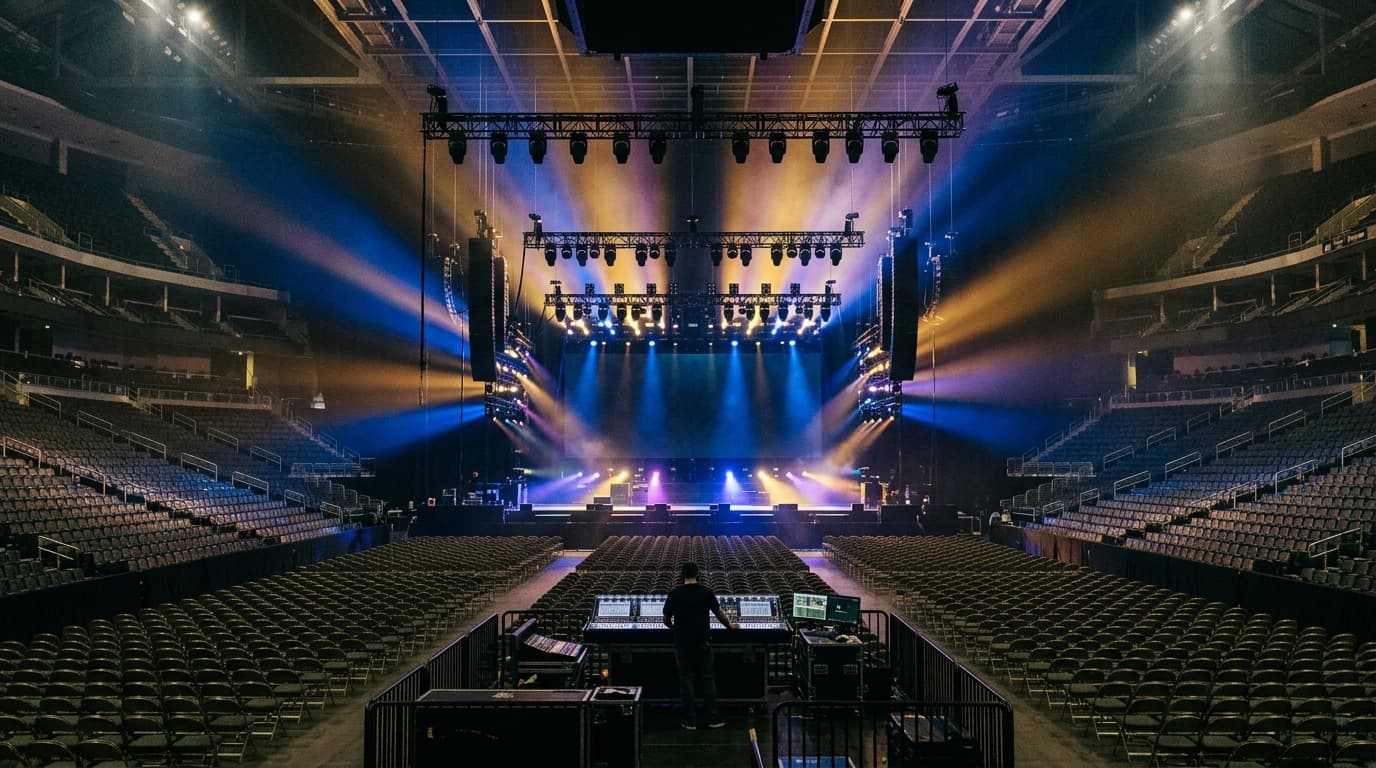
 Farnborough
 Nice
Nice
The Partner and the Starting Point: A Destination Wedding Planner With 14 Weddings a Year
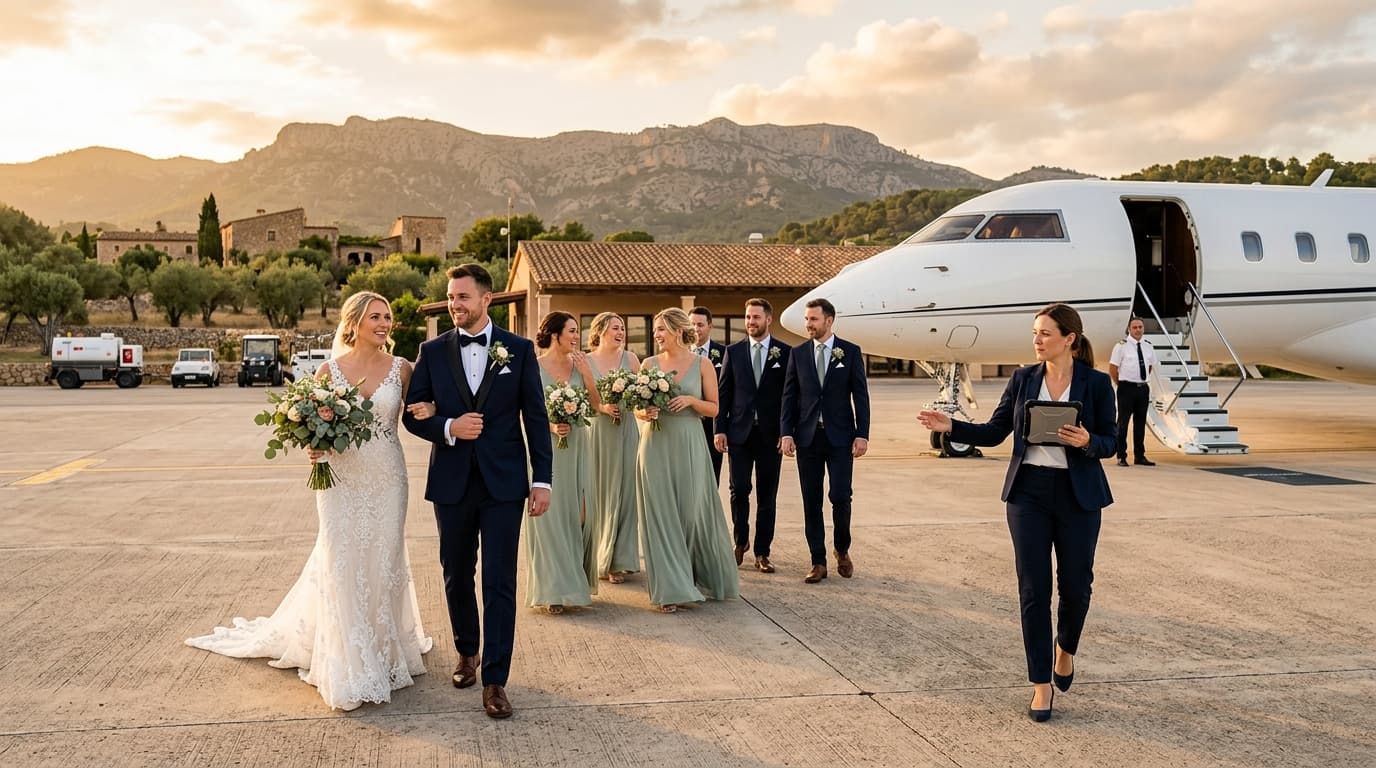
A wedding planner who raises charter at three fixed points in every client timeline earned £19,800 in commission from Villiers across one season, without quoting a single price. We will call her Elena. Her business is useful to study because it is the opposite of random: she runs 14 weddings a year across Provence, the Amalfi coast, the Cyclades and the Swiss Alps, and by each October she knows which months of the following year the work will land in.
That predictability is what matters to anyone weighing up a private jet affiliate programme. A hotel concierge earns when a guest happens to ask, and a one-off introducer earns when a contact happens to need a flight. Elena earns when a date she has already written in her diary arrives. Her weddings cluster between May and September, with four or five in June alone, and each carries 60 to 120 guests, a couple, and two families with the means to travel well.
She began with a habit rather than a plan. For years she had arranged flights for clients informally, phoning an operator she half-knew and passing on a price, and earning nothing for hours of chasing. Joining Villiers as an introducer changed two things. The 30% commission on guest-party and honeymoon flights gave the work a return, and the handover process took the quoting off her desk altogether.
Not every wedding produces a flight, and the numbers are worth stating plainly. Across her 14 weddings that season she made ten bookings: seven guest-party flights and three honeymoon departures, with two couples booking both. Eight of the 14 weddings, just over half, generated at least one charter.
Where Charter Fits in the Planning Timeline: The Three Moments a Client Actually Asks
Most planners who fail to earn from charter make the same mistake: they mention it once, early, when the couple is still choosing a venue and flights feel irrelevant. Elena treats charter as a question that becomes relevant at three specific moments, and she raises it only then.
Moment one: venue confirmed, 12 to 14 months out. Once the couple signs a venue in, say, the Luberon or on Mykonos, the transfer problem becomes visible. She sends a short note covering how guests will reach the venue and mentions, in one line, that she works with a charter broker for families who want to travel as a group. Nobody books at this point. The aim is that the idea exists before anyone has made other arrangements.
Moment two: guest list firm, 5 to 7 months out. This is where most guest-party enquiries begin. Once she can see that 14 to 20 guests are coming from London, usually the two families and closest friends, she raises it directly. Commercial schedules to smaller airfields rarely suit a wedding party, and a group of that size fits two aircraft comfortably. A Bombardier Challenger 350 has a 7 ft 2 in cabin width and seats eight to ten, so two of them carry 16 to 20 guests from Farnborough (EGLF) to Nice (LFMN) in roughly 1 hour 40 minutes.
Moment three: final weeks, and the honeymoon question. In the month before the wedding, couples ask about what happens afterwards. Elena has learned that honeymoon flights are decided late and emotionally, so she lets the couple lead. If they mention a destination, she offers the introduction. If they do not, she leaves it.
The discipline is in the restraint. Three prompts across a year-long timeline feel like service, whereas weekly reminders would feel like selling. She has also learned which couples never ask, and does not push them.

The Introduction Itself: What She Sends, What She Leaves to Villiers, and Why She Never Quotes
Elena's handover is a single email, written in about five minutes. It names the couple, the wedding date and venue, the likely number of guests, the departure airport if she knows it, and who the decision-maker is, usually the mother of the bride or the groom himself. She copies in the client only after asking permission, and she says plainly that Villiers will be in touch within one working day.
What she leaves out is deliberate. She does not name an aircraft, suggest a price or promise availability. Her early experience was that a quoted figure became a commitment she could not honour: a planner who says "around £8,000" for a Nice sector has set an anchor that no broker can then move. A realistic one-way figure for a Citation Latitude from EGLF to LFMN is £10,000 to £15,000, and a wedding party needing two aircraft plus return legs can reach £40,000 or more, depending on dates. That range moves with peak-weekend demand, positioning legs and aircraft availability, none of which a planner can see.
Villiers handles everything after the introduction: matching aircraft to party size, checking slots at the arrival airport, arranging ground transfers and coordinating return times with the wedding schedule. A Phenom 300E, with its 5 ft 1 in cabin width and seats for six to eight, suits a small family group, while the Citation Latitude's 6 ft 5 in cabin width suits a party of eight or nine travelling with luggage. Elena does not need to know that. Her job is to place the client in capable hands at the right moment.
There is a commercial reason for this too. Because Villiers owns the conversation with the client, the booking is attributed to her from the first email, and her 30% commission is recorded against that introduction. She is paid once the flight has operated, so a cancelled booking costs her nothing but time she did not spend.

The Income Curve: Month-by-Month Commission Across a Wedding Season, Including the Quiet Winter
The commission arrives in waves that follow the wedding calendar, not the booking calendar. Elena earns when flights operate, which means income lags the introductions by several months. Here is her season, rounded to the nearest £100.
- January to April: £0. No weddings fly, but this is when moment-two introductions for the summer are made.
- May: £1,500. One guest-party flight to Provence.
- June: £5,900. Two guest-party flights (£1,200 and £1,800) and one honeymoon departure (£2,900).
- July: £1,600. One guest-party flight to the Cyclades.
- August: £3,600. A honeymoon departure from a July wedding, the largest single payout of the year.
- September: £3,100. Two guest-party flights (£1,400 and £1,700).
- October: £1,900. A final guest-party flight, to Geneva (LSGG) for an alpine wedding.
- November: £2,200. A honeymoon departure from an October wedding.
- December: £0.
The total is £19,800, with a monthly average of £1,650 across the year. Looked at that way, the income is steady only in aggregate; individual months swing between nothing and £5,900. Elena plans around it by treating each quarter as a unit and not expecting a monthly salary.
The quiet winter is where the next season is built. From December to April she runs consultations for couples marrying 12 to 18 months away, sends moment-one notes and follows up on guest lists as they firm up. She earns no commission in those months, but roughly two thirds of the following year's introductions come from this period. A planner who treats winter as downtime has a thinner summer.
The pattern also shows why a steady stream from a private jet affiliate programme depends on timing rather than volume. Elena made ten bookings in a year, which is fewer than many referral partners expect. The income comes from the fact that each booking is large and each introduction is made at the point where the client is ready to say yes.
What Makes It Repeatable: A Checklist Any Planner, Concierge or Event Partner Can Copy
Nothing in Elena's model depends on weddings specifically. It works for any partner whose clients plan far ahead and gather in groups: corporate event organisers, yacht brokers, ski chalet operators and anyone who runs a calendar of fixed dates. The pieces that transfer are these.
- Map your timeline to three prompts. Identify the moment an event becomes real, the moment numbers are confirmed, and the moment the client starts asking about what comes next. Raise charter at those points and at no others.
- Write the introduction as a template. Names, date, venue, party size, departure airport, decision-maker. If it takes more than five minutes, it is too long.
- Never quote. Prices depend on aircraft positioning, date and demand. Let the broker give a figure that can be honoured.
- Ask permission before copying the client. A warm introduction needs the client's agreement, and it protects your relationship if the answer is no.
- Track by flight date, not booking date. Commission arrives when flights operate, so forecast income against your event calendar, with several months of lag built in.
- Use the quiet season to build the next one. The introductions that pay out next summer are made this winter.
- Accept that roughly half of clients will not book. Elena converted eight of 14 weddings. A conversion of that order, applied to a diary known a year ahead, is enough.
The broader point for anyone considering a charter referral partnership is that a 30% commission on a handful of well-timed introductions can outperform a scattered stream of casual leads. The earning potential comes from the diary, the discipline and a clean handover, and none of those require a large network. A planner with ten events a year and a clear process has the raw material for a dependable second income, and the process is the part worth copying.