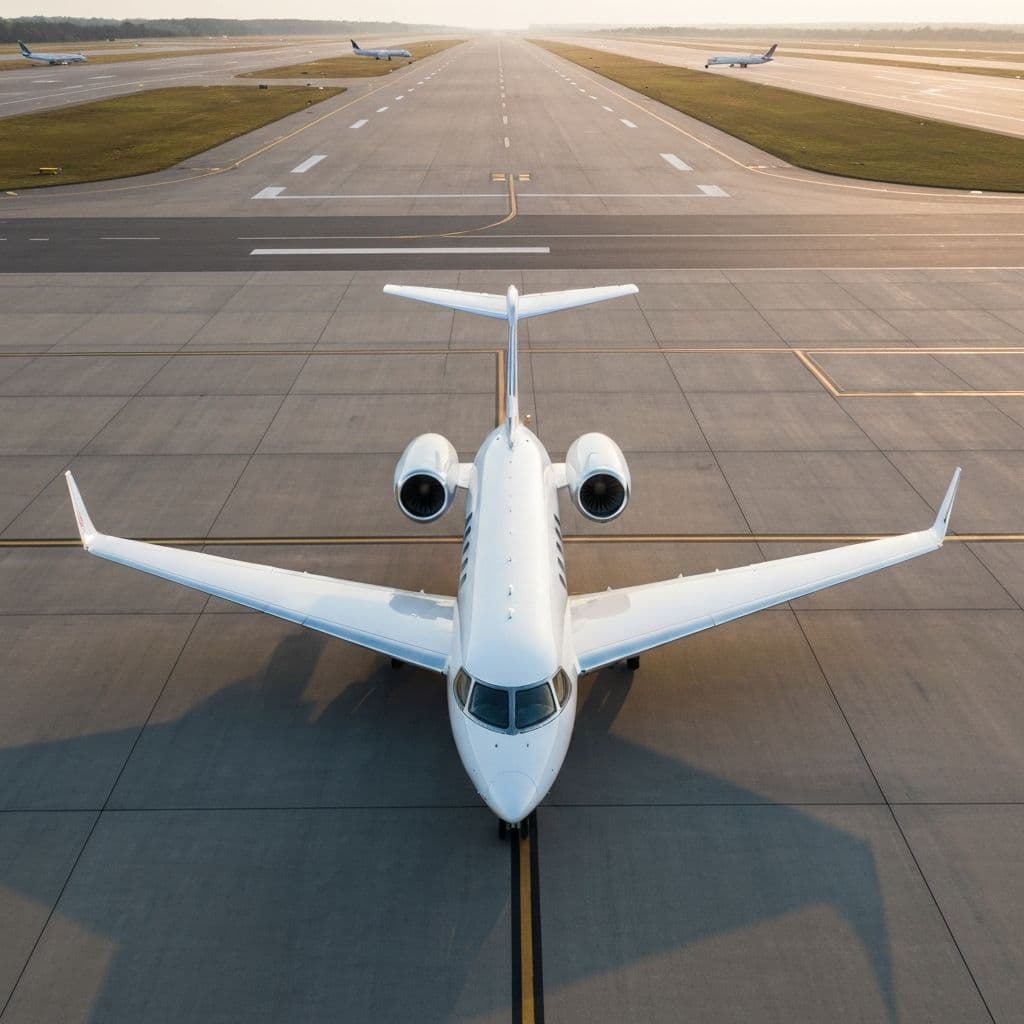
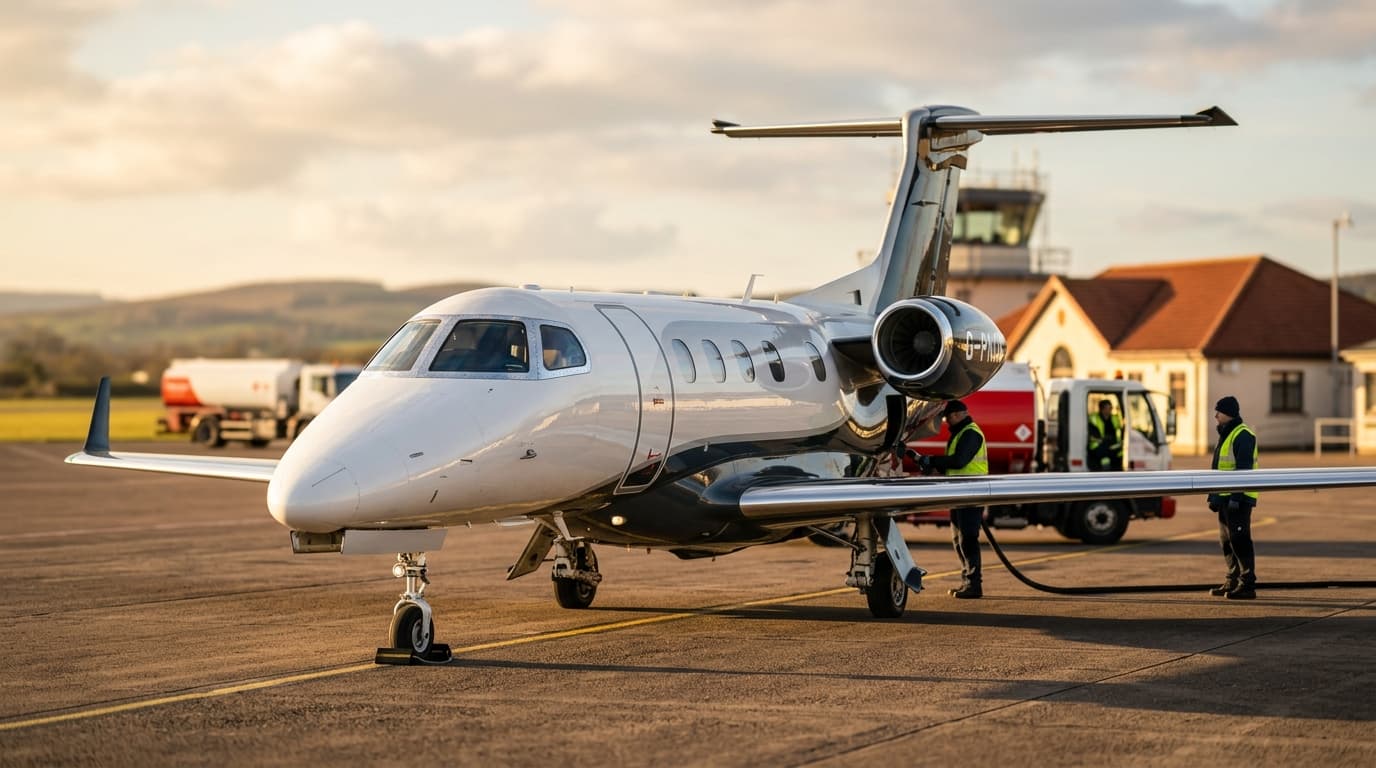
The Aircraft That Quietly Dominates the Light Jet Category
Embraer has topped the light jet delivery charts for more than ten consecutive years, and the margin isn't close. In most of those years the Melbourne, Florida production line has shipped more Phenom 300Es than the Citation CJ4, the Citation M2 and the Pilatus PC-24 combined have added to their own order books.
That gap exists because operators who fly light jets professionally, whether fractional programmes, charter fleets or corporate flight departments, care more about dispatch reliability and cost per hour than headline range. The Phenom 300E's Pratt & Whitney Canada PW535E1 engines are among the most mature powerplants in the class, and Embraer's fleet-wide dispatch reliability figures consistently sit above 99%.
NetJets and Flexjet both built fractional programmes around the type precisely because those numbers translate into fewer cancelled legs and lower maintenance reserves per flight hour. Resale value backs up the same operational case: a ten-year-old Phenom 300 retains a noticeably higher percentage of its original list price than most light jets of the same vintage, which matters to any charter operator building a fleet around predictable depreciation.
That preference is what makes the Embraer Phenom 300E the default reference point whenever a light jet gets shortlisted on cost, dispatch reliability and cabin comfort. Most charter guides skip straight to long-range aircraft with more dramatic numbers, but for the short, high-frequency sectors that make up most private aviation demand in Europe, this is the aircraft doing the actual work.
More than 700 Phenom 300 and 300E airframes are now in service worldwide, a fleet size most manufacturers only reach after spreading production across an entire model family rather than a single variant. That scale is precisely why charter brokers can usually source one on short notice, even during the July and August peak when smaller fleets run out of availability first.
Range and Speed: What 'Light Jet' Actually Means in Practice
A maximum range of 2,010 nautical miles (3,724 km) puts London within non-stop reach of most of Europe, North Africa and the Canary Islands, but not much further. Flown at the Phenom 300E's maximum cruise speed of 464 knots true airspeed (Mach 0.80), that figure is the entire story of what "light jet" means in operational terms.
Compare that to the midsize Citation Latitude's 2,700 nm range and the category difference becomes concrete rather than abstract. The Phenom 300E comfortably covers London to Malaga, Nice, Geneva or Milan non-stop; it will not comfortably reach Dubai or the eastern Mediterranean without a fuel stop, and the Atlantic is out of the question in either direction.
At the other end of the scale, a very light jet like the Citation M2 tops out nearer 1,550 nm and 404 knots, which is why the Phenom 300E sits at the upper edge of the light jet bracket rather than the middle of it. A service ceiling of 45,000 feet also lets it climb above most weather and slower traffic on sectors where a very light jet would be stuck negotiating a lower cruise altitude.
Where the aircraft earns its keep is short-field performance. A balanced field length requirement of around 3,209 feet (978 metres) opens up airports that larger jets cannot use at maximum weight, including tighter regional strips across the Alps and the Balearics that add real routing flexibility for operators working last-minute charter requests.
Speed matters more than range for the sectors this aircraft actually flies. London to Nice at 464 knots is a genuine one-hour-forty sector gate to gate, and that saved time is what tips the choice towards a fast light jet over a slower, larger cabin on a short hop.
The mission profile explains the delivery numbers better than the range figure alone does. A Phenom 300E can fly London to Nice and back within a single duty day, or complete three or four shorter hops around northern Europe in the same window, which is the flying pattern that dominates European charter demand rather than the one long transcontinental leg that headline range specifications are built to impress.
Cabin, Baggage, and Comfort: Why It Flies Bigger Than Its Class
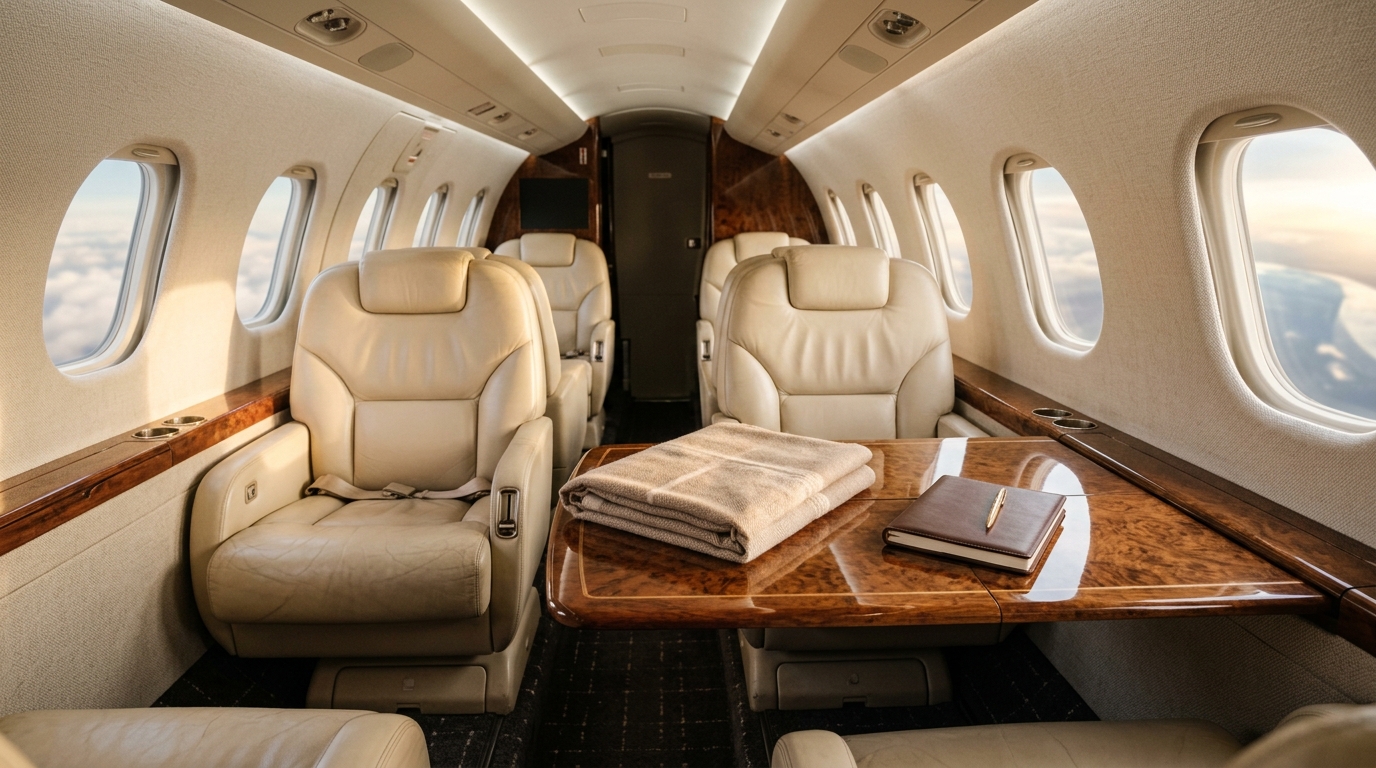
Cabin height of 4 ft 11 in and width of 5 ft 1 in sound modest against a Citation Latitude's stand-up 6 ft cabin, but the Phenom 300E's 17 ft 8 in cabin length is longer than most aircraft in its own weight class, including the Citation M2 and the Phenom 100EV it effectively replaced in Embraer's own line-up.
Executive configurations seat six to eight passengers in a four-plus-two or four-plus-four club layout, with a genuine flat floor and enough shoulder room that four adults can work across a table without the elbow contact that defines the very light jet category below it. Fourteen windows, more than most direct competitors carry, keep the cabin brighter than the dimensions alone would suggest.
Baggage is where the aircraft quietly beats aircraft twice its price. An 84 cubic foot baggage compartment, heated, pressurised and accessible in flight, swallows ski bags, golf sets and full-size luggage for eight without anyone repacking at the kerb. Few light jets offer in-flight access to stowed baggage at all, and it is often the detail that decides a booking for a group travelling with equipment rather than just hand luggage.
The cockpit runs Garmin's G3000 avionics suite with synthetic vision as standard, which matters less to passengers than it does to the operators flying single-pilot certified missions on tight schedules. Single-pilot certification keeps direct operating costs down in a way that shows up directly in the charter quote, one of the quieter reasons this aircraft undercuts rivals on price per sector.
Cabin altitude at the aircraft's 45,000 foot service ceiling sits at around 6,600 feet, noticeably lower than several ageing midsize cabins still flying today. On a day with three or four sectors booked back to back, that difference measurably reduces fatigue for passengers and crew alike.
Best Routes: Where the Phenom 300E Earns Its Reputation
London Luton (EGGW) to Nice Côte d'Azur (LFMN) covers 620 nautical miles in around one hour and forty minutes, and it is the single sector that best demonstrates why booking a Phenom 300E beats waiting for a larger aircraft's availability on a route this short.
Geneva (LSGG) follows a similar pattern: an hour and fifteen minutes from Luton or Farnborough (EGLF), landing close enough to the Alps that a client can be on snow in Verbier or Villars within ninety minutes of touchdown. Milan Linate (LIML), Ibiza (LEIB) and Faro (LPFR) all sit comfortably inside the aircraft's range with fuel reserves to spare.
Business routes benefit just as much as leisure ones. London to Zurich (LSZH) for a same-day set of meetings is a sub-two-hour sector each way, short enough that a finance client can fly out, close a deal and be home for dinner without touching a commercial schedule at all.
Pricing on these routes typically runs to £12,000 to £16,000 one way for London to Nice or Geneva at current market rates, rising towards £18,000 for Ibiza on peak summer weekends when positioning costs increase. That figure buys a sector a midsize jet would price at closer to £20,000 to £24,000 for the same distance, which is the arithmetic that keeps this aircraft booked through July and August.
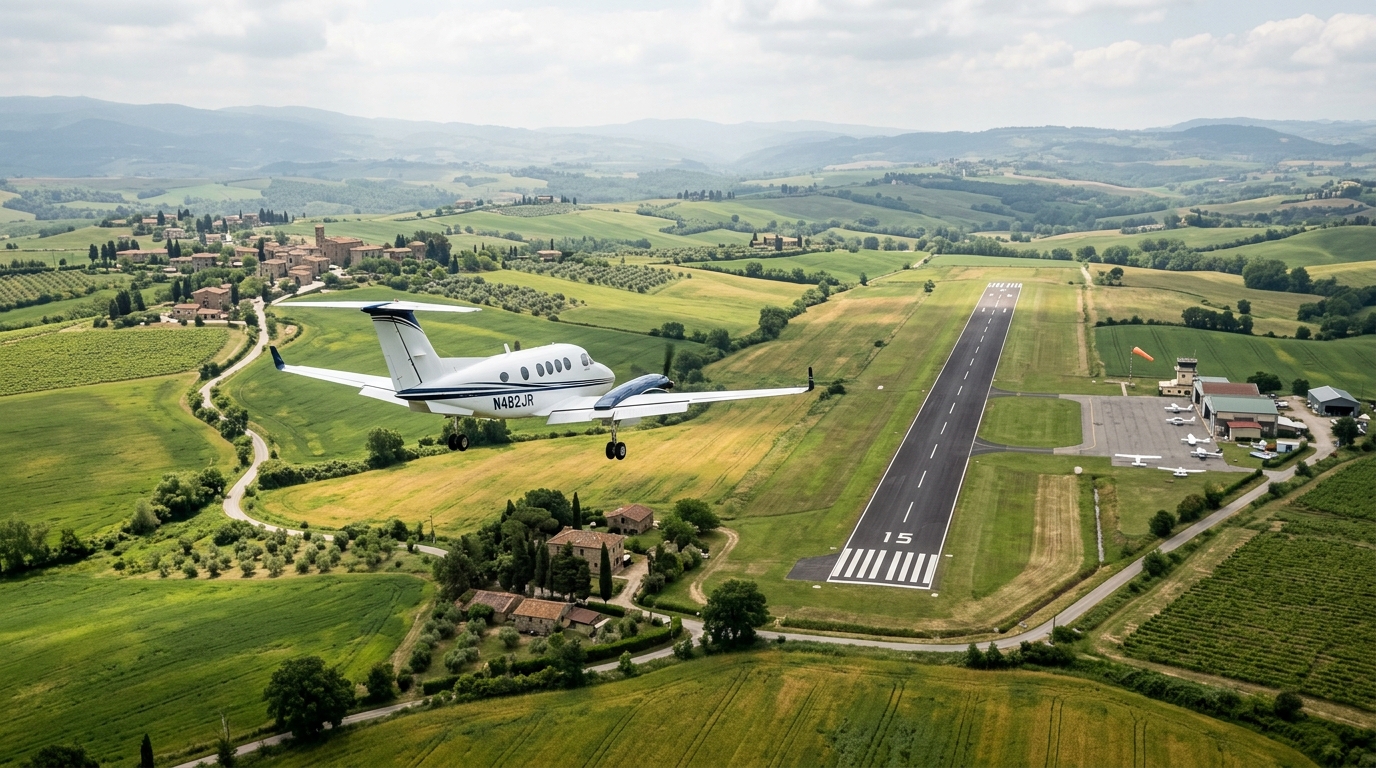
Shorter regional strips extend the map further. Sion (LSGS) and Samedan (LSZS) in the Engadin valley both fall within the aircraft's short-field performance envelope, giving ski-season charter clients direct access that larger cabins flying into Zurich or Geneva cannot match without a road transfer of an hour or more.
Phenom 300E vs Citation CJ4 vs Citation Latitude: When to Step Up
The Citation CJ4 Gen2 is the closest direct competitor on paper, with a marginally longer range of 2,165 nm and a cruise speed of 451 knots against the Embraer's 464. The practical difference between the two comes down to cabin length, where the CJ4 runs shorter, and Embraer's larger production volume, which tends to mean easier last-minute charter availability across European operator fleets.
The Citation Latitude changes the calculation entirely. Its 6 ft 0 in stand-up, flat-floor cabin and 6 ft 5 in width let passengers move around in a way neither light jet permits, and its 2,700 nm range reaches destinations such as the Canary Islands or Cairo that sit outside the Phenom 300E's comfortable envelope.
The decision threshold is straightforward. A group of six or fewer on a sector under 1,500 nautical miles is squarely Phenom 300E territory, where the saving over a midsize cabin is real and the aircraft's speed keeps total journey time competitive. Once a booking involves seven or more passengers, a sector beyond roughly three hours, or a client who specifically wants to stand up and move through the cabin, the Citation Latitude becomes the better recommendation, typically £20,000 to £25,000 for the same London to Nice sector that a Phenom 300E flies for £12,000 to £16,000.
Hourly charter rates track the same hierarchy. A Phenom 300E typically runs to £3,000 to £3,500 per flight hour, a Citation CJ4 sits close behind at £3,200 to £3,700, and a Citation Latitude moves up to £4,200 to £4,800, a gap that compounds quickly once a sector runs past two hours.
Charter operators who run all three types tend to steer bookings the same way: CJ4 availability as a like-for-like swap when a Phenom 300E is already committed, and Latitude only once the brief genuinely calls for more cabin or more range. For the bulk of European private aviation demand, short sectors carrying small groups on short notice, the light jet that outsells every rival in its class remains the sensible default, and stepping up should be a deliberate choice driven by passenger count or cabin requirements rather than habit.