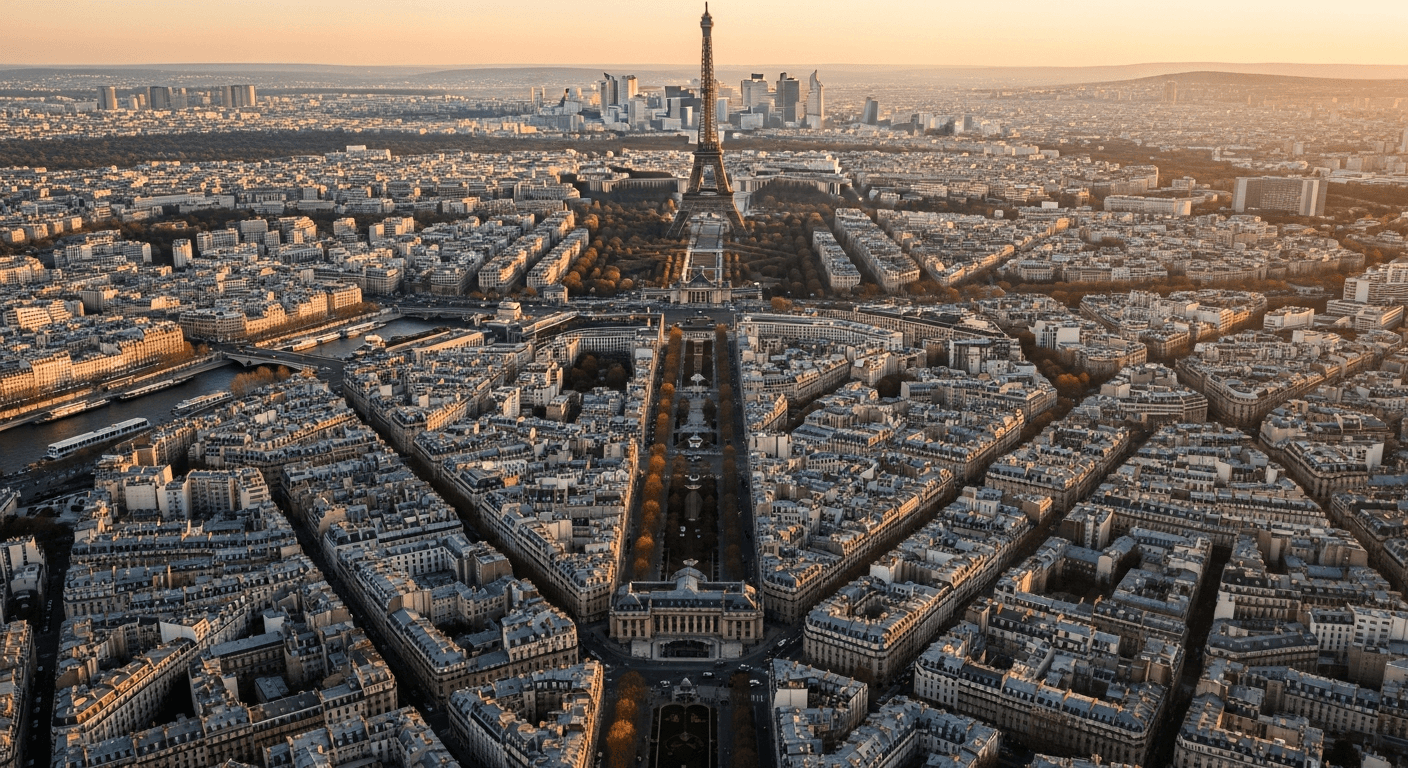
Why Paris Is One of Europe's Most Important Private Jet Corridors
A client routing into Charles de Gaulle (LFPG) rather than Le Bourget (LFPB) on a standard Thursday evening can add 90 minutes of ground time before reaching the 8th arrondissement. That single airport decision is often more consequential than the aircraft selection itself, and it is the kind of detail that separates an experienced private jet Paris booking from a routine one.
Paris sits at the intersection of Europe's most active business aviation corridors. The London–Paris sector is one of the highest-frequency short hops in the European charter market; Geneva, Zurich, Brussels, Frankfurt, and Milan all generate regular bilateral traffic. Beyond Europe, the French capital draws significant charter volume from the Gulf states, the eastern United States, and North Africa, placing it alongside London and Geneva as one of three primary western European arrival markets for ultra-long-range operations. This breadth of origin markets means Paris handles a wider variety of aircraft category movements than most European business aviation hubs outside London.
Three airports handle the bulk of private jet Paris movements: Le Bourget (LFPB), Toussus-le-Noble (LFPN), and Beauvais-Tillé (LFOB). A fourth, Paris Orly (LFPO), handles some business aviation alongside scheduled services but is rarely the optimal choice for private charter. Each of the three principal facilities carries meaningfully different transfer times, different FBO standards, and different slot environments. Choosing between them is a logistics decision with real consequences for any Paris programme.
The slot environment at Le Bourget is significantly more accessible than at LFPG, which operates under Level 3 slot coordination and makes ad-hoc general aviation movements difficult to schedule at short notice. Le Bourget's dedicated business aviation infrastructure means that short-notice requests are operationally viable outside peak periods, and the airport's absence of scheduled carrier traffic removes the runway sharing and priority sequencing that can affect block times at LFPG.
Le Bourget: Paris's Premier Business Aviation Hub
LFPB carries no scheduled commercial traffic, which has allowed its ground infrastructure to develop entirely around business and general aviation requirements. The consequences are practical: ramp handling is purpose-built, FBO facilities cater to the expectations of private clients, and there is no scheduled-carrier congestion affecting the experience from block-in to vehicle departure. Transfer time from the Le Bourget ramp to the triangle formed by the Opéra, the Marais, and the Champs-Élysées averages 25 to 40 minutes by car under normal traffic conditions.
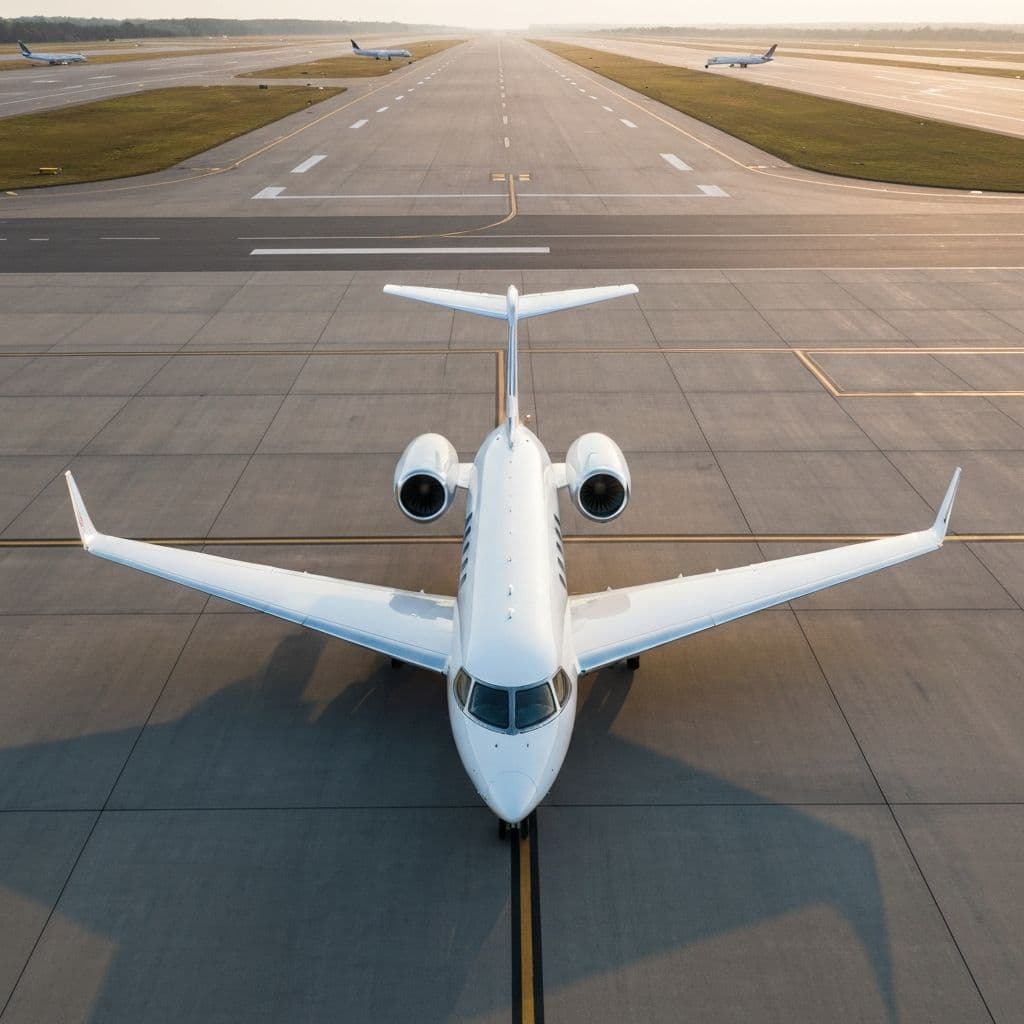
The FBO landscape at LFPB includes Signature Aviation as the dominant operator, alongside Dassault Aviation's own handling facility and a cluster of independents. Ramp capacity is substantial: the airport accommodates ultra-long-range aircraft without the slot pressure that general aviation faces at LFPG, and a Bombardier Global 7500, with a wingspan of 31.4 metres, and a Gulfstream G700 can operate from the main ramp simultaneously without proximity constraints.
Handling fees at LFPB are higher than at secondary Paris alternatives, which is a relevant consideration for positioning flights and ferry operations without passengers on board. For client-facing movements, where the total programme cost is dominated by the aircraft charter rather than ground handling, the differential over Toussus-le-Noble is modest relative to the transfer time saved.
The Paris Air Show, held at LFPB in odd-numbered years, consumes ramp capacity almost entirely during show week in late June. Clients planning private jet Paris arrivals during those dates should arrange alternative routing through LFPN, or submit slot requests and FBO berth requirements well ahead of normal lead times. Elevated handling fees are a secondary consideration; availability is the primary constraint.
Beyond the air show, peak demand at Le Bourget tracks Paris's cultural and commercial calendar. Fashion Week in February and September/October generates a concentrated spike in movements, as do the French Open at Roland Garros in late May and the Cannes–Paris corridor during the Film Festival. Slot requests at LFPB during Fashion Week should be submitted at least two weeks in advance, with FBO preferences confirmed at the same time.
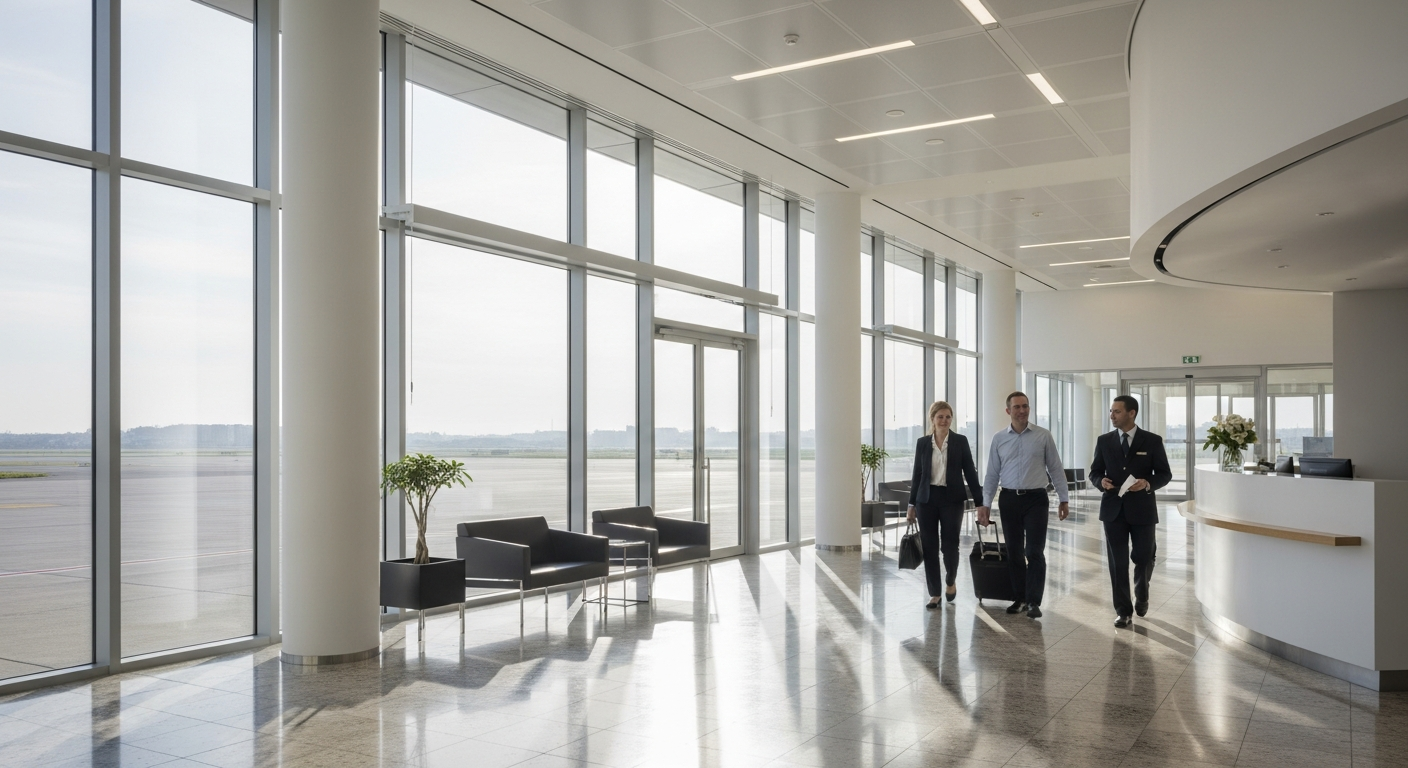
Toussus-le-Noble and Paris Beauvais: When the Alternatives Make Sense
Toussus-le-Noble (LFPN) lies 28 kilometres southwest of central Paris, with transfer times of 35 to 55 minutes depending on traffic. The airport operates primarily as a training and general aviation base but handles charter movements and serves as a useful overflow option when Le Bourget is under pressure from events or seasonal peaks.
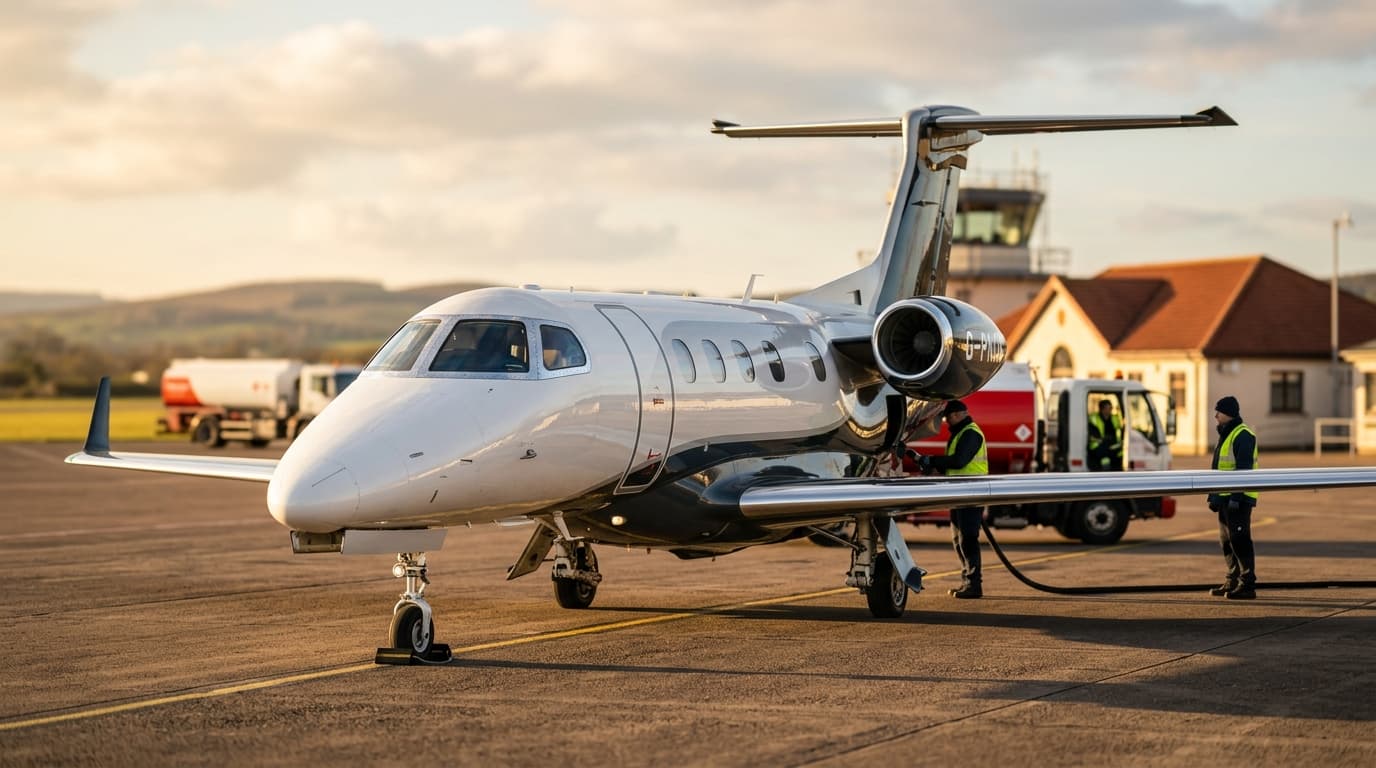
The case for LFPN is specific rather than general. For clients arriving from the southwest, including those routing from Bordeaux, Biarritz, or Iberian departure points such as Lisbon (LPPT) or Madrid (LEMD), Toussus-le-Noble can reduce door-to-door ground time for journeys into the Left Bank or the western business districts around La Défense. Light and midsize aircraft, including the Embraer Phenom 300E and the Cessna Citation Longitude, operate from LFPN without restriction. FBO facilities are professional and well-maintained but do not match the infrastructure depth available at Le Bourget's principal handlers, and clients with high ground-experience expectations should understand that distinction before selecting LFPN as a preference rather than an overflow.
Beauvais-Tillé (LFOB) sits 85 kilometres north of Paris. Transfer time to the city centre runs between 80 and 110 minutes by road under reasonable conditions and extends further during peak-hour congestion on the A16. The honest assessment is that Beauvais is not an optimal arrival point for a private jet Paris itinerary when Le Bourget is accessible. Its longer runway accommodates certain aircraft requiring additional field length, and its fuel pricing has historically been competitive for positioning and ferry operations. For clients travelling as end users, the 85-kilometre transfer is a meaningful disadvantage that slot unavailability or specific aircraft requirements would need to justify.
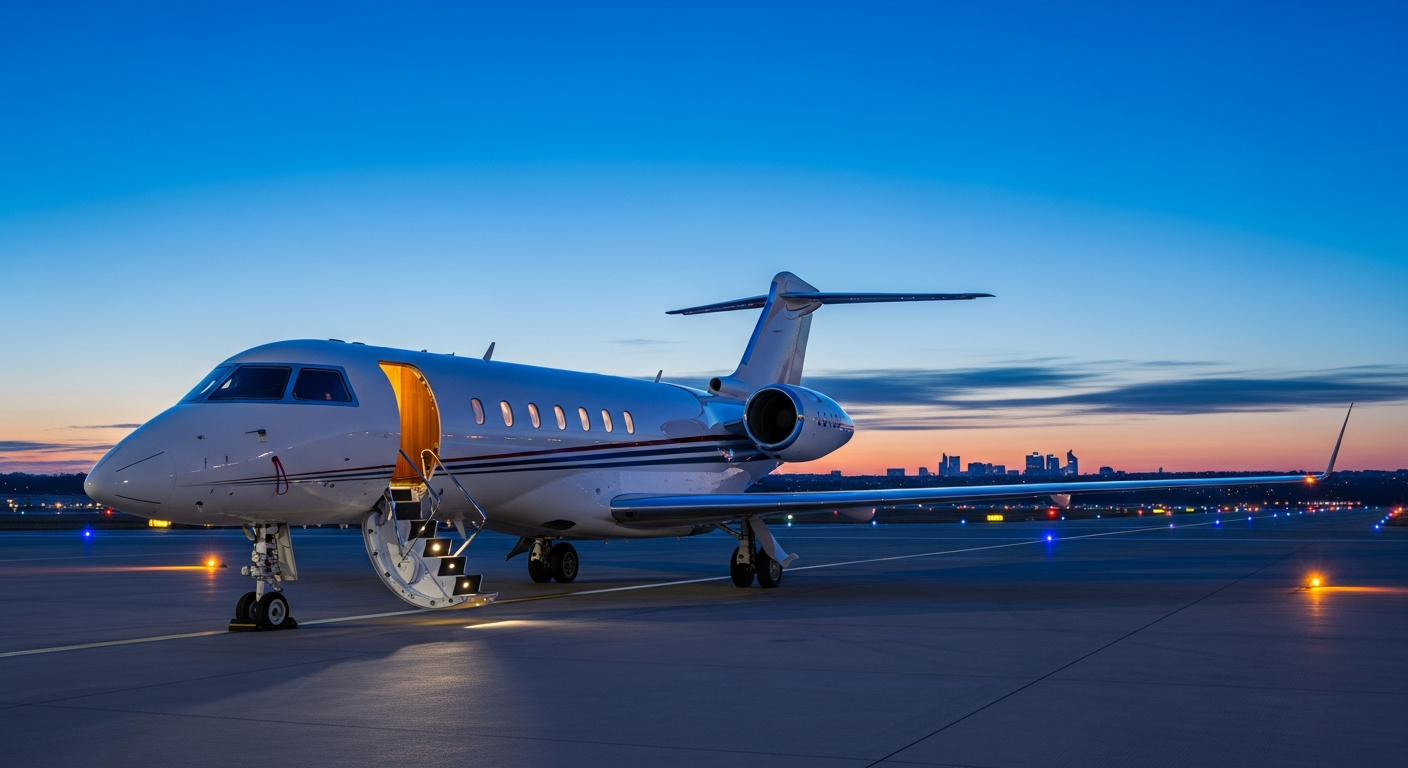
The Best Routes to Paris by Private Jet: Aircraft for Every Corridor
The London–Paris sector is the most-booked short hop in European private aviation. Block time from London Farnborough (EGLF) or London Luton (EGGW) to Le Bourget runs approximately 55 to 70 minutes. The Embraer Phenom 300E, with a cabin height of 5 ft 1 in and a range of 1,971 nautical miles carrying up to eight passengers, is the natural choice for this corridor. A one-way London–Paris charter in this category runs to approximately £8,000 to £12,000 at current market rates, varying with positioning requirements and operator.
For sectors from the Gulf states, an ultra-long-range aircraft is the standard selection. A Riyadh (OERK) to Le Bourget routing covers approximately 5,200 kilometres. The Dassault Falcon 8X, with a range of 11,945 kilometres and a three-engine configuration that provides operational flexibility, is a coherent choice for this corridor given Dassault's maintenance network centred around LFPB. The Gulfstream G650ER, with a range of 13,890 kilometres and a maximum cabin width of 7 ft 2 in, is the direct comparator; both aircraft handle the Riyadh–Paris routing non-stop with significant range margin.
Transatlantic sectors from New York Teterboro (KTEB) or Boston (KBOS) run to approximately 6,200 to 6,400 kilometres. The Bombardier Global 7500, with a range of 14,260 kilometres and a four-zone cabin providing dedicated sleeping, dining, and lounge areas, handles this non-stop without payload compromise. For clients requiring full-flat beds for the crossing, the Global 7500's Nuage seats extend to 6 ft 6 in fully reclined, a comfort margin that matters on a seven-hour overnight sector. The Gulfstream G700, at 13,890 kilometres range, is the direct alternative; both operate into LFPB routinely.
For inter-European routes including Geneva (LSGG), Zurich (LSZH), Brussels (EBBR), and Frankfurt (EDDF), a midsize aircraft covers most sectors efficiently. The Citation Longitude carries ten passengers, has a cabin height of 6 ft and a range of 3,500 nautical miles. A Geneva–Paris sector in this category typically runs to £15,000 to £22,000 one-way, depending on positioning and timing.
Planning Your Paris Private Jet Trip: Timing, FBO Transfers, and Seasonal Considerations
Le Bourget's position north of Paris places it on the primary road network leading via the A1 into the Périphérique. Arrival timing relative to peak road periods is a genuine planning variable: a landing at 17:30 on a Tuesday in September creates materially different ground conditions from a 10:00 arrival on a Monday morning. Pre-arranging dedicated transfers with drivers who carry current knowledge of A1 and Porte de la Chapelle conditions at the booking stage, rather than on arrival, is a straightforward way to protect the ground-time margin that Le Bourget's private terminal structure provides.
FBO procedures at LFPB for pre-notified arrivals are efficient. Non-Schengen customs and immigration are handled on the ramp or within the FBO facility rather than through a shared terminal, compressing the time between block-in and vehicle departure to under 15 minutes for cleared arrivals. This operational advantage matters most for clients with fixed-time commitments in the city.
For multi-sector programmes incorporating a day in the French regions, Le Bourget provides solid departure flexibility. Aircraft such as the Phenom 300E and the Citation Longitude can depart for Nice (LFMN), Bordeaux (LFBD), or Lyon Saint-Exupéry (LFLL) and return to Paris within a standard operational day. Aircraft selection for the Paris leg of a European tour should account for this intra-France flexibility, rather than optimising solely for the inbound sector.
The constraint that catches even experienced private jet Paris bookers is the Saturday departure curfew at LFPB. Le Bourget imposes movement restrictions on Saturday afternoon and Sunday operations that affect departure window availability. Flights departing after 17:00 on a Saturday require earlier slot confirmation than equivalent weekday operations, and late additions to weekend programmes frequently collide with these restrictions. Building a 30-minute buffer into any late-Saturday Paris departure is standard practice for operators who use Le Bourget regularly.