Why the same introduction can pay very differently: the trip type sets the number
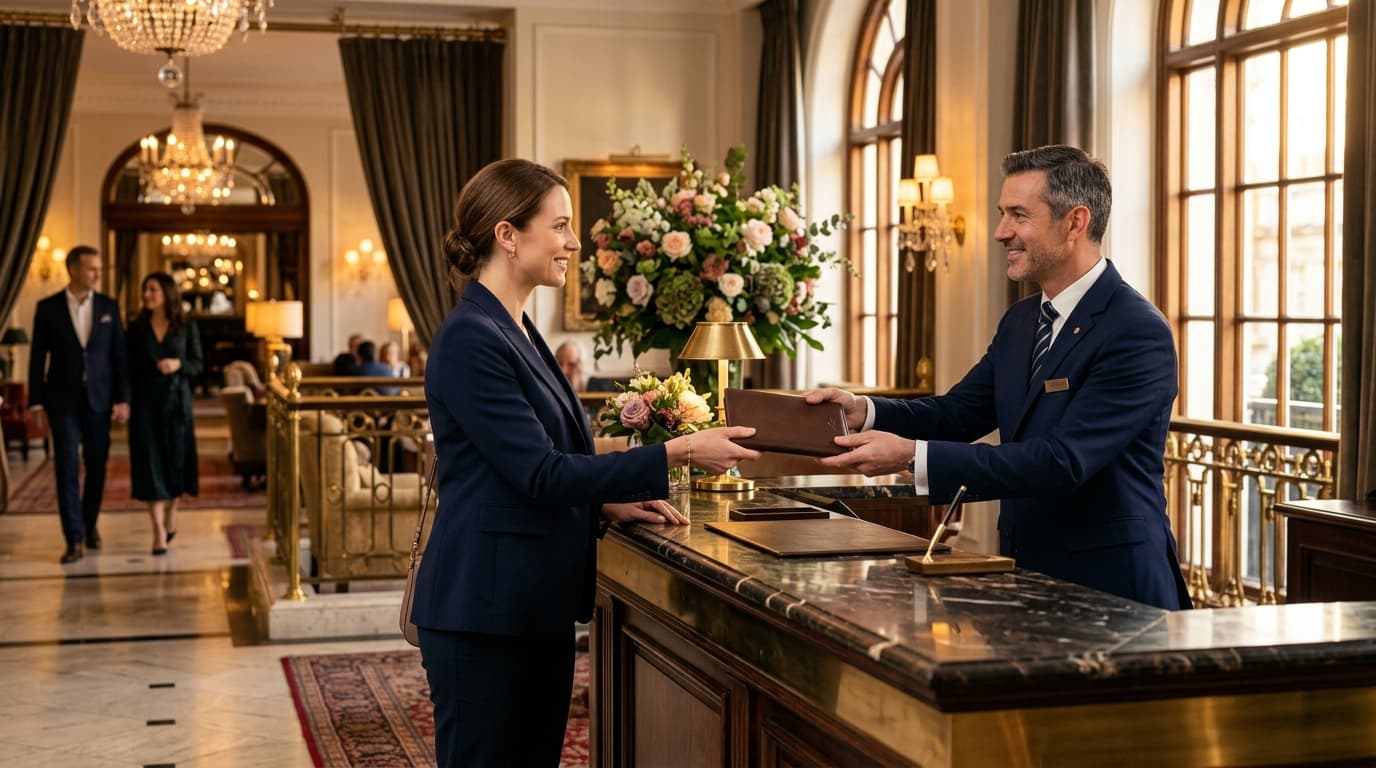
A concierge who introduces a guest to a £20,000 weekend charter and one who introduces a guest to a £180,000 transatlantic return can do identical work and be paid £600 and £5,400 respectively. The effort is the same: a conversation at the desk and a name passed to the broker. The trip decides the number.
Anyone researching hotel concierge referral commission private jet charter will find a headline percentage. What they rarely find is how that percentage behaves across different kinds of trip.
Every figure below uses one set of illustrative terms: a 3% introducer commission on the pre-tax charter price, paid out of Villiers' own fee and never added to the guest's bill. It is paid within 30 days of the final flight, once the guest's payment has cleared. Check your own agreement for the exact terms; the arithmetic works the same way whatever the percentage.
Three things move the number: the aircraft size and sector length, whether the trip is a return or a single leg, and whether the price is a standard charter or a discounted empty leg. A concierge controls none of these directly. What they do control is which trip the guest asks about in the first place.
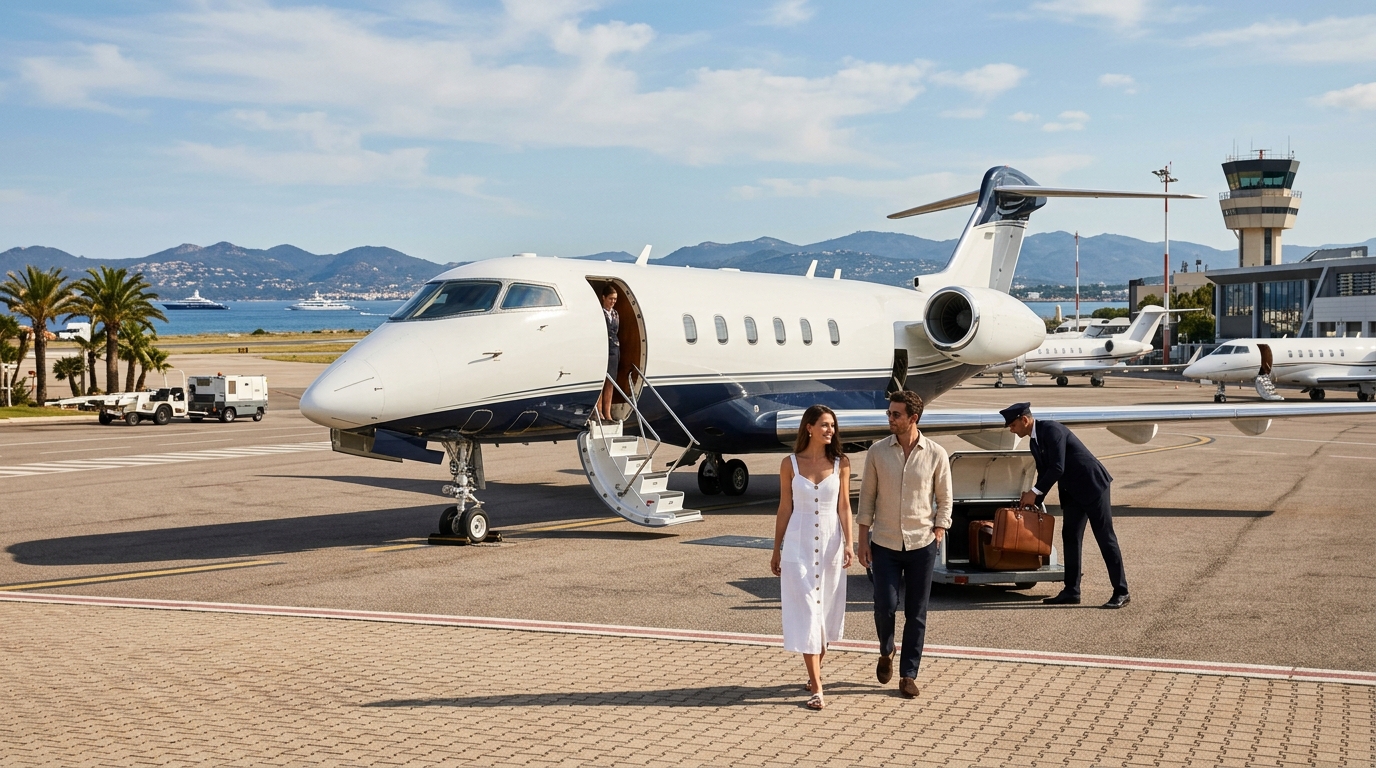
Worked example 1: a London to Nice summer weekend on a light jet
Farnborough (EGLF) to Nice (LFMN) takes about 1 hour 50 minutes in an Embraer Phenom 300E. The cabin is 5 ft 1 in wide and 4 ft 11 in high, and it seats six, so a couple with friends fits comfortably with luggage. The jet's 2,010 nm range is far more than this route needs.
A Friday-out, Sunday-back charter in July or August typically prices at £17,000 to £23,000 pre-tax. Take £20,000 as the working figure. At 3%, the commission is £600.
A mid-August weekend flown on the 17th and 19th would therefore pay by mid-September. The guest never sees the commission, and the quote is the same whether or not an introducer is involved.
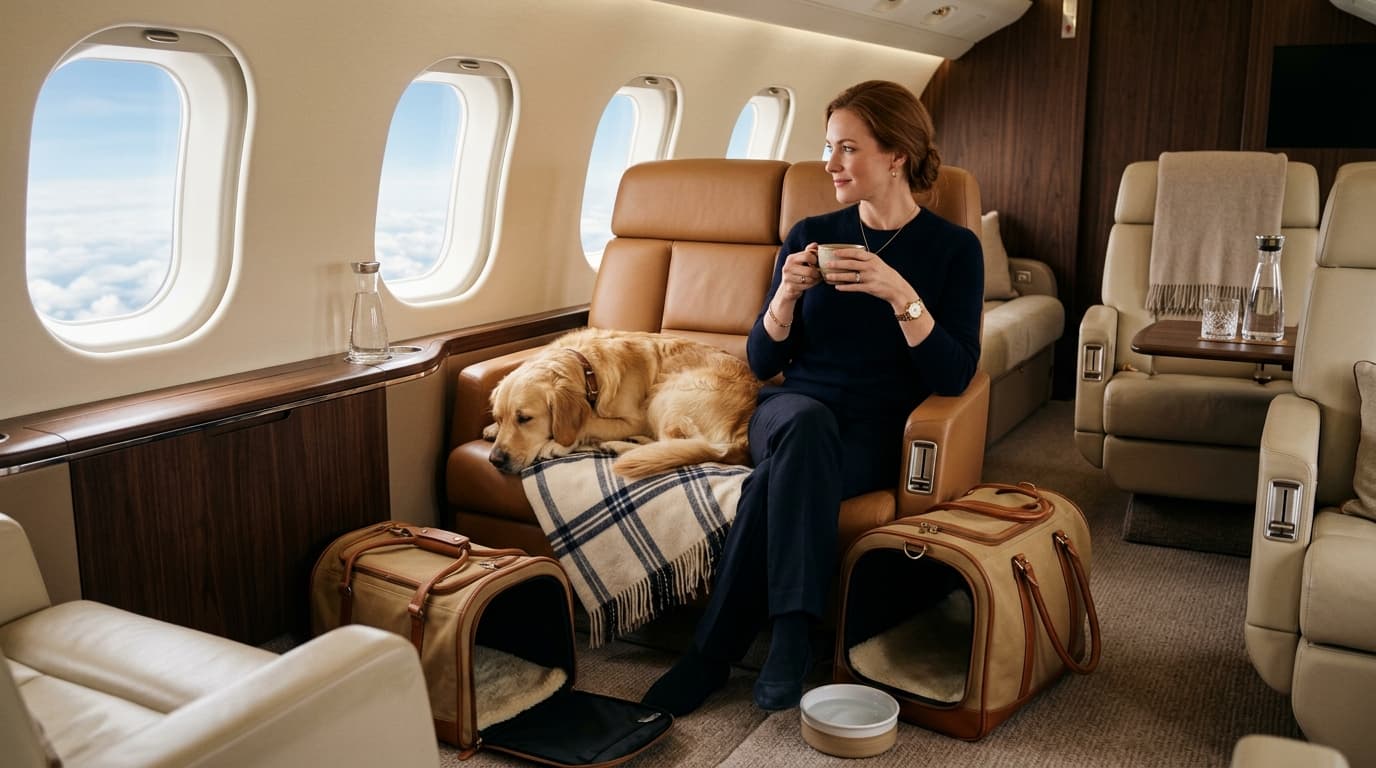
The concierge's influence here is the brief. Passing on the passenger count, the luggage, the preferred departure time and any pets before the quote is requested saves a full day of back-and-forth. Peak Fridays and Sundays are when aircraft are scarcest, so a guest who is happy to leave on Thursday evening or return on Monday morning often opens up better availability.
What the concierge cannot influence is whether a Phenom 300E is free that weekend. In July, that depends on bookings made weeks earlier by other people.
Worked example 2: a one-way empty-leg booking, and why the commission looks smaller
Suppose a Cessna Citation XLS+ drops guests at Nice and has to return to Farnborough empty. Its cabin is 5 ft 6 in wide and 5 ft 7 in high, and it seats up to eight. That return sector is an empty leg: the aircraft is flying anyway, so the operator sells the seats at a reduced price.
A standard one-way charter on this sector would run to £12,000 to £14,000. The empty-leg price might be £7,500. At 3%, the commission is £225.
That looks small for two reasons, and neither is a flaw in the arrangement. The trip is a single sector, and the price has already been discounted. The guest has paid less, which is why they booked.
The concierge cannot influence any of the things that define an empty leg: which route is available, which day, or whether it holds. The leg exists because someone else booked the outbound journey. If that booking moves by six hours or is cancelled, the leg moves or vanishes with it.
What the concierge can do is identify the guests with open dates and a flexible departure airport. These are the guests for whom a positioning leg works. They are often also the guests who come back for a full-price charter next season, so a £225 first booking can be the start of a much larger relationship.
Worked example 3: a family of six, Teterboro to Palm Beach, on a midsize jet
Teterboro (KTEB) to Palm Beach (KPBI) is roughly 2 hours 40 minutes in the air. A family of six with children, golf bags and a nanny needs more than a light jet's baggage hold. The Cessna Citation Latitude is a typical choice: a 6 ft 5 in wide, 6 ft high cabin that seats up to nine, with a range of 2,700 nm. The Bombardier Challenger 350, with a 7 ft 2 in wide cabin, is the usual alternative.
A one-way sector on this route runs to roughly £19,000 to £27,000 in school-holiday weeks. A return, with a week or ten days in Florida between legs, comes to about £48,000. At 3%, the commission is £1,440.
That is more than double the Nice weekend, and it comes from a single guest conversation. The reason is straightforward: two sectors, a larger aircraft, and a peak-demand route.
The concierge's influence here is timing and detail. Passing on the family's school-holiday dates early, along with the ages of the children, car-seat needs and any pets, lets the broker hold an aircraft before Presidents' Week or the Christmas fortnight fills. The earlier the introduction, the wider the choice of jet.
What the concierge cannot influence is whether a Latitude or Challenger 350 is free in those peak weeks. If neither is, the broker will propose a larger or smaller aircraft, and the price moves with it.

Worked example 4: a transatlantic charter and the long-haul effect on a single introduction
Farnborough (EGLF) to Teterboro (KTEB) is about 3,000 nm, which means 6 hours 45 minutes to 7 hours westbound. Only an ultra-long-range jet does this without a fuel stop. The Gulfstream G650ER (7,500 nm range, with an 8 ft 2 in wide, 6 ft 3 in high cabin) is the benchmark. The Bombardier Global 6500 and the Dassault Falcon 8X, whose range is 6,450 nm, are its closest comparators for this sector.
A one-way crossing on this class of aircraft prices at £85,000 to £110,000. A return, with the aircraft staying in New York for a week, comes to about £180,000. At 3%, the commission is £5,400, the equivalent of nine Nice weekends from one introduction.
The payout timing is the same 30 days, but it runs from the final leg. A guest who flies out in June and returns in July pays the concierge in August.
The concierge's influence is limited to the introduction itself and when it happens. A guest planning a Manhattan trip months ahead can be put in touch early, while a guest who calls three days before departure often cannot be served at all, because very few G650ER, Global 6500 or Falcon 8X aircraft are available at short notice.
The long-haul effect cuts both ways. These trips are rare and the guests who take them often already have a broker. A concierge should treat one as a bonus rather than a plan.
From examples to an annual figure: how many guest conversations it takes to earn a meaningful sum
The useful question is not how much one trip pays but how many guests are genuinely in the market. A busy hotel concierge may speak to 1,000 guests in a year. Most are not in the market for a charter, because they are travelling on a fixed budget, on a fixed route, or are simply not interested.
A realistic funnel looks like this. Of 1,000 guest conversations, perhaps 30 are genuinely in the market: guests who already fly privately, or who mention a destination where the logistics are difficult. Of those 30, about one in three asks for a quote, which gives 10 enquiries. About 40% of enquiries convert, which gives 4 booked trips.
The mix matters more than the count. Take two Nice-style weekends (£1,200), one empty leg (£225) and one family run (£1,440). That is £2,865 for the year.
A transatlantic booking is the variable. If one lands every second year, it adds an expected £2,700 a year on average, which brings a typical annual figure to about £5,500. In a year when one actually happens, the total is £8,265.
This is also where the ability to influence the outcome is largest. Improving the number of guests who are genuinely in the market, rather than the headline percentage, moves the total most. A concierge who logs every conversation, notes which guests mentioned a trip, and passes on the brief promptly will see the funnel improve. The percentage and the aircraft availability stay fixed; the introductions are the part that is yours to improve.