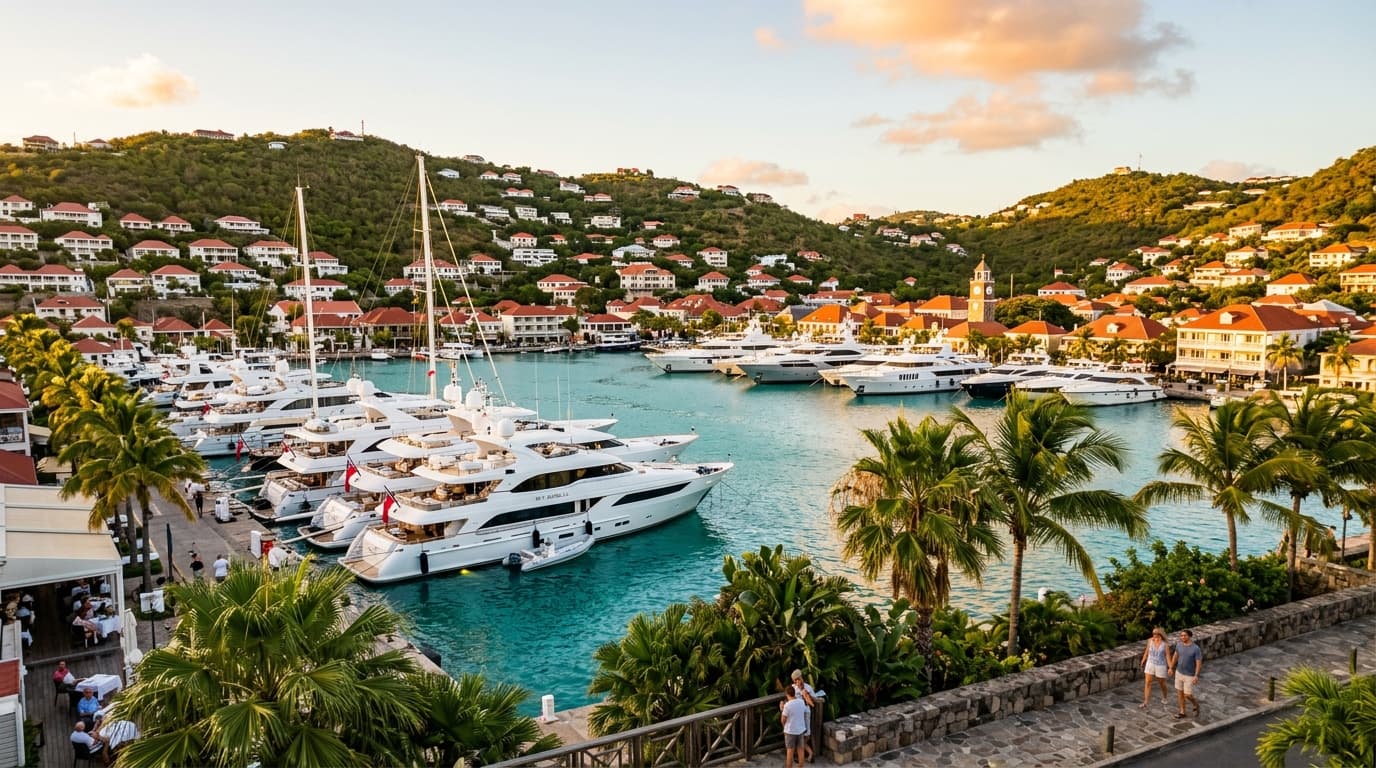
 Farnborough
 Nice

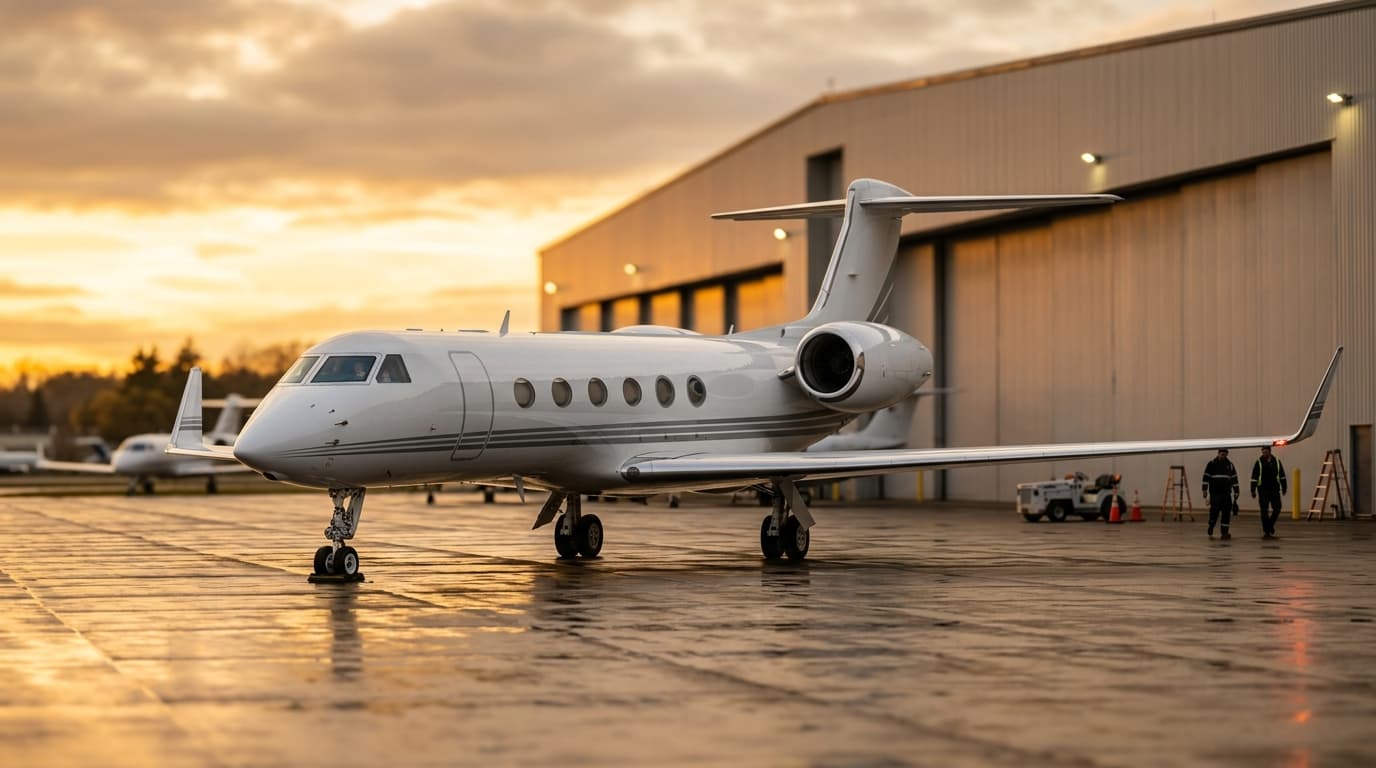
Why the Gulfstream G550 Still Dominates Ultra-Long-Range Charter
On a London to Dubai sector, a Gulfstream G550 typically costs £15,000 to £30,000 less than a Gulfstream G700, and the two aircraft land within about 20 minutes of each other. That gap explains why experienced brokers still reach for the G550 first when a client wants a large, fast, proven cabin for a long sector.
Gulfstream delivered the first G550 in 2003, and production ran for the better part of two decades. Hundreds of airframes were built, so the charter market has genuine depth: on any given week several are positioned in Europe, the Gulf and the eastern United States. A G700 or Bombardier Global 7500 in the right place on the right date is a far scarcer proposition.
The powerplant is a pair of Rolls-Royce BR710C4-11 engines, each producing 15,385 lb of thrust. They are among the best-understood engines in business aviation, with mature maintenance support at Farnborough (EGLF), Dubai and Singapore. On a 10-hour sector, a known quantity is worth more than novelty.
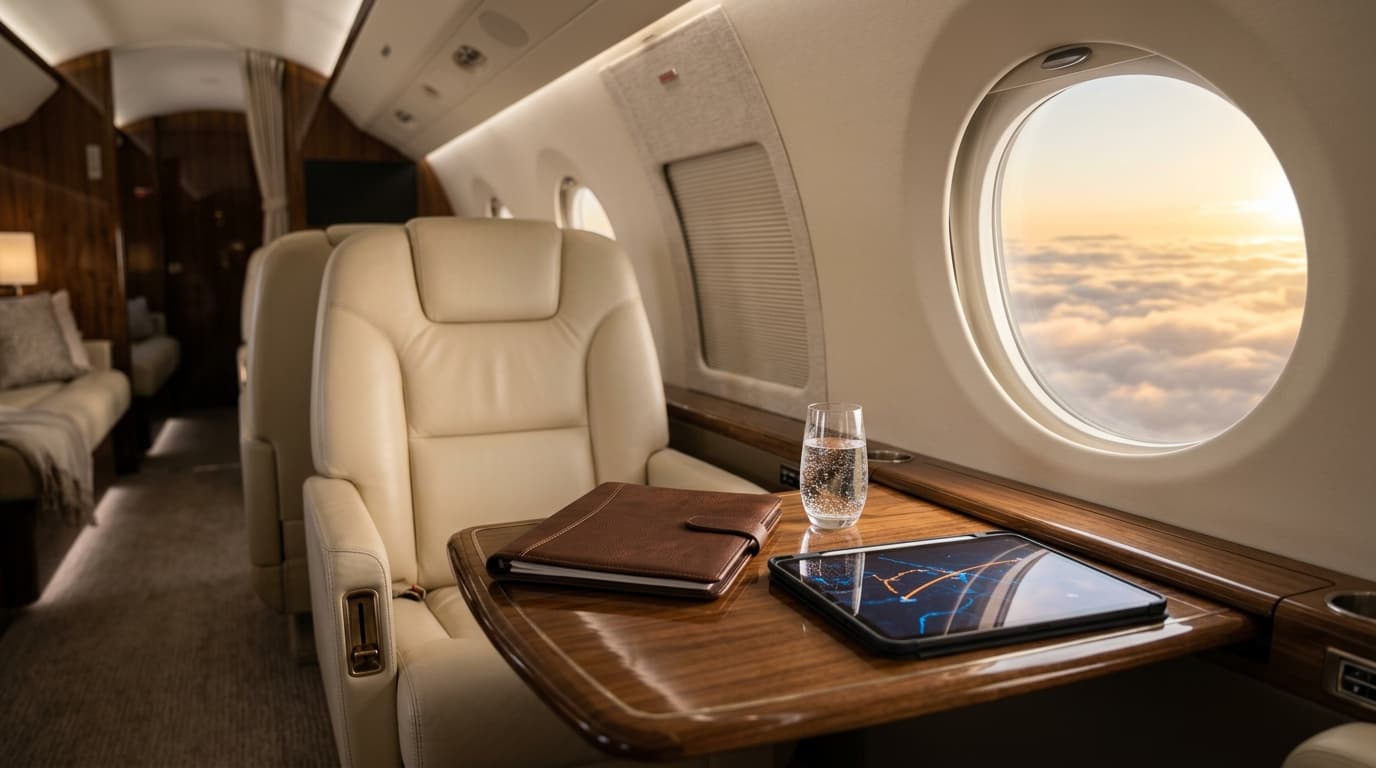
The cabin holds up as well. At 43 ft 9 in long, 7 ft 4 in wide and 6 ft 2 in high, it seats up to 16 in a typical charter layout and sleeps six to eight. Fourteen oval windows keep it bright, and the cabin altitude sits at 4,850 ft when the aircraft cruises at 41,000 ft.
Fleet depth also keeps pricing honest. Charter rates for the type usually run at roughly £8,000 to £10,000 per flight hour, against £11,000 to £14,000 for a G700. For a client who wants the destination rather than the badge, that difference buys a lot of ground handling, catering and onward transport.
Range and Real-World Routes: London to New York, Dubai, Riyadh and Beyond
The 6,750 nm figure is quoted at Mach 0.80 with eight passengers and four crew, and real planning takes a few hundred miles off it for winds, alternates and reserves. Even so, most of the routes that matter to European clients sit comfortably inside the aircraft's reach.
London to New York. EGLL or EGLF to Teterboro (KTEB) is about 3,000 nm and takes around 7 hours 45 minutes westbound against the prevailing winds. A one-way sector typically runs to £70,000 to £90,000, depending on positioning and the season. The aircraft is not stretched, so there are no surprises with diversion fuel.
London to Dubai. The run to Dubai World Central (OMDW) is roughly 2,970 nm and about 6 hours 45 minutes in the air. Expect £60,000 to £80,000 one way from a UK departure, and less if the aircraft is already returning to the Gulf.
London to Riyadh. King Khalid International (OERK) is about 2,650 nm, a flight of around 6 hours. That puts a one-way charter at £55,000 to £75,000, and the G550's cabin makes the duration easy for a full party of 12.
London to Johannesburg. At roughly 5,300 nm to Lanseria (FALA) or OR Tambo (FAOR), nonstop flight is within range but leaves thin margins when headwinds build. Many operators plan a stop at Nairobi (HKJK) or Luxor instead, which adds about 60 minutes. Budget £130,000 to £165,000 for the sector.
London to Singapore. At about 5,850 nm to Seletar (WSSL), the realistic plan is one stop, usually in Dubai or Muscat. Total journey time is around 13.5 to 14.5 hours including the technical stop. A London to Singapore sector on this aircraft typically runs to £150,000 to £190,000 at current market rates.
For anything beyond about 5,500 nm nonstop, the question is not whether the G550 can make it but whether a stop is acceptable. For most clients it is, particularly when the stop is a 60-minute turn with a fresh crew briefing already arranged.
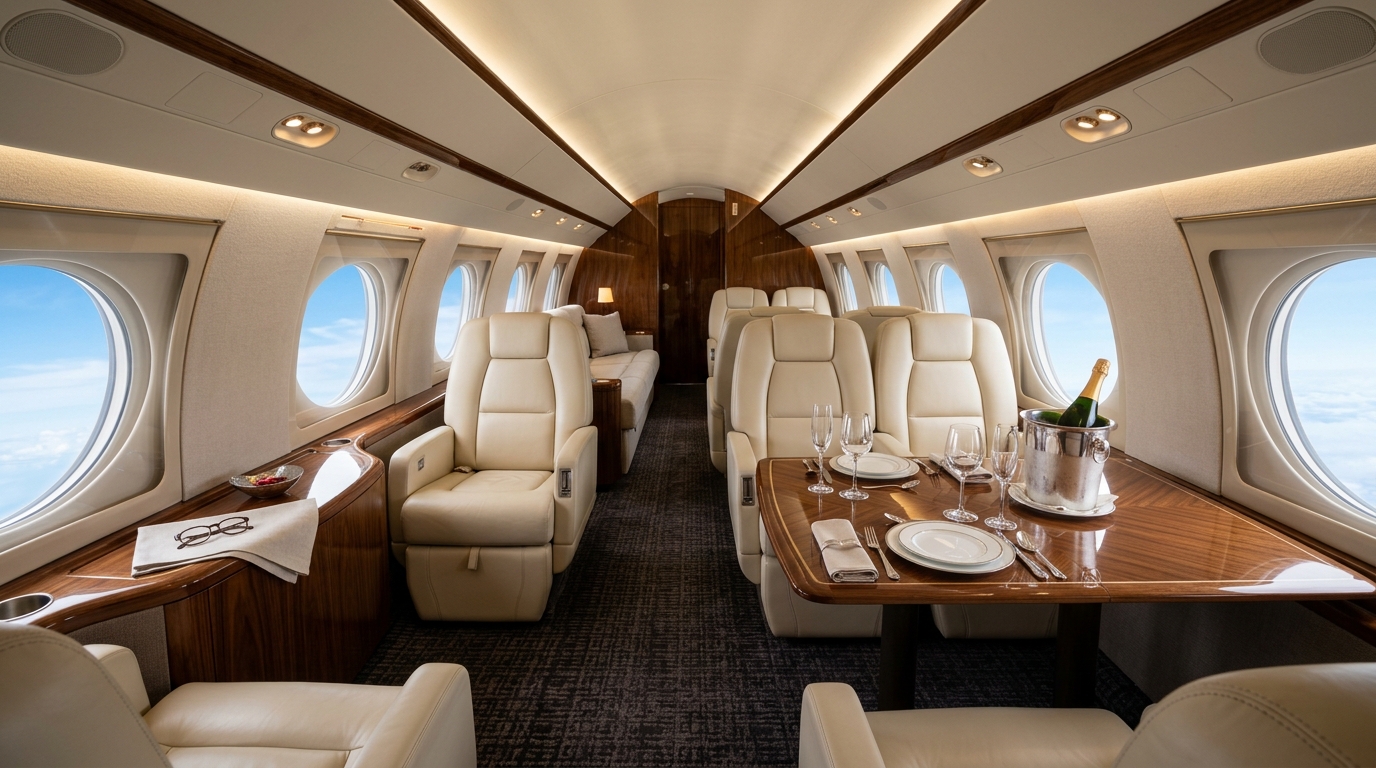
Inside the Cabin: Layouts, Sleeping Configurations and What Refurbishment Changes
Two G550s built in the same year can feel like different aircraft inside. The shell is identical; the interior depends entirely on what the original owner specified and what has been replaced since.
The standard arrangement uses three zones. A forward galley and crew rest area leads into a club section with four seats, then a four-seat conference and dining area, and finally an aft stateroom with a three-place divan and a full lavatory. That layout carries 12 to 14 passengers in comfort. Aircraft with 16 or more seats exist, but the sleeping options shrink as the seat count rises.
For overnight sectors, the sleeping count is the figure to ask about. A typical eight-berth G550 converts the divan, two club seats and two conference seats into beds. A four-zone private-owner layout may sleep only four, with a proper bed in the aft cabin.
Refurbishment is where the type earns or loses its place. A full refit within the last five years will usually include new leather and veneers, LED lighting, a modern cabin management system and updated in-flight entertainment. An unrefurbished aircraft from 2005 may still have a fixed-screen entertainment system and a dated galley.
Connectivity belongs in the same conversation. Newer G550s carry Ka-band systems such as Viasat or Inmarsat Jet ConneX, which can stream video and handle multiple concurrent video calls. Older installations rely on Ku-band or Iridium Certus, which handle email and messaging but struggle with simultaneous calls. On a 12-hour flight, that difference matters.
The galley is the other area where age shows. Ovens, steam equipment and chilled storage vary by tail, and a client planning a full dinner service for eight should confirm the equipment before booking, not after.
G550 vs G650, G700 and Global 6000: Where the Rate Difference Is Worth Paying
The Gulfstream G650 is the nearest sibling, with 7,000 nm of range and a cabin 8 ft 2 in wide, ten inches wider than the G550's 7 ft 4 in. It typically commands 15 to 25 per cent more per hour, and the wider cross-section is noticeable when the aft stateroom is in use. For a party of six or fewer on a sector under 7 hours, that premium buys comfort rather than capability.
The Gulfstream G700 extends the case further. It offers 7,500 nm of range, a cabin 56 ft 11 in long, and up to five living areas. The extra length matters when 14 passengers need separate dining, working and sleeping zones for 12 hours. On shorter sectors, the same passengers will barely notice.
The Bombardier Global 7500 reaches 7,700 nm and offers a cabin 8 ft 6 in wide, with a dedicated crew rest area and a fixed bed in the aft stateroom. It is the aircraft to book when a client needs London to Singapore nonstop, or London to Sydney with a single stop rather than two. Where the G550 needs a stop, the Global 7500 often does not, and that saves roughly 90 minutes door to door.
The Bombardier Global 6000 is the cheaper alternative, but it offers only 6,000 nm of range against the G550's 6,750 nm. Its cabin is 8 ft 2 in wide, so it feels roomier than the G550's. For transatlantic and Gulf sectors it is a fair match; for Johannesburg or Singapore it adds a stop the G550 may avoid.
A workable threshold: if the sector is under 7 hours and the party is 12 or fewer, the G550 is usually the right call. Move to a G700 or Global 7500 when the flight exceeds 9 hours nonstop, the party needs more than eight berths, or the client wants a fixed bed rather than a convertible divan.
How to Choose the Right G550 Tail: Age, Interior, Connectivity and Operator Checks
On a type this old, a broker's value lies in telling one airframe from another. Rates for a Gulfstream G550 charter can look identical across three quotes while the aircraft behind them differ by a decade in interior condition.
Year of manufacture and refit date. Ask for both. A 2008 airframe with a 2022 refit will often outclass a 2012 airframe with its original interior. Request cabin photographs dated within the last 12 months, not brochure images.
Seating and sleeping count. Confirm the exact number of belted seats and the number of true berths. Ask whether the aft bed is a fixed berth or a convertible divan, and whether a lavatory with a full-size sink is installed.
Connectivity. Establish the system, the provider and the coverage along your route. A Ka-band installation that performs over the North Atlantic may fall back to slower speeds over central Africa, so ask about coverage on the actual flight path.
Operator quality. Look for an ARGUS Platinum or Wyvern Wingman rating, IS-BAO Stage 3 registration and a documented record on long-range sectors. Ask how many hours the captain has on the G550 specifically; 1,500 hours or more on type is a reasonable benchmark for a long-haul charter.
Maintenance and APU status. An aircraft with an inoperative auxiliary power unit or deferred defects can be grounded at a remote fuel stop. Ask for current maintenance status and confirm that a recent inspection has been completed.
Positioning. The cheapest quote often reflects an aircraft already in the right place, not a poorer one. A G550 returning empty from the Gulf can offer a London to Dubai leg at a meaningful discount to the published hourly rate.
Brokers who can name the tail number, the refit date and the operator's safety rating before quoting are doing the work that justifies the commission. Insist on all three before agreeing to a price.