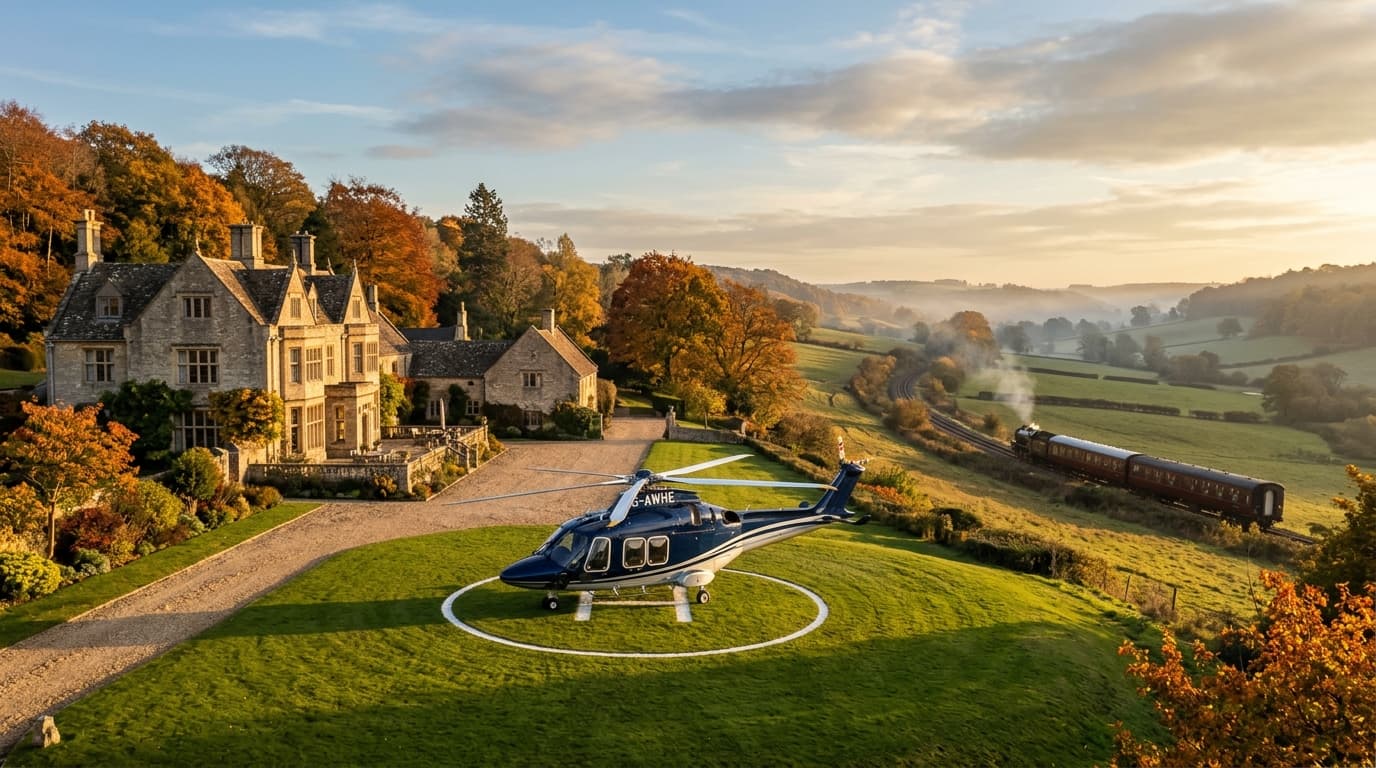
 Farnborough
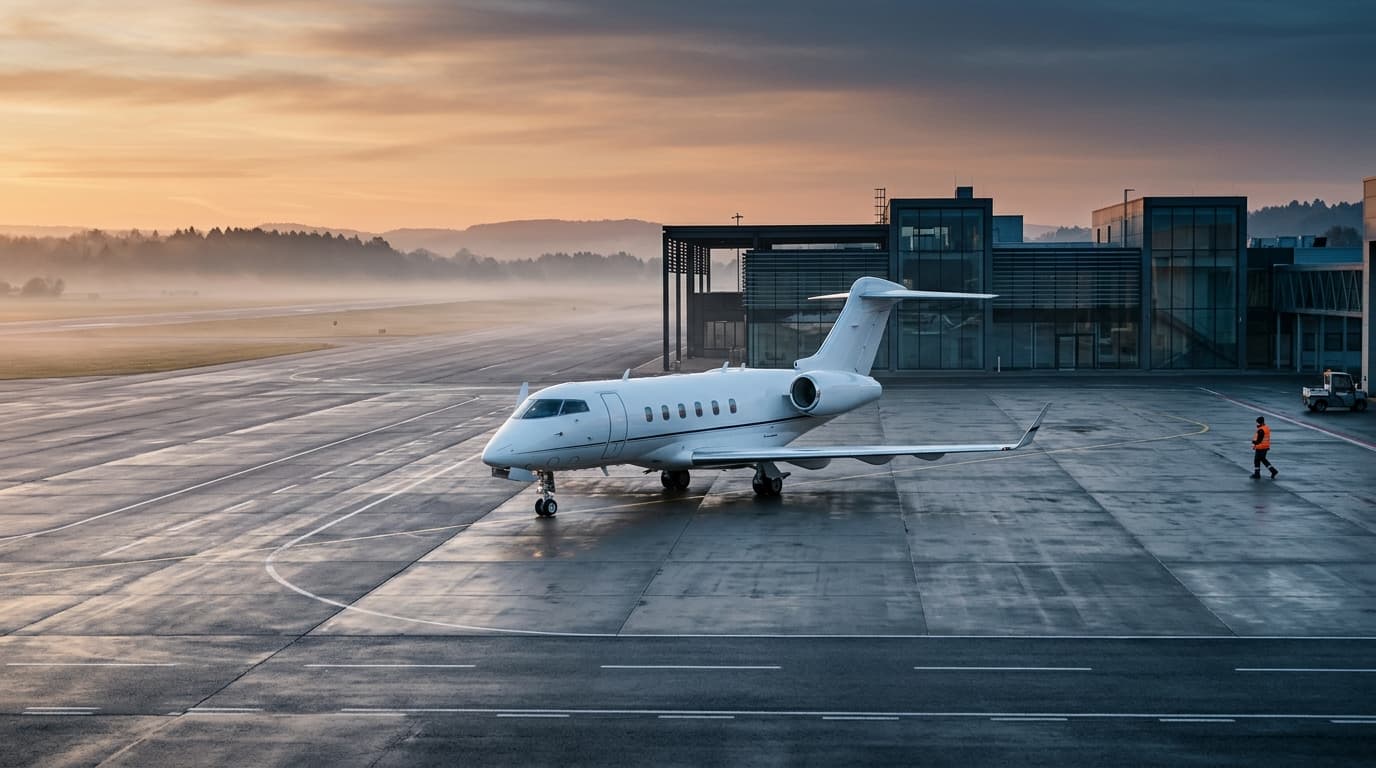
 Nice
Anatomy of a One-Line Request: The Eleven Facts a Charter Quote Needs That a Concierge Message Rarely States
The message "get the principal to Geneva tonight, two guests, one dog" answers four of the eleven questions a charter quote needs, and the seven it skips decide the price. Executive concierge private jet requests tend to arrive in this form: courteous, urgent and silent on the facts an operator will ask for within minutes.
The four stated facts are the destination city, the date, a head count of three and the presence of a pet. The full set an agent model has to resolve is:
- Departure airport or pick-up address
- Earliest and latest acceptable departure time
- Confirmed passenger count, with names as they appear on passports
- Passport nationalities and any visa position
- Baggage count, plus oversize items such as golf bags or skis
- Pet weight, breed, crate size and travel documents
- Arrival airport: Geneva (LSGG) or an alternative such as Lausanne (LSGL)
- Return date, or confirmation that the movement is one-way
- Cabin and catering requirements
- Flexibility: how far the time, airport or aircraft can move
- Paying entity and the person who can approve the price
The model classes each fact as stated, inferable or missing. The departure airport is often inferable from the principal's diary or last booking; the time window and return intent are not. Only the missing facts that move the price go back as questions, and never more than three at once, because an assistant will answer three questions at 18:00 far more readily than seven.
The order matters commercially. Facts 2, 7 and 8 (time window, arrival airport, return intent) swing the total by more than the choice of aircraft does, as the pricing section shows.
From Passenger, Pet and Baggage Count to Aircraft Category: How a Shortlist Is Actually Built
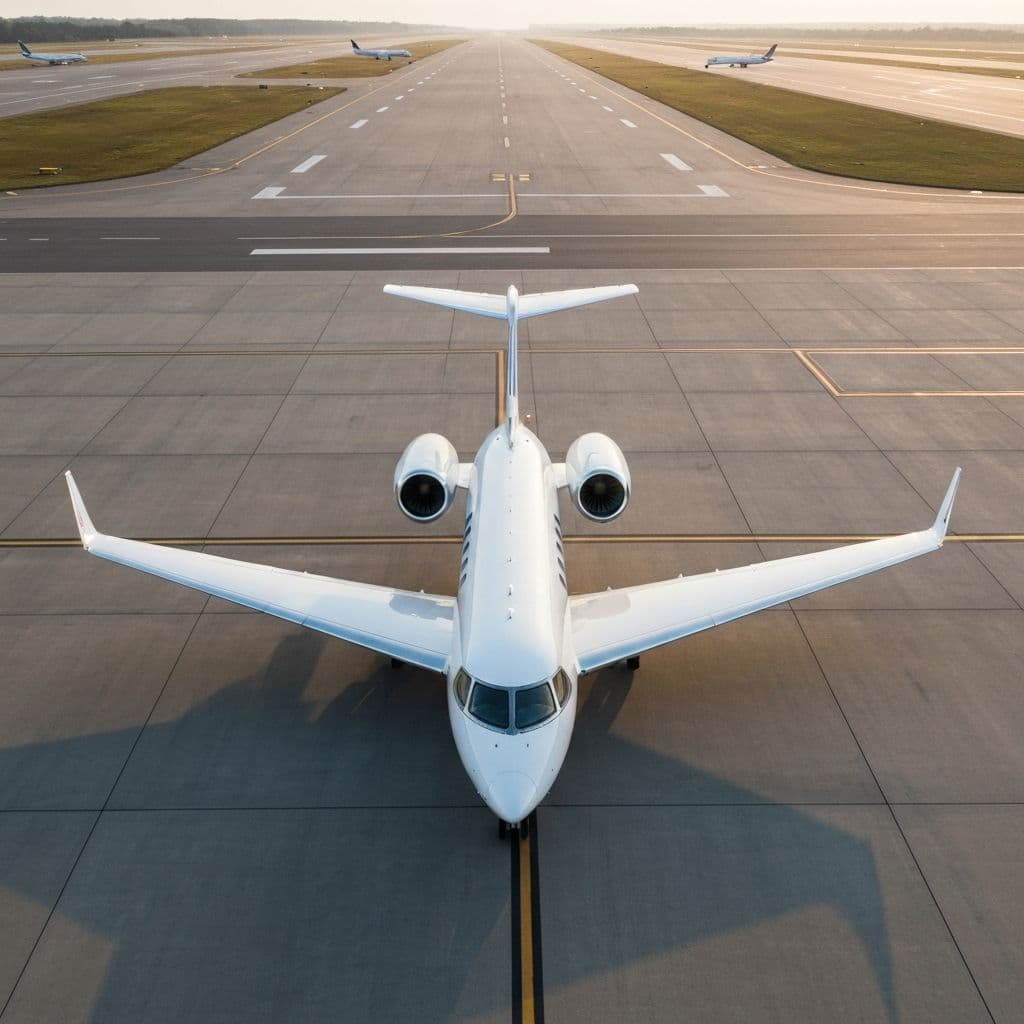
Three passengers sound like a light-jet job until the dog and the luggage are counted. A Phenom 300E seats six to eight in typical charter layouts and flies roughly 2,000 nm, far beyond the 400 nm from London to Geneva, but its baggage hold is about 66 cu ft against 106 cu ft in the Challenger 350, according to manufacturer data.
The agent model builds the shortlist from four numbers: seats, accessible baggage volume, cabin cross-section and the operator's pet policy. For three people, an assumed six soft bags and a crate of about 90 cm for a large dog, my working threshold is 80 cu ft of accessible hold. That threshold removes the Phenom 300E at 66 cu ft and keeps the Challenger 350 at 106 cu ft.
The Cessna Citation XLS+ goes into a "verify against the operator's spec sheet" bucket rather than an automatic yes. Its cabin is 5 ft 6 in wide and 5 ft 7 in high, which is comfortable for three people, but the dog's crate depends on the hold, and hold figures vary by configuration.
Cabin width is the dog's number. The Challenger 350 offers 7 ft 2 in of width and 6 ft of height, which is 25 inches wider and 14 inches taller than the Phenom 300E's 5 ft 1 in by 4 ft 10 in. Its direct comparators are the Embraer Praetor 500 and the Cessna Citation Latitude, so the shortlist can hold three real alternatives rather than one.
Pet policy is a hard filter, not a preference. Operators differ on whether dogs may travel in the cabin, and some charge a cleaning fee. The model removes any aircraft whose operator excludes animals before pricing, because a rejected quote costs 30 to 60 minutes that tonight's request does not have.
The arrival side needs the same discipline. Swiss entry for a dog typically requires a microchip, a valid rabies vaccination and a health certificate, and the agent checks the current Swiss federal veterinary requirements instead of relying on a remembered rule. Missing paperwork is the commonest reason a pet-carrying movement fails at the destination, not at departure.
Slots, Curfews and Airport Choice: Why Farnborough, Biggin Hill and Luton Are Three Different Answers at 21:00
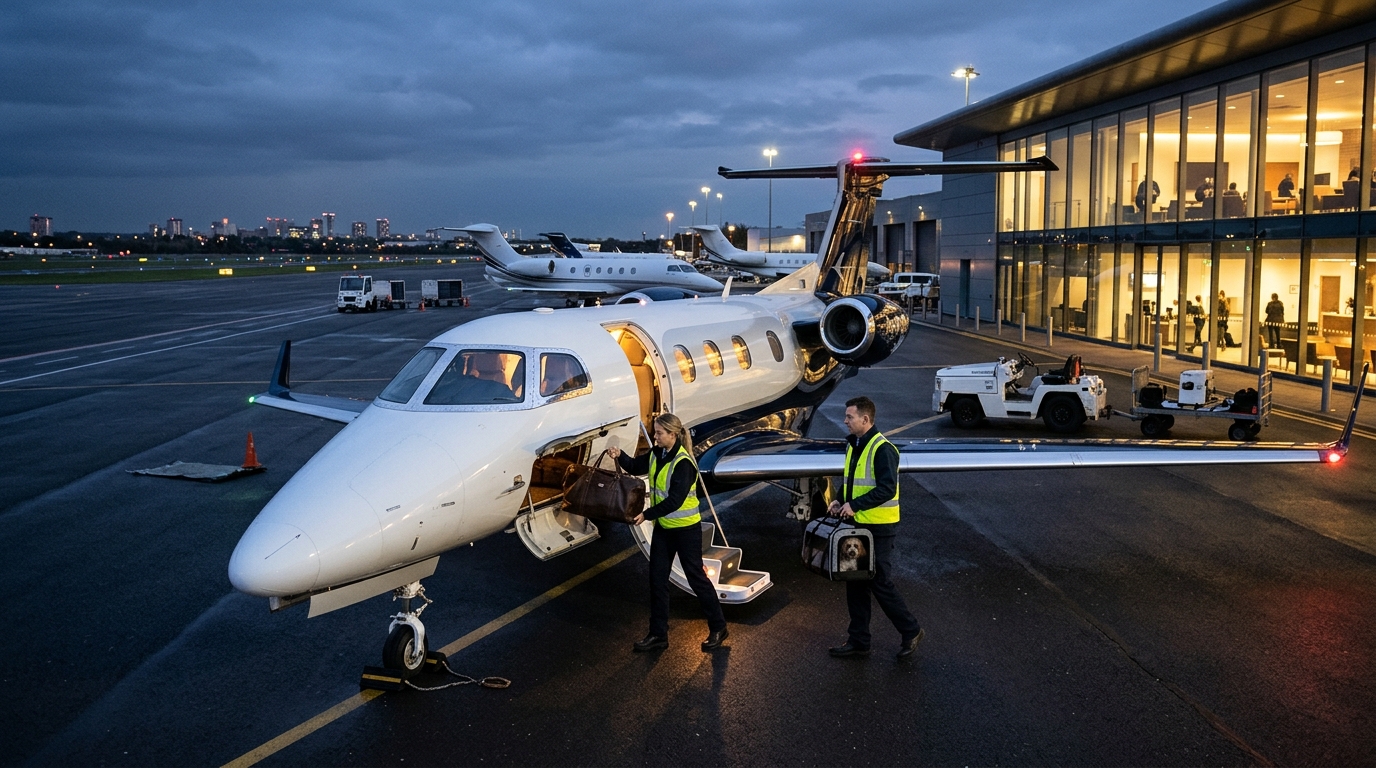
At 21:00 on a weekday, the three London airports stop being interchangeable. Farnborough (EGLF) is a dedicated business aviation airport that typically operates until about 22:00 on weekdays, with late extensions on request and at a charge; check the current AIP and airport notice. Road transfer from Mayfair typically runs 55 to 70 minutes.
Biggin Hill (EGKB) is nearer, at 45 to 60 minutes from Mayfair, but it is noise-sensitive and its late-evening departure restrictions are typically tighter than Farnborough's. A 21:00 departure usually fits; a slip to 21:45 may not.
Luton (EGGW) sits at 60 to 75 minutes from Mayfair. It is typically open around the clock, subject to a night noise quota that begins at about 23:30, so it is the forgiving answer when the principal's meeting overruns. The cost of that forgiveness is the longest road leg of the three.
The model scores each candidate on three numbers: door-to-door ground time, latest permitted departure, and arrival margin at LSGG. A principal who leaves Mayfair at 19:45 reaches Biggin Hill between 20:30 and 20:45, which leaves a comfortable margin before 21:00. The same departure reaches Luton between 20:45 and 21:00, which is too late to board and leave on time, so Luton drops out of the 21:00 case.
The arrival end deserves equal attention. A 21:00 departure from EGLF with a 1 hour 30 minute flight lands at 22:30 UK time, which is 23:30 local in Geneva during winter time. LSGG handles night traffic, but business aviation arrivals that late depend on the handling agent's out-of-hours cover and on customs being notified in advance, so the agent checks both before the quote is shown.
Business aviation airports on both sides also work on prior-permission arrangements. The agent therefore requests permission in parallel with the aircraft search, not after it, because a confirmed aircraft without a confirmed departure permission is not a booking.

Pricing the Whole Movement: Positioning Legs, Return Legs, Fees and the Empty-Leg Opportunity
A Challenger 350 from Farnborough to Geneva one-way typically prices at £8,500 to £12,000 on a same-day request, and the workings explain the spread. Assume a block rate of about £4,500 per flight hour (author's estimate for this class) and 1.5 hours of flight: £6,750. Airport, handling and navigation fees across both ends typically add £1,500 to £3,000; take £2,000. That gives about £8,750 before any positioning.
Positioning is the variable. If the aircraft is based at Luton, a 30-minute empty flight to Farnborough adds 0.5 hours at £4,500, or £2,250, bringing the one-way total to about £11,000. An aircraft already standing at Farnborough removes that line entirely, which is why the model asks every operator where the aircraft is, not just whether it is free.
The trip shape changes the number. If the principal returns three days later and the aircraft waits in Geneva, the return adds a second 1.5-hour sector with its fees (about £8,750) and overnight crew and parking costs that I would estimate at £1,500 for three nights. The total is £8,750 + £2,250 + £8,750 + £1,500 = £21,250, within a £18,000 to £24,000 range for the whole return.
Out-of-hours charges can add several hundred pounds at EGLF or EGKB if the departure runs past the standard closing time, so the agent prices the late-extension scenario alongside the base case. A dog's cleaning fee, where charged, is small by comparison, typically a few hundred pounds.
The empty-leg opportunity sits on the return, not the outbound. An aircraft that happens to be repositioning London to Geneva tonight is rare, but the agent checks anyway; the better target is a Geneva to Farnborough empty leg on the return date. Such legs are commonly priced 25 to 50% below the standard one-way rate in my market observation, though availability is never guaranteed and the principal should be shown it as an option, not a promise.
The pricing logic is the same whether a charter specialist or a concierge desk is asking. The same architecture could run this costing as the front end for concierge teams, with the broker's quoting engine behind it.
What a Concierge Team Could Hand Off to an Agent Model, and What Should Stay With a Human
Before anything reaches the principal, the model runs operator checks, and these are where a defensible booking is made or lost. It confirms a valid air operator certificate covering the aircraft type, a current insurance certificate, and an independent safety audit rating from a body such as Wyvern or ARGUS. It also checks crew duty time.
Crew duty is the check most often missed. Under typical EASA flight time limitation schemes the basic maximum duty day is 13 hours, though each operator applies its own approved scheme. A crew that reported at 07:00 for an earlier trip has used 14 hours by 21:00, over that limit, so the Farnborough departure fails for that aircraft however attractive its price.
VillAs of today, villiersOS runs private jet charter only. Concierge intake is a sector it does not serve, so the case here is that the same architecture could take on this front-end work, not that it already does. The adjacent opportunity is the jet-request slice of a concierge desk's workload, not the whole concierge budget.
Here is an illustrative efficiency estimate. Suppose a desk handles 25 jet requests a month at 45 minutes of manual work each: 25 × 45 = 1,125 minutes, or 18.75 hours. If an agent model assembles the shortlist and a human spends 15 minutes reviewing each, the figure falls to 375 minutes, or 6.25 hours. That saves 12.5 hours a month, about two-thirds of the effort. These are my assumptions, not measured results.
The handoff boundary is straightforward. The model can extract facts, filter aircraft, check airport hours, cost the movement and verify operators. A human should approve the price, decide whether to waive a rule such as a pet restriction, handle any doubt about a dog's paperwork, and speak to the principal when the request carries a sensitivity the message does not state.
For concierge teams, the working method is the checklist itself. Send all eleven facts in one message, give a 90-minute departure window, name a fallback airport, and state who approves the price. A request in that shape can be quoted, checked and returned in a single pass instead of four rounds of questions.