Why Croatia Has Become Europe's Most In-Demand Summer Charter Destination
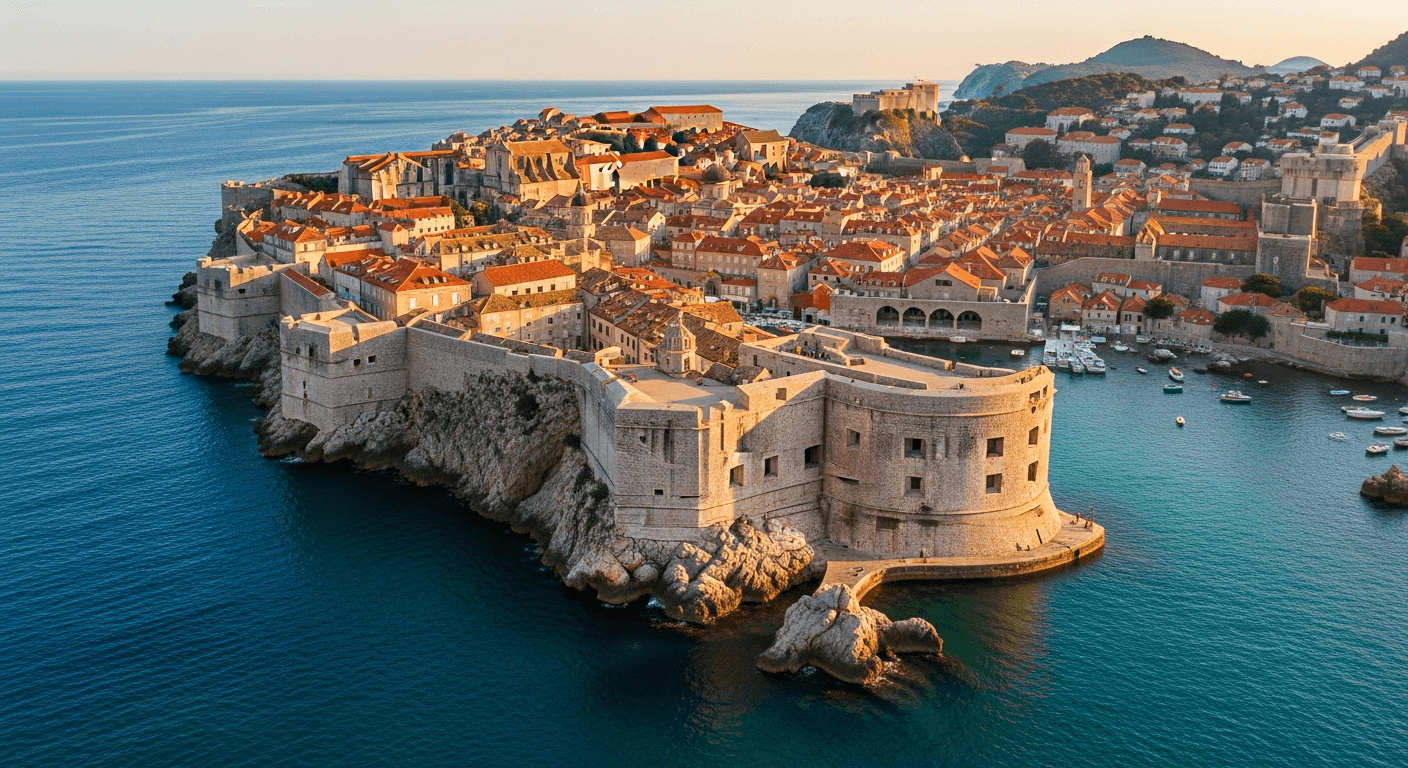
The Dalmatian coast has quietly overtaken Sardinia and the Greek islands as the most frequently requested summer destination in Villiers' European routing data for the past two consecutive seasons. The shift is structural: requests to charter a private jet to Croatia now outpace those to Mykonos and Capri combined during the peak July-to-August window, driven by a coastline that rewards guests who understand how to move across it efficiently.
What changed is not Croatia itself but the supporting infrastructure. The expansion of Split Airport (LDSP) in 2019 added meaningful GA apron capacity and raised handling standards. Croatia's accession to Schengen in January 2023 removed a customs friction point that had previously complicated multi-country summer tours: arrivals from Geneva (LSGG), Zurich (LSZH), or London Farnborough (EGLF) now clear once, which simplifies the ground experience considerably for guests moving across a broader European circuit.
The appeal is also structural in its geography. Hvar, Korčula, and Vis have become anchoring destinations for a clientele that builds summer around three or four Mediterranean stops. That kind of itinerary creates demand for flexible repositioning rather than a simple point-to-point charter: London to Dubrovnik, then Split, then an island circuit by water, then back. A well-structured multi-stop charter programme handles it naturally; a single outbound booking cannot.
The villa and estate market has completed the picture. Properties on Brač's southern coast and on Hvar's north-facing hillsides now compete directly for the same summer weeks as comparable estates in Saint-Tropez and Porto Cervo. Croatia is no longer a value alternative within the Mediterranean circuit; for many guests this season, it is the lead destination.
The combination of reliable flying conditions from May through September and the concentration of international yacht traffic in the same window means Croatia's charter season runs longer and peaks harder than almost any comparable Mediterranean destination. For an active operator on the Dalmatian route, the six-week peak around high summer can account for more movements than the previous ten months combined.
The Airports That Matter: Dubrovnik, Split, and the Case for Brač
LDDU's single runway serves both scheduled and general aviation on the same piece of tarmac, and at peak summer the competition for slots and ramp space is intense. Experienced operators working the Dalmatian route submit slot requests to the airport coordination authority three to four weeks ahead of a Saturday July arrival as a minimum; six weeks is more comfortable. Arriving without confirmed slots on a busy day risks ramp delays, holding costs, and potential diversions to Mostar (LQMO) across the Bosnian border, all of which negate the operational efficiency that charter is supposed to deliver.
Split Airport (LDSP) operates with marginally greater flexibility on the GA side. Its geographic position makes it the stronger hub for guests whose primary interest lies in the central Dalmatian islands: Hvar, Brač, Šolta, and Vis. Ground transfer from the GA apron to the Split ferry terminal takes under 30 minutes when handling is properly pre-arranged, which makes LDSP the cleaner entry point for itineraries that begin with an island circuit rather than a city stay.
Brač Airport (LDSB) is the operational option that most itineraries overlook. Positioned at 1,252 feet AMSL on the island itself, LDSB can accept light jets and turboprops up to approximately 12,500 kg MTOW. The Embraer Phenom 300E manages the runway with standard performance margins; heavier midsize jets need individual performance analysis before any commitment. For groups of four to six already positioned on the island by yacht, departing from LDSB instead of backtracking to LDSP eliminates the ferry crossing entirely and gives the final morning back.
Choosing the Right Aircraft for the Dalmatian Run
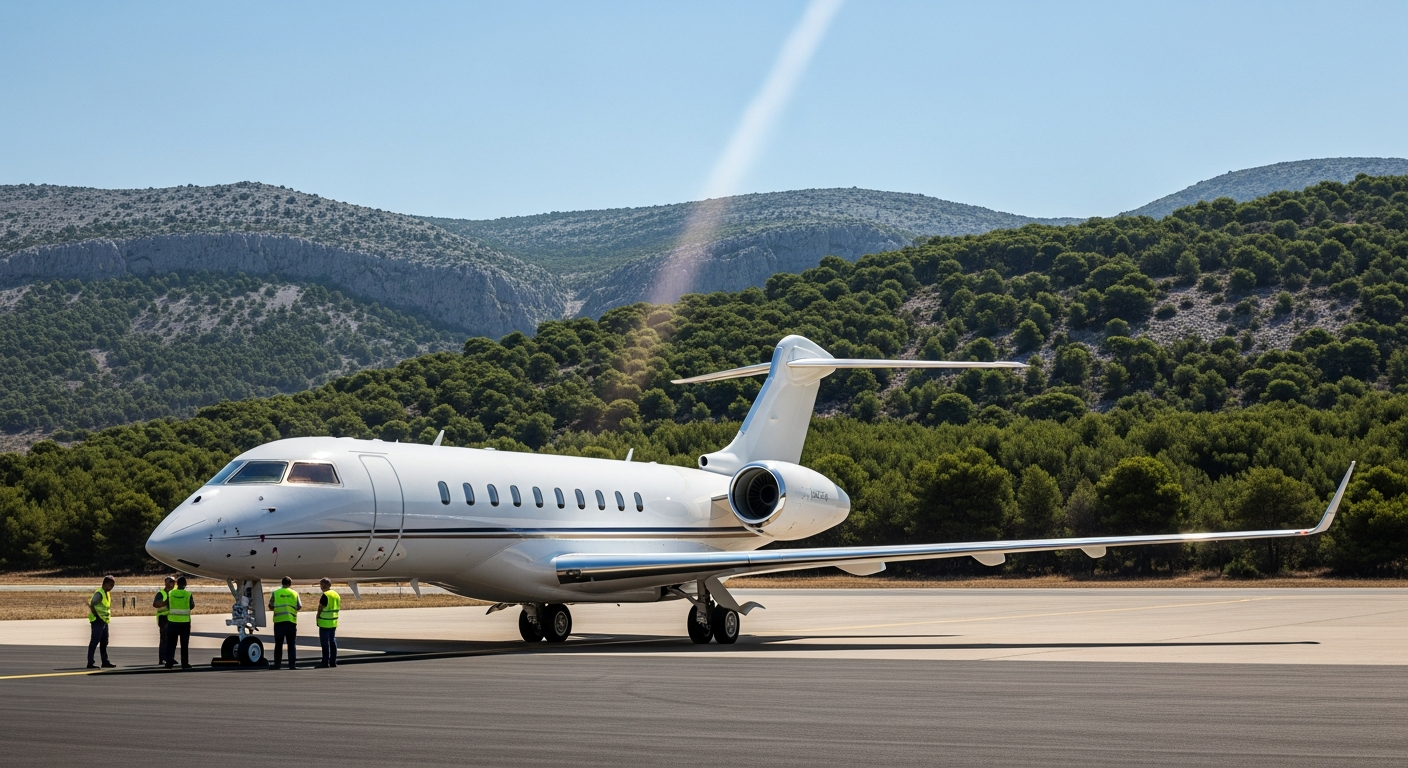
The most requested private jet to Croatia sector from the UK is Farnborough (EGLF) to Split (LDSP), covering roughly 1,680 nautical miles. A Cessna Citation Longitude flies it in approximately three hours, priced at £18,000–£24,000 one-way at current market rates depending on positioning requirements and the operator's base. For groups of six to eight, that figure distributes into territory that makes other charter categories within the private aviation spectrum difficult to justify.
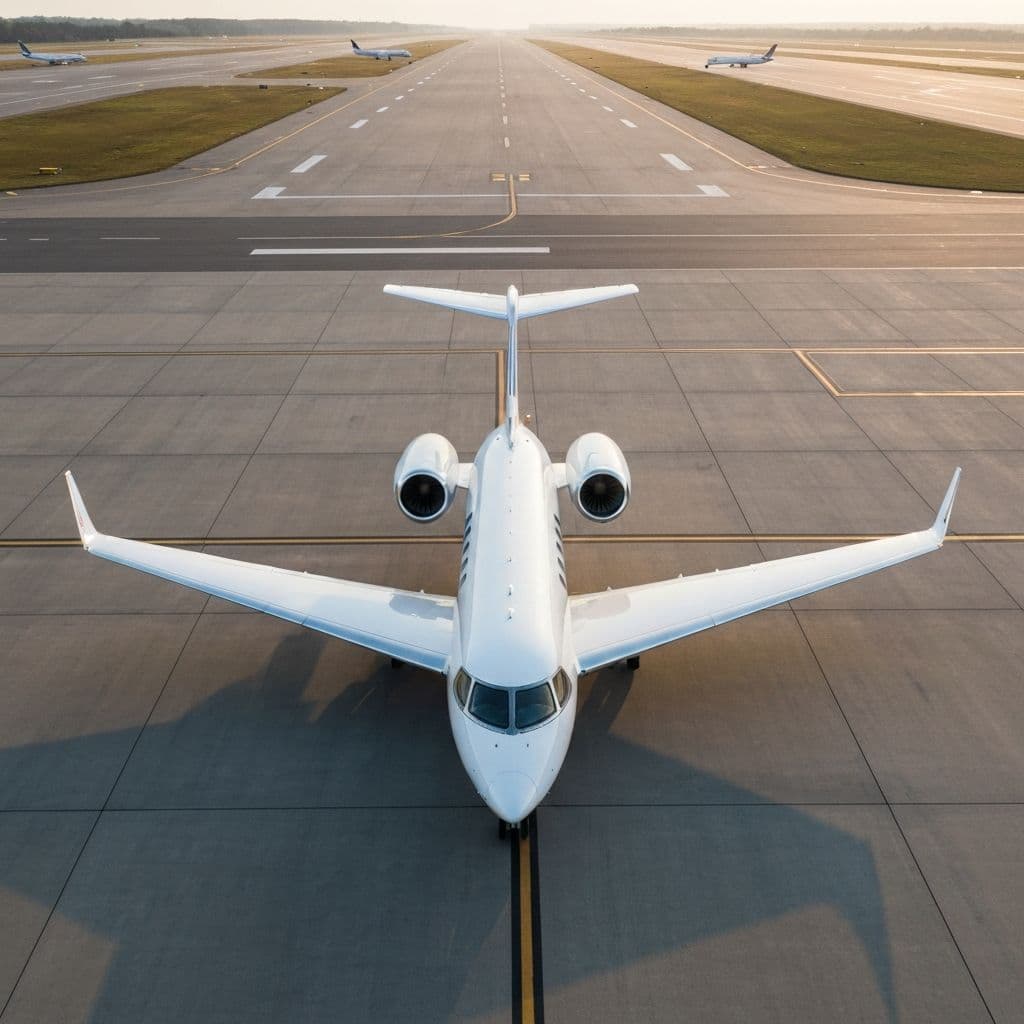
The Embraer Phenom 300E is the aircraft that appears most frequently on Dalmatian routing requests, for sound reasons. Its range of approximately 2,010 nautical miles handles the London to Dubrovnik sector with comfortable margin, its short-field performance suits both LDDU and LDSP, and its operating economy makes it the natural starting point for groups of up to five passengers. The relevant limitation is cabin width: at 1.52 metres, the Phenom 300E is narrow for a cruise that approaches two and a half hours.
For groups requiring more comfortable cabin dimensions, the Pilatus PC-24 offers unusual field performance for its category; the Dassault Falcon 2000LXS provides a three-section cabin at a meaningful step up in hourly cost; and the Cessna Citation Latitude sits between the two. The direct structural comparators in this midsize category are the Gulfstream G280 and the Embraer Legacy 500, which cover the same sector with overlapping cabin specs. The choice between them typically comes down to operator relationships and regional availability rather than performance differentials.
For guests arriving from further afield and building Croatia into a longer European summer circuit, the Bombardier Global 7500 covers Riyadh (OERK) to Split non-stop with eight to twelve passengers, and the Gulfstream G650ER manages Teterboro (KTEB) to Dubrovnik in under ten hours with a favourable wind. On a three-week itinerary that also takes in Monaco and Mallorca, neither aircraft is disproportionate.
Building Your Itinerary: Combining Sea and Air Across the Islands
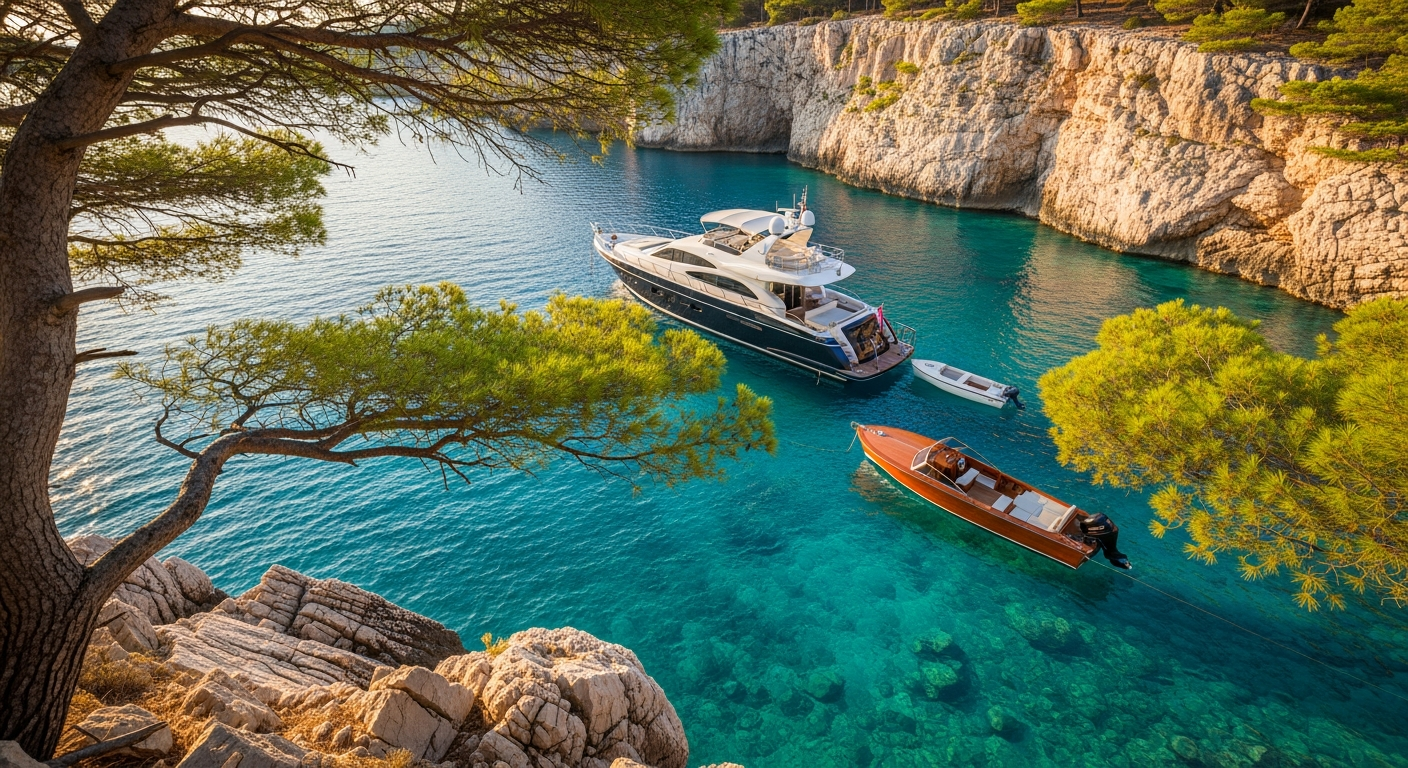
The operational challenge of the Dalmatian archipelago is that its most desirable destinations, Hvar Town, Korčula, and Vis, have no landing strips and sit 30 minutes to two hours from the nearest GA-accessible airport by fast boat. The itinerary that works best treats air and sea as two halves of a single transport system, using the aircraft for arrival and departure and a crewed vessel or high-speed tender for the island-to-island movement.
A practical five-day structure: arrive Split (LDSP) by private jet, transfer to a crewed yacht for an island circuit across Hvar, Korčula, and Vis over three days, return to Brač by tender for a final night, and depart from LDSB the following morning. Choosing LDSB for departure rather than LDSP removes the reverse ferry crossing and preserves a final island morning before wheels-up, without adding any meaningful repositioning distance for the aircraft.
The positioning logic also shapes whether a dedicated booking or an empty-leg opportunity makes more sense. Operators reposition light jets between LDDU and LDSP regularly during peak season, producing a steady supply of empty-leg sectors at 40 to 60 per cent below full-charter pricing. Booking a private jet to Croatia on an empty-leg from Vienna (LOWW) or Frankfurt (EDDF) requires departure-time flexibility of 24 to 48 hours and acceptance that the sector may be cancelled if the primary booking changes. For groups whose schedule can accommodate it, the saving is real and the journey is identical.
One structural point that affects total cost: planning the complete round-trip routing at the point of initial booking, with a flexible or open return date, almost always produces a lower total figure than booking the inbound sector and handling the return separately. Operators price aircraft availability across the full positioning period, and an unpositioned aircraft on a Croatian apron for four days accumulates fees differently to a confirmed round-trip booking with a confirmed departure window.
When to Book, What to Expect, and How to Avoid Peak-Season Mistakes
The general aviation slot coordination window at LDDU for mid-July through the first week of August effectively closes by mid-April. Any operator offering confirmed availability for those specific peak weeks after that date is working from stored handler relationships or routing through alternative airports. Anyone with serious intentions to charter a private jet to Croatia for peak season should have routing, preferred operator, and provisional slot requests confirmed before Easter.
The shoulder months deserve more serious evaluation than they typically receive. Late May through mid-June and the first three weeks of September offer same-week availability at both LDDU and LDSP with reasonable regularity. Weather across the Dalmatian coast in those windows is reliable, anchorages are navigable without peak-season wake traffic, and villa and hotel rates across Hvar and Dubrovnik typically run 20 to 35 per cent below July peaks. The experience of sitting at a table in Hvar Town without a reservation queue in early June is not a consolation prize; for most guests who have done both, it is the better version.
Ground handler selection at LDDU is more consequential than at larger, better-resourced hubs. The approved handlers work a constrained apron with limited ramp space, and the difference in competence and responsiveness between them matters on a hot Saturday when customs clearance, catering delivery, and vehicle transfer need to sequence correctly within 25 minutes. A strong handler makes the eight-kilometre gap between the airport and the Old City operationally invisible; an indifferent one adds 40 minutes and a phone call that should not be necessary.
The operators and brokers who handle the Dalmatian route consistently know which handling firms perform reliably, which slots are worth requesting, and which of the three entry airports suits a specific itinerary best. That accumulated operational knowledge is part of what a booking through a specialist private aviation broker provides, at no additional cost to the charter price.